Suunto Smart Heart Rate Belt 2
-
It seems to me that the numbers we see for GCT and FT in the app are for a full stride (left plus right leg) while the guidance numbers are for a single step?
From the Suunto app for a recent run (72 year old and slow runner if you wonder):
Average cadence 76 rpm
Average step length 158 cm
Avg GCT 449 ms
Avg FT 334 ms
GCT/FT relationship 1.336
Vertical oscillation 5.1 cm
GCT balance 51.6% - 48.4%Computing the cadence from GCT and FT - 60 / (0.449 + 0.334) = 60 / 0.783 = 76.6 rpm matches the 76 rpm cadence.
The guidance numbers are
GCT
Elite < 210 ms
Excellent 210 - 240
Good 240 - 270
Average 270 - 300
Poor > 300FT
Jogging 80 - 120 ms
Stable 100 - 150
Fast 120 - 180
Sprint 180 - 250If you take the average of GCT and FT, e.g. 250 + 150 ms, you get a cadence of 150, clearly for a single leg.
Maybe Suunto would like to clarify this? I do believe it is correct to show the numbers for a complete stride. It is the guidance numbers that are confusing.
At least I hope I am not “Extremely poor”

-
@matram Yes, looks like. In my case its 290ms GCT and about 400ms FT. Makes no sense with the given description…
But your GCT/FT ratio is “Elite”. Not bad
-
@VoiGAS for me (https://forum.suunto.com/topic/15857/running-form-metrics-oddities/2) its 259ms GCT and 435ms FT, what makes no sense either…
-
@inge-nallsson @voigas @2b2bff
Did a 90m slow run today comparing with the STRYD Duo.Metric SHRM2 Stryd Cadence (spm) 150 151 GCT (ms) 456 465 VO (cm) 5.1 7.25 Symmetry (L/R) 49.6% / 50.4% 51.4% / 48.6% GCT actually looks fairly accurate (assuming Stryd would be the most accurate).
EDIT: corrected cadence for SHRM2 - had max before. This looks good.
Stryd has several different symmetries. Stryds ILR (Impact Loading Rate) balance looks closer to what Suunto is measuring at 50.2% / 49.8%.
Still struggling to turn these metrics into something you can act on in training. Anyone else had any success?
-
@matram Looks like everything except GCT is garbage - in this case I would trust a dual foot sensor a lot more.
GCT Balance is unusable and maybey even malicious if you try to counteract…Very disappointing
 ️
️ -
@matram Interesting difference in Vertical Oscillation. Is it even possible to really measure via foot pod? I would think you have to wear the sensor on the hips or chest to measure VO of the torso.

-
Optical HR is not a good option in the fast approaching winter conditions.
I highly recommend Coros armband HR sensor. It is quite accurate, comfortable, and works well when you wear it under layers. The connection with Suunto watches is stable. I used it with Race S, Race, and Vertical 2 - all without issues. The only small annoyance is that it needs to be recharged from time to time. The battery lasts 38 hours. The main advantage for me is that it is so comfortable that I forget that I wear it.
Suunto should offer something similar, although considering that Suunto pushes ZoneSense technology, I doubt that Suunto would ever consider an optical external HR sensor. Too bad! I still prefer Coros HR monitor even though it doesn’t provide compatibility with ZoneSense. I can’t wear a chest strap for very long without having skin irritation on the chest.
-
Suunto should offer something similar
Why, though? I mean there is the Coros HRM that is near to perfect and others (like Polar Verity Sense). Why reinvent the wheel?
Suunto often refers to being open in their APIs and they feel not the need to include all the external tools in their platform. This is a similar situation. -
First activies with the new belt and sensor :
- no issue with pairing or recording with both my SRs and SV1
- I probably need to adjust in a better way the belt : it’s wider, HR detection zones are wider => while running it tend to get down. To adjust.
- Belt itself
wider than the old oneExactly same size and hight - Sensor => tested with both new and old belt. No significant recording differences I can notice at my level. Aftewards metrics are diplayed in both case in SA
- Don’t have tested yet the sunnto app with metrics.
Suunto’s devices at home :
Vertical titanium solar
Suunto Race S
S9pp titanium sand
Suunto Wing & Spark
S9B titanium Ambassador edition, A3P, X6 -
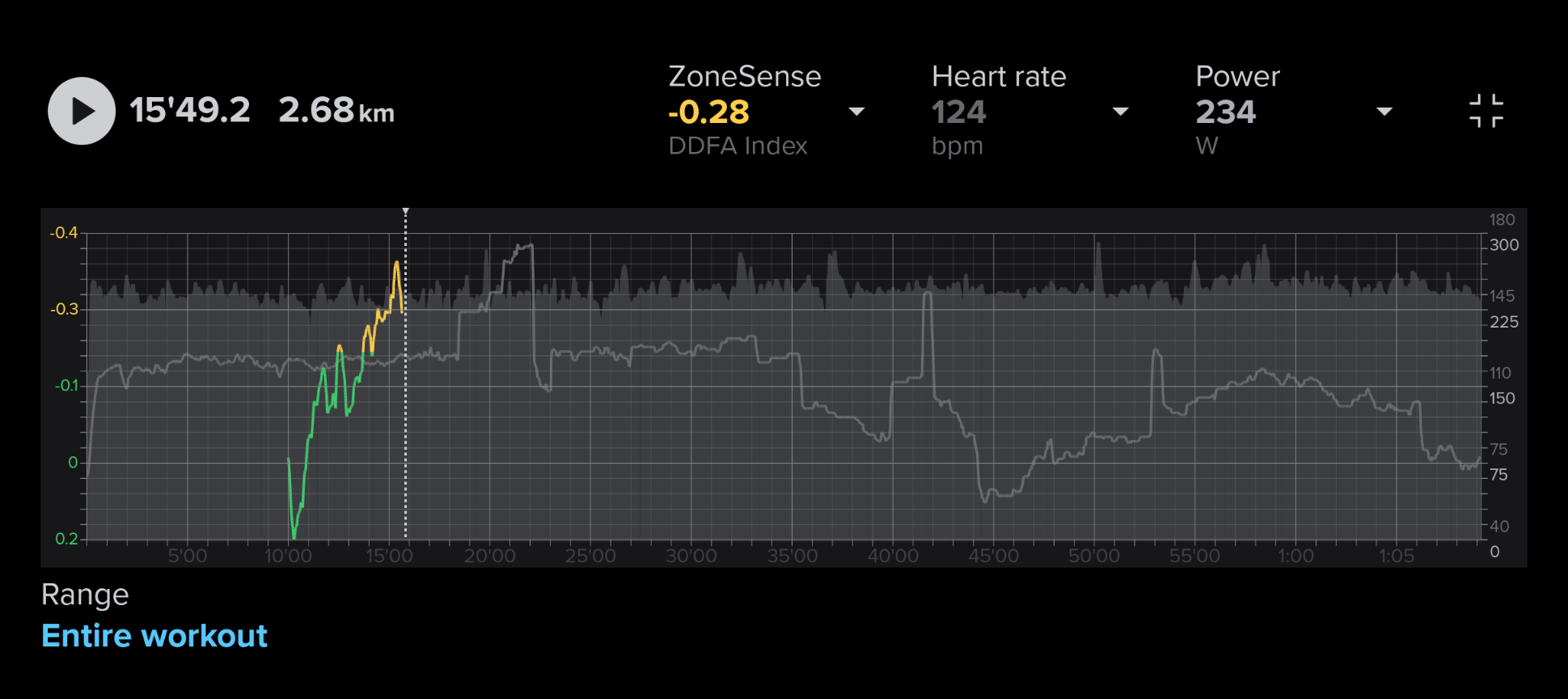
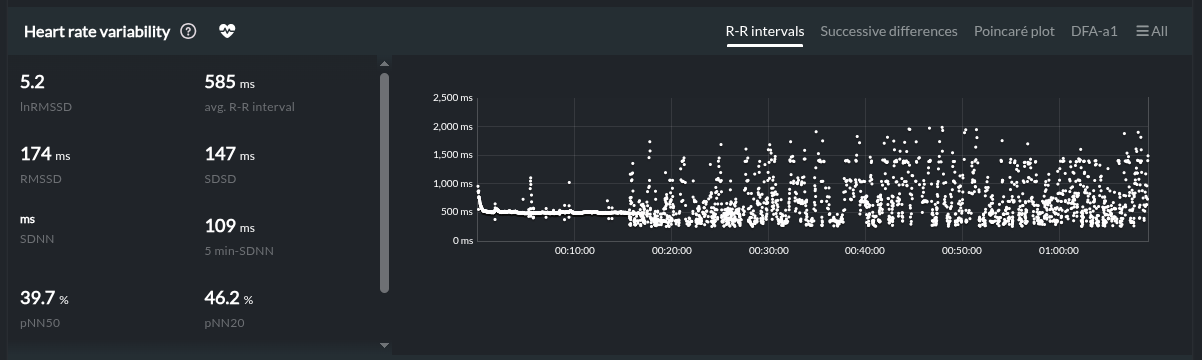
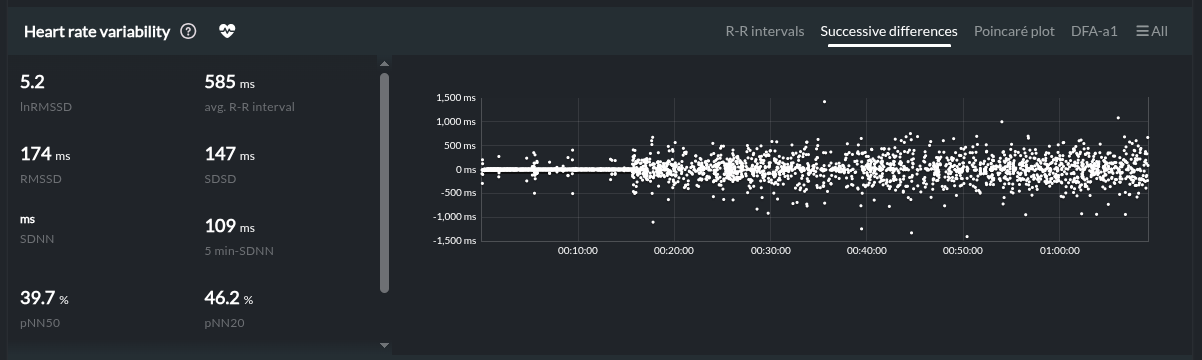
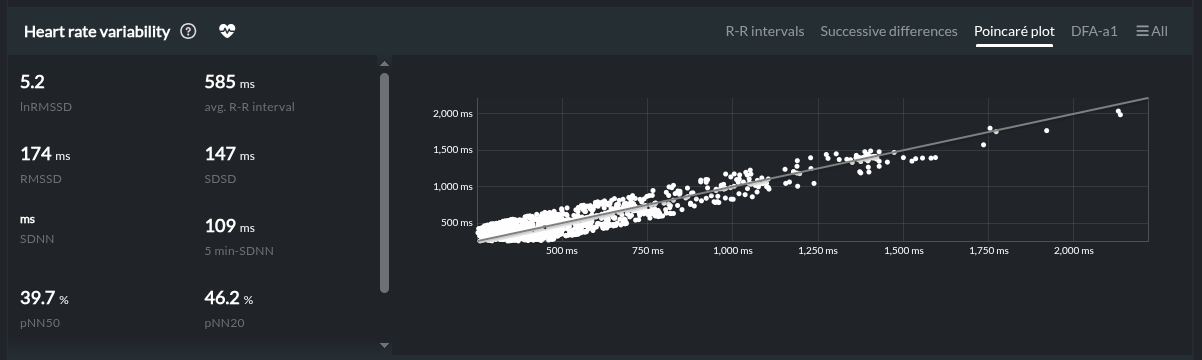
I’m done with the Polar H10. I’ve had nothing but problems with this HRM the past 6 years I’ve owned it. Just ordered the SHRB2. Hopefully I have better luck. Polar H10 screenshots to follow:
-
@atoponce I had these problems with a worn-out H10. There were tiny cracks on the electrodes. I bought a new strap, and it’s been fine for a year or two now.
-
@HonzaS This strap is 13 months old with a consistent 8-10 hr/wk. I know a few run club friends who have had their same Garmin chest strap for 5+ years and going strong. I just learned yesterday after griping about my H10, that one of my friends replaced his after 12 years of consistent 7-8 hr/wk. Maybe he’s lucky, maybe I’m not. Dunno.
I do rinse the strap after every use and hang to dry religiously, and I wash it with mild soap maybe once or twice per month. Inspecting the strap visually, I’m not seeing any signs of wear on the electrodes under the strap. It looks brand new.
But I’ve seen this problem on brand new straps also. When my H10 was covered under warranty, I sent it in, and they sent it back saying it was fine with a new strap. The problems persisted with that strap as well.
Suunto Race S / 9 Baro / Ambit 3 Peak / Observer
Suunto SHRB2 / Polar H10 / Verity Sense / OH1
Stryd Duo / Wind
r/suunto mod -
I sent it in, and they sent it back saying it was fine
Do you have the latest firmware version?
-
@snow Yes
-
New belt tested again, a bit more tightened. It’s better and more confortable on chest. Will probably test it this week-end over a long race.
Don’t know if data are accurate (as usual I will follow trends more than precise values), but it works.
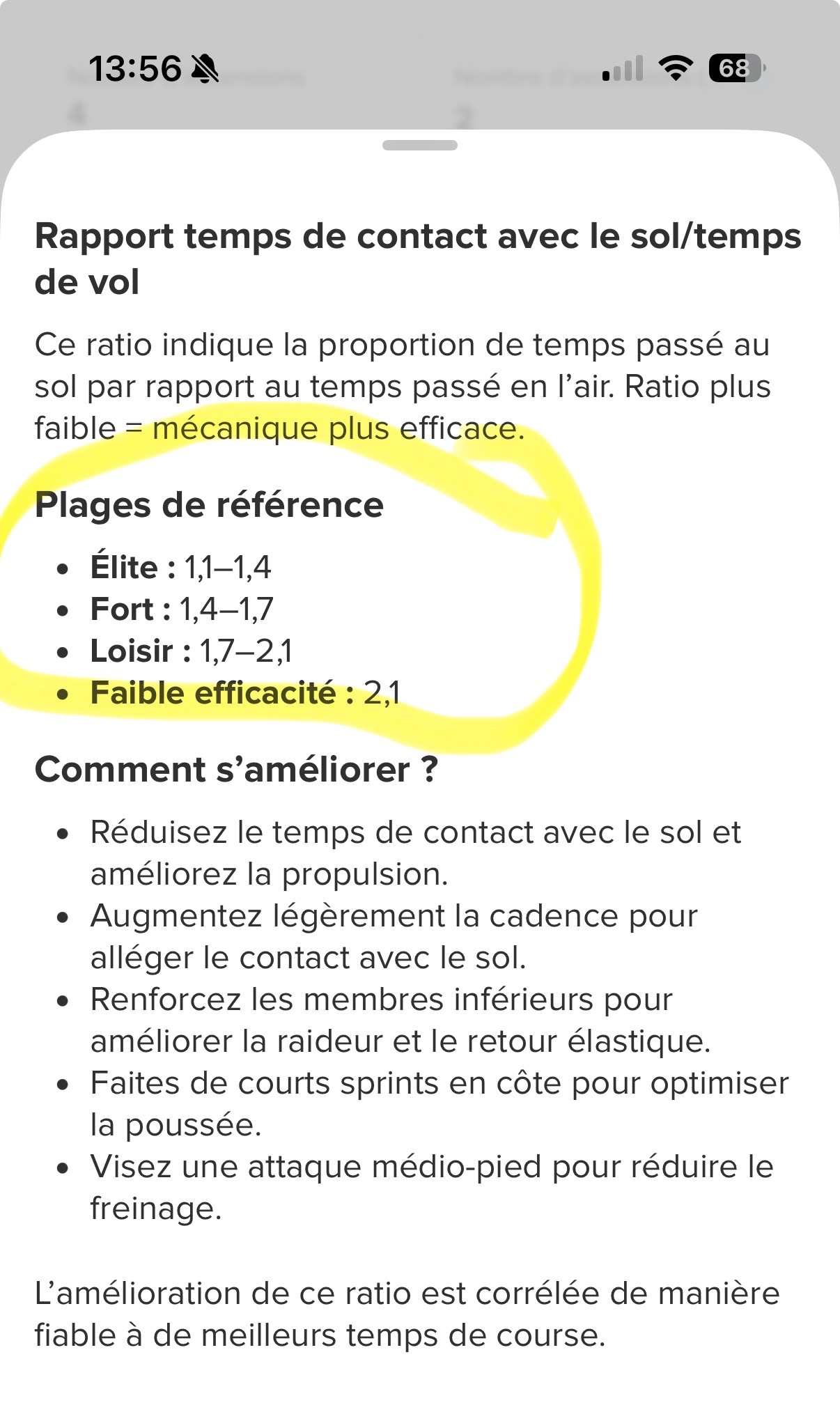
I wonder so why GCT/FT ratio is displayed in % while explanation says otherwise ? Can’t interpret it.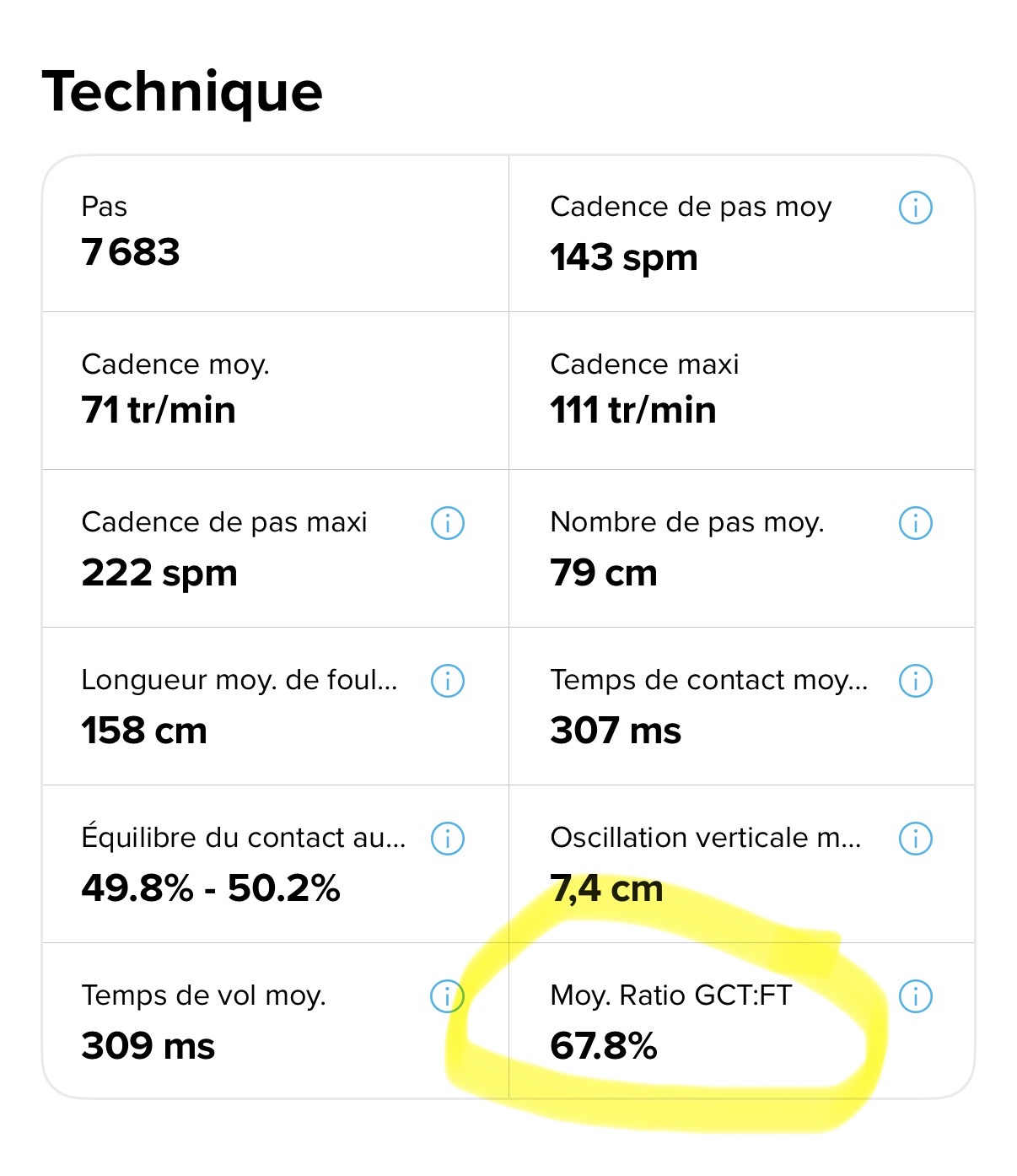
-
@Tieutieu we are just above Elite…

https://forum.suunto.com/topic/15857/running-form-metrics-oddities/2 -
@2b2bff thanks ! (sorry I hadn’t spotted your post)
-
@atoponce So I’m curious what you’ll get with new SHRM2. I hope you’ll be satisfied. I just remembered one more thing. Have you ever tried moving the chest strap about 5cm to the left under your left breast? I use it this way because it produces the greatest amplitude in this position and even Polar recommends it…
-
@HonzaS I just got my new SHRB2 this morning and took it for its maiden voyage for my afternoon easy run. The plus side, Suunto and Stryd mostly agree on the running dynamics. At least I’m not bothered by the differences, given that the SHRB2 is at my chest and Stryd at my feet.
Metric Suunto SHRB2 Stryd NextGen Duo Cadence 169 spm 169 spm Stride Length 102 cm 1.01 m GCT 310 ms 295 ms GCT Balance 50.2% - 49.8% 49.4% L / 50.6% R Vertical Oscillation 7.0 cm 6.02 cm Flight time 397 ms 415 ms (derived) GCT:FT Ratio 78.1% 71.1% (derived) To answer your question though, I haven’t shifted the belt left to align the module more over the heart. That’s something worth checking. I’ll give that a go tomorrow.
On this easy run, I did see artifacts on par with my Polar H10. The first ~18 minutes are noisy and the last ~25 minutes also. The route is flat with very little wind.
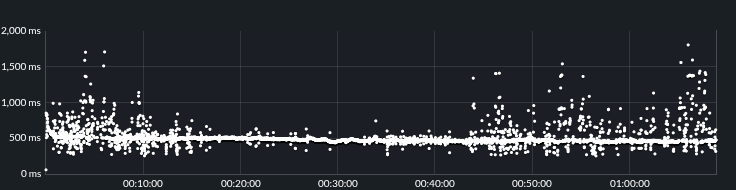
Actually, looking closer as I type this, that noise is when I had a headwind. It was a very light breeze, barely noticeable, but the timing does align. I was in a headwind until ~19:20 I turned around with a tailwind. I turned back around into a headwind at ~43:00 and remained in it until getting home.
Curious.
Suunto Race S / 9 Baro / Ambit 3 Peak / Observer
Suunto SHRB2 / Polar H10 / Verity Sense / OH1
Stryd Duo / Wind
r/suunto mod -
Speaking of which, if I pair both my Stryd pods and the SHRB2 to my Race S, which one is the source of pace and distance? Any way to find out?






Hello! It looks like you're interested in this conversation, but you don't have an account yet.
Getting fed up of having to scroll through the same posts each visit? When you register for an account, you'll always come back to exactly where you were before, and choose to be notified of new replies (either via email, or push notification). You'll also be able to save bookmarks and upvote posts to show your appreciation to other community members.
With your input, this post could be even better 💗
Register Login