Vertical 2 resources
-
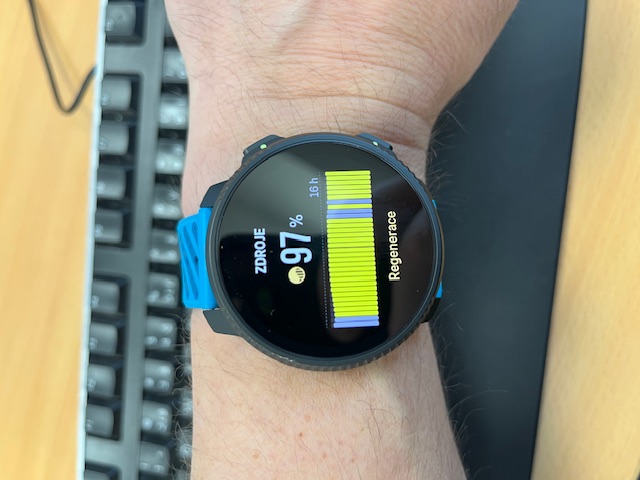
I really think people who are thrilled by the current resources have never used a watch with working resources. I tried my Garmin yesterday. I had a bad night before, and the resources went up only to 66% in the morning (Suunto would nevertheless show me almost 100%). I finished the day, of course, with 5%, that’s the minimum with Garmin. It helped me not to train in the late afternoon, as I was really tired. Suunto would drop during this day mostly from their something 99% to 70%, and would tell me I have still so many resources. When I relax in the evening, it would raise to something 95%. Why not train a bit? The next morning again 100%. How is such data helpful? Garmin’s body battery raises during the day virtually not at all, only during naps 2 or 3%. If you sit down and relax, it either stays the same or rises by 1 or 2%. Suunto can rise at the same time by 10, 20, or even 30 percent, especially if using a hilariously high heart rate.
Another problem with Suunto is that the resources are only in half-hour intervals. Why is that? So, let’s say you are very active for 14 minutes and sit down for the other 16 minutes, this half-hour would show you as inactive or recovering. Why not change it to 5 or 10 minutes intervals?
Let alone, why does the user have to play games with the heart rate of the resources? This has to be automated like Garmin or Amazfit does, it shouldn’t be the concern of the user. No, the current resources of Suunto right now are a joke and not helpful at all.
-
@jannis That’s a pretty generalised view you’re posting about the Suunto. As I mentioned above, it works for me – just as accurately as it did with my Garmin Epix back then.
And I ask myself: what’s wrong with resources rising again during the day, even if I don’t take a nap? When I’m sitting relaxed on the sofa, it’s definitely restorative.
-
@runomatic said in Vertical 2 resources:
just as accurately as it did with my Garmin Epix
Race S user here, Resources work ok, but my Epix Pro is another level…
I drank alcohol the other day and Garmin Body battery showed stress well into my sleep time. Real rest started about two hours into my sleep.
Race S has not bothered about this. Resources started to increase steadily about 21:00 as Garmins body battery was still declining. Body battery started to increase shortly before midnight… -
@2b2bff I actually miss the stress measurement feature on the Suunto too. However, the Epix is so uncomfortable to wear while sleeping that I don’t miss it much.
-
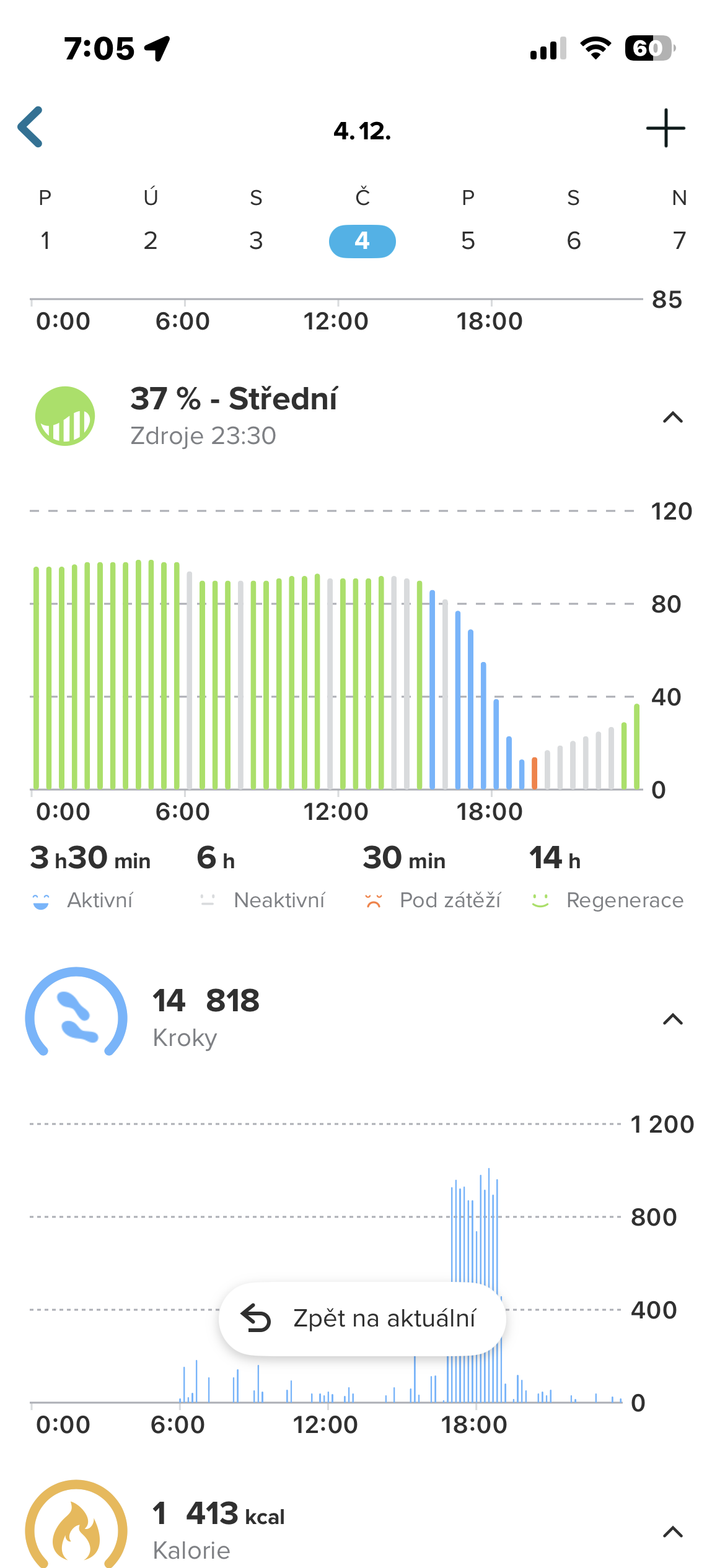
I went cross-country skiing for 2 hours. Average HR for 2 hours was 149bpm (H10 strap). Resources went down pretty quickly (finally
 ) but i don´t understand red stripe - under load, this was 45 minutes after activity and it is bigger than blue one before it, so resources are going up when I am under load?? Strange
 -
@PetrMisek But if you look, the graph perfectly shows the problem. One could think, not knowing, that you slept from midnight until 5 PM the next day. It is not helpful at all. Also, why does the axis show 120 percent? Is this another bug by Suunto? And then again, right after the activity, there is a rapid rise in the resources.
-
J jannis referenced this topic on
-
Is SV2 or R2 uses HRV to calculate resources?
-
@masi0 Yes. In the Suunto app, if you scroll below the graph, there’s a full explanation of what you’re seeing and how resources are measured.
-
@PetrMisek If you swipe across the graph, the app shows you the legend for each bar. Red indicates very high stress.
-
@Manuel-Extreme In the night yes, but not during the day.
-
@masi0 From in-app documentation, there’s no clear distinction between daytime and nighttime HRV measurement.
What is explicitly described is how “resources” are calculated:
Active state: recovery time from activities reflects recovery needs. Longer recovery times indicate faster depletion of resources.
Inactive state: HRV is used to assess autonomic balance. Higher HRV indicates more available resources, while lower HRV indicates reduced resources. Metrics like RMSSD, stress index, SDNN, together with heart rate, are used to evaluate stress levels.
So the focus is not on when HRV is measured, but on how it is used within the model. -
@Manuel-Extreme HRV is only measured during the sleep portion of the day. It’s not measured during the day, which wouldn’t make much sense anyway.
-
@maszop Are you saying that based on inference, or because you have the specifications?
-
@Manuel-Extreme said in Vertical 2 resources:
@maszop Are you saying that based on inference, or because you have the specifications?
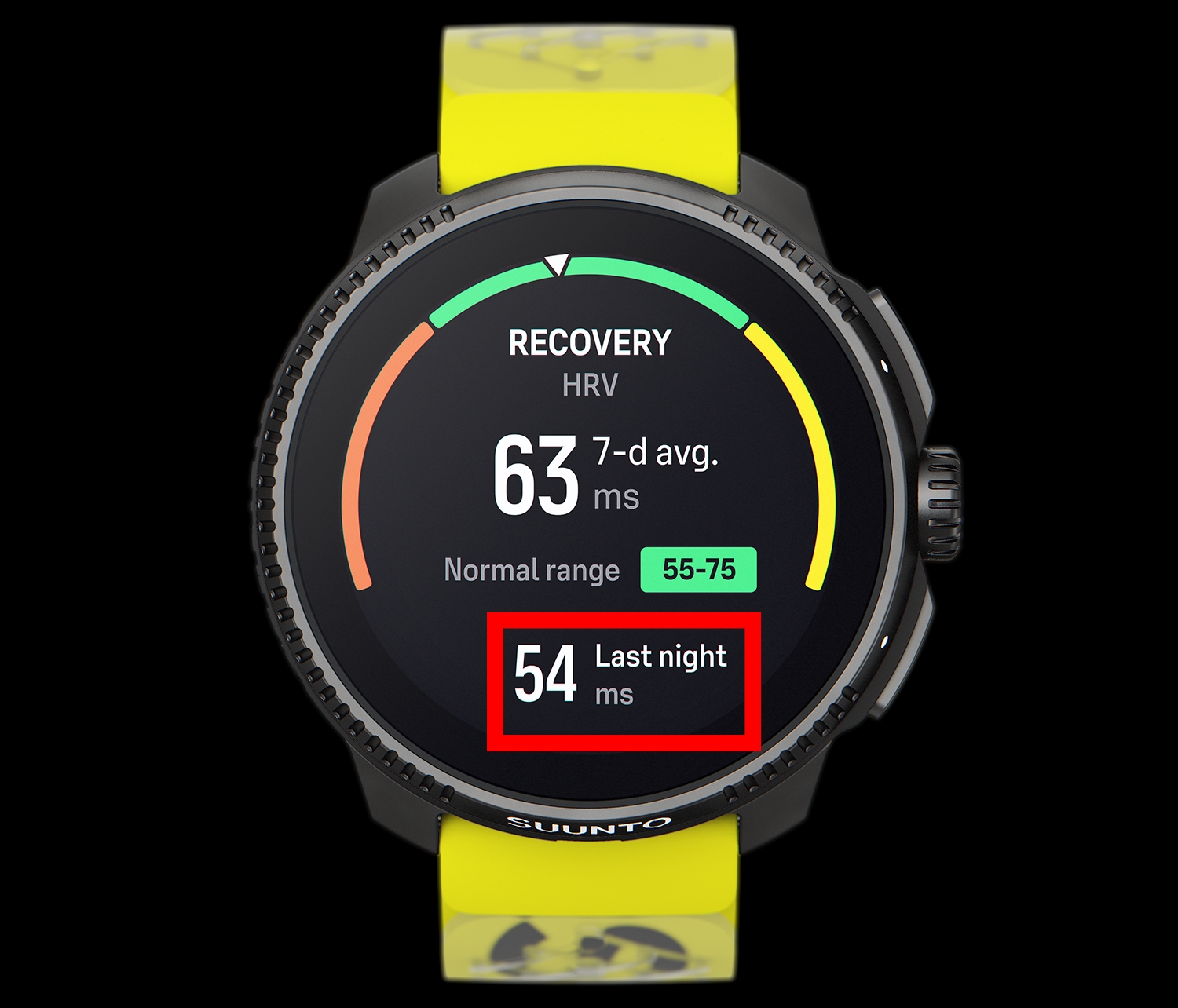
“Suunto Race, Suunto Race S, Suunto Vertical, Suunto Ocean and Suunto 9 Peak Pro GPS watches can track your HRV during your sleep. Nighttime measurement is a reliable and easy way to gather comparable HRV data.”
-
Looks like this debate is going nowhere. @maszop in the picture above, you show HRV widget that shows average HRV during sleep specifically. But it does not disprove that 24 hour HRV measurement is part of the data stream used for continuous Resources calculation. So better arguments are needed. Or better yet, someone from Suunto who knows what they are talking about regarding this, to set the record straight.
@masi0 said in Vertical 2 resources:
In the night yes, but not during the day.
Same goes for this claim. Provide more details, or is this just an assumption?
-
@Squirrel Measuring HRV alone is pointless because the data itself is useless. What’s needed is a trend based on repeated measurements under repeated conditions. That is, at night.
-
Measuring HRV alone is pointless because the data itself is useless.
Agreed, HRV in isolation. But nobody said it is used in isolation to calculate resources.
What’s needed is a trend based on repeated measurements under repeated conditions. That is, at night.
You already got that in the HRV widget you posted above and also in the app, where you can look at long term trends and history. So what are you trying to suggest here regarding resources?
-
@maszop correct, but my assumption would be that Suunto as everybody else have added HRV during the day also since they added Stress measurment in Resources. Do not have any proof of that, but I doubt they only use HR to calculate that.
-
@aiv4r Your assumption is based on what?
-
@maszop Why do you keep insisting on answering with certainty about things you don’t actually know?
Stress scores are typically measured using HRV and HR, including during the day under optimal conditions.
That’s certainly how Firstbeat algorithms work.Does Suunto do it? According to its in-app documentation, yes
The study confirms that other sport Watch Firstbeat based primarily uses HRV (with HR as a supporting signal) to derive the stress score.
https://pmc.ncbi.nlm.nih.gov/articles/PMC12647429/




Hello! It looks like you're interested in this conversation, but you don't have an account yet.
Getting fed up of having to scroll through the same posts each visit? When you register for an account, you'll always come back to exactly where you were before, and choose to be notified of new replies (either via email, or push notification). You'll also be able to save bookmarks and upvote posts to show your appreciation to other community members.
With your input, this post could be even better 💗
Register Login