Suunto Smart Heart Rate Belt 2
-
Please come later with results once you get them.
It was @atoponce who brought up shirt fabric and wondered about electrostatic discharges, but I thank you for the prodding which made me test the theory over three new running sessions!
The very first post in this SHRM2 thread quotes product sale blurbs from the site cam2.com.hk. One paragraph contains:
“Enhanced signal shielding prevents static electrical noise caused by dry performance fabrics”
A more generic description at us.suunto.com says at the Overview and Specifications sections:
“Trust Every Beat A new chest-strap construction shields the signal from static noise, holding readings stable from the first minute […] Module: Stainless steel cover plate + fiber reinforced composite material”
I can now confidently state that Suunto has failed, to a staggering degree, with this construction aim [Disclaimer: Using my SHRM2 unit in combination with my exercise clothes].
During the three Run/Walk sessions conducted because of injuries - and detailed in this thread - I used a 100% cotton T-shirt and an outer layer jacket being a blend of 80% cotton and 20% polyester. In spite of wetting both chest and strap with a high saline water solution (and doing a short warmup), all exercises had poor HRV data sections during the first 10 minutes, and one bad HR strangeness.
The Runalyze site lists (unexplained) something called Anomalies in percentage at the R-R intervals section, and Artifacts when clicking on DFA-a1. Since the exercise times were somewhat long, ca 1.5 hours, these numbers did not seem in excess:
An: 0.4%
Ar: 1.9%An: 0.5%
Ar: 1.8%An: 0.3%
Ar: 0.8%But when I started doing regular running, using a T-shirt of 100% polyester and a windbreaker jacket also of 100% polyester, the An/Ar numbers in the much shorter times (ca 20 - 27 minutes) became significant:
An: 5.4%
Ar: 8.7%An: 9.0%
Ar: 19.9%An: 3.4%
Ar: 7.3%Polyester rubbing against polyester can build up significant charges and the first two runs showed major HR faults at the first 4 to 6 minutes, the third only had the ‘little’ dip from 120 to 76 bpm at 3 minutes detailed in my previous posting. Prior to these runs I only ran the strap (both sides) under a water faucet and scooped the same water over my chest.
When this electrostatic discharges and shirt fabric question came up, I first extended the water routine to also running the whole front of the (100% polyester) T-shirt under the faucet. Sopping wet first layer! And that did a tremendous job of keeping the An/Ar numbers down:
An: 0.0%
Ar: 0.5%Here’s the complete R-R chart from Runalyze:
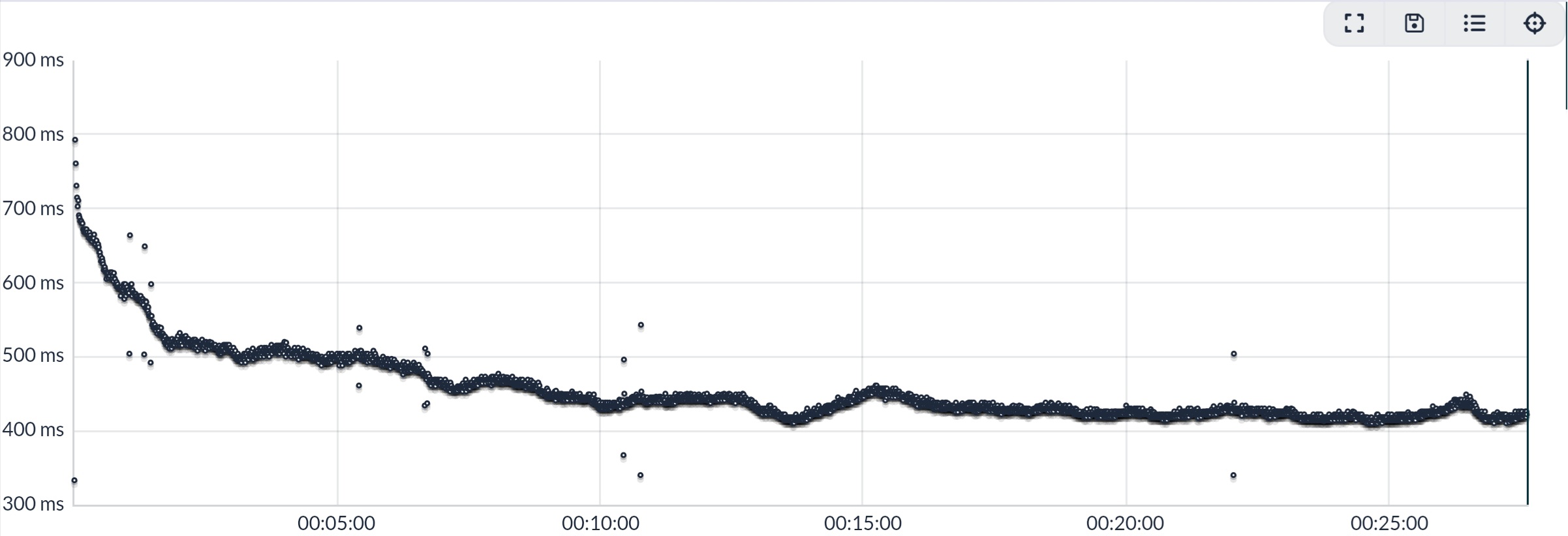
Not bad, eh? And the HR graph compared as a twin to the one from the control watch; Garmin FR955 using its OHR. But why stop there… During the 13.5 years I’ve done running exercises, both Garmin (all their 4 or 5 models of chest HR monitors I’ve owned) and Polar (the H10) have forced me to appreciate rubber as a solution to the chafing problem. Suuntos HR pod (previous small round one) and band was the first that did not rub the skin raw or completely off during longer runs. With the others I used a sleeve of inner tubing from an old bicycle tire. Cutting a small piece for the SHRM2, just covering the pod not any of the electrodes, I tried the easiest running session path I can find hereabouts, smooth asphalt and little undulations, for a 33 minutes out-and-back:
An: 0.0%
Ar: 0.2%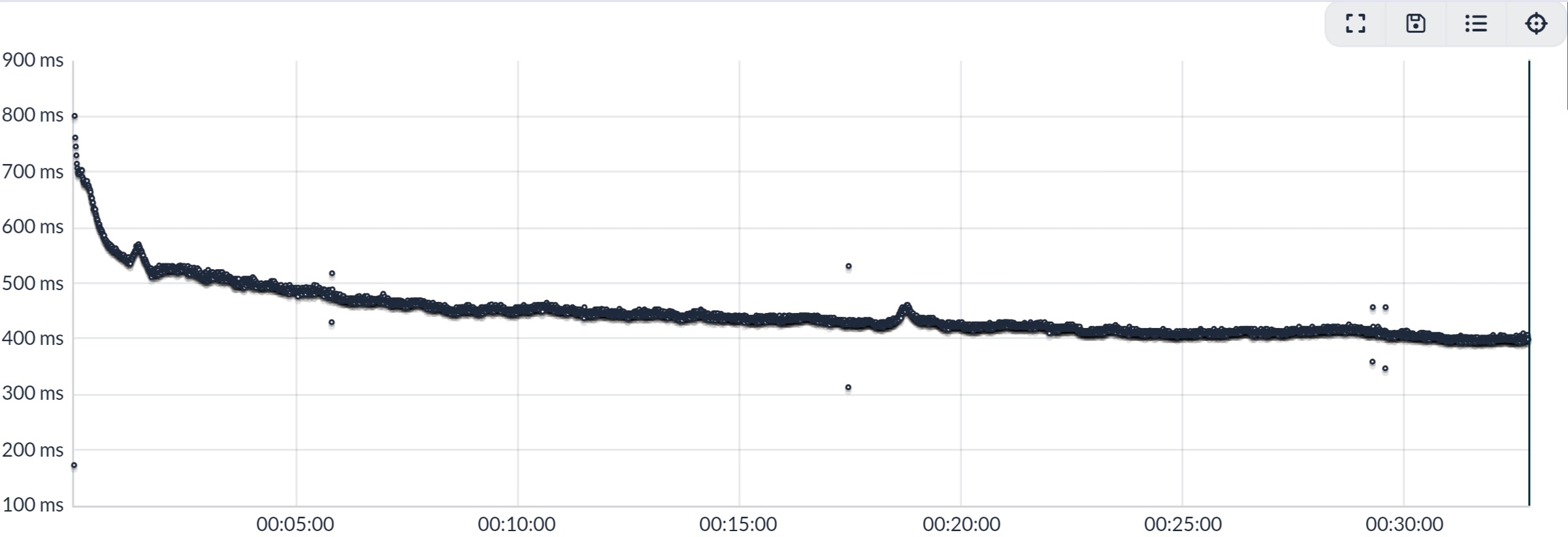
As can be seen, the result was even better than water on the T-shirt. No HR shenanigans at all. The two R-R zigzags in the graph correspond to real HR changes which also were registered by the FR955 control watch.
The final test with the rubber sleeve was along a normal out-and-back trail path containing both undulations and one (doubled) short technical section:
An: 0.1%
Ar: 0.0%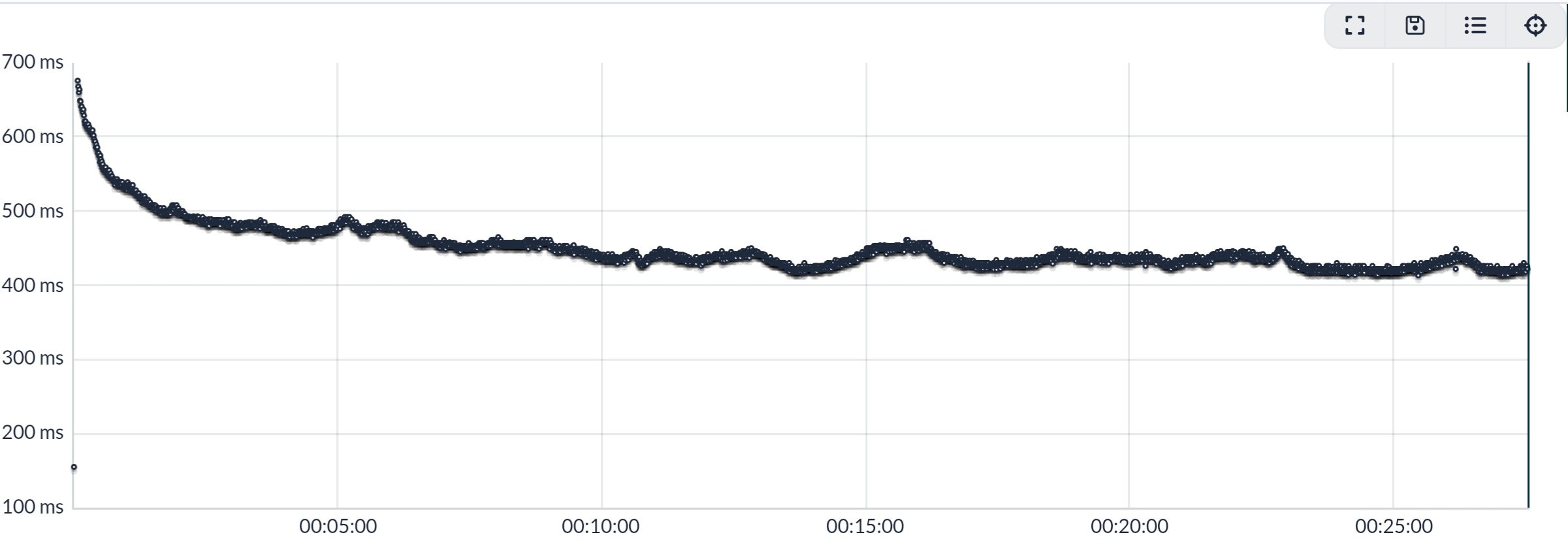
Hard to find a cleaner result. The HR graph in the Suunto App had one quick change which I at first didn’t recognise, but then remembered as an episode of: running in a slight descent towards a junction while seeing a man and a free running dog, taking the turn, hearing the man shouting ‘No, no, stop, stop’ at the dog, feeling some touching at my heels, turning torso backwards while still running, seeing the dog go to ground and wagging its tail, turning forwards again and continue the run. During this episode my HR jumped 5 beats over 10 seconds:
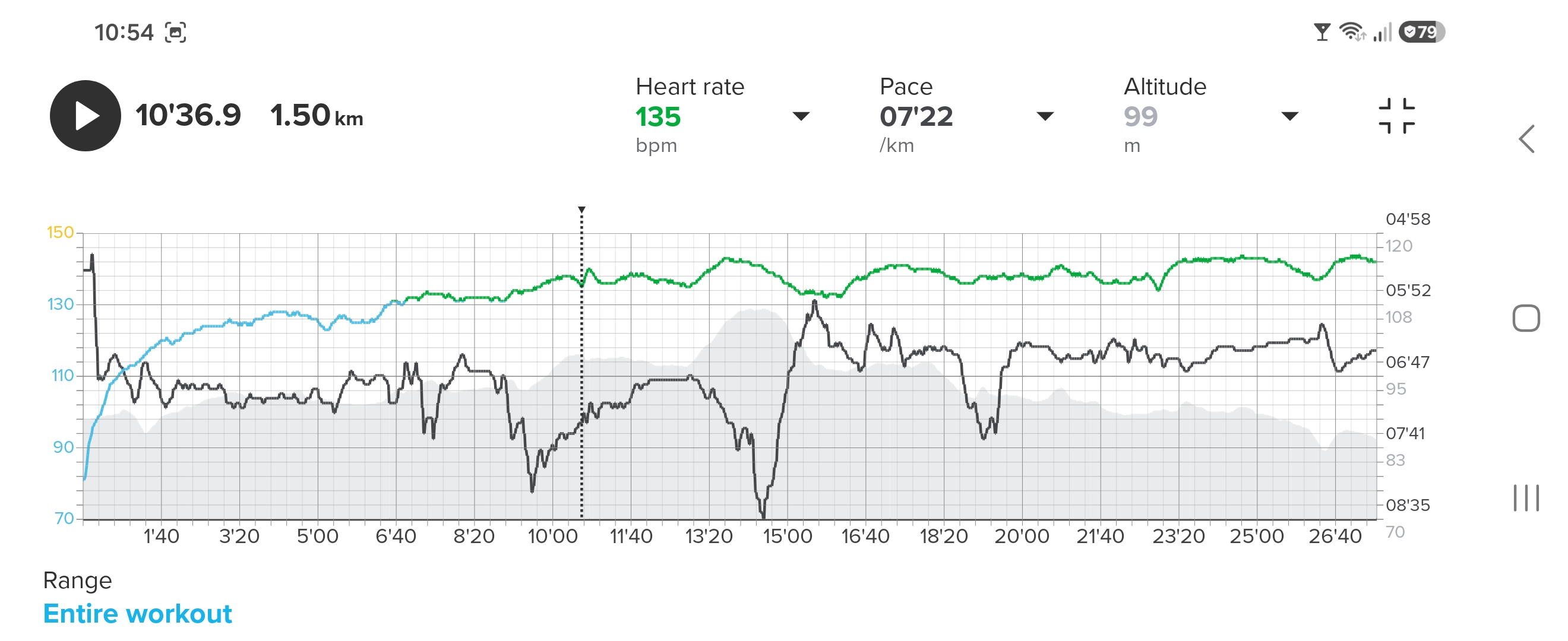
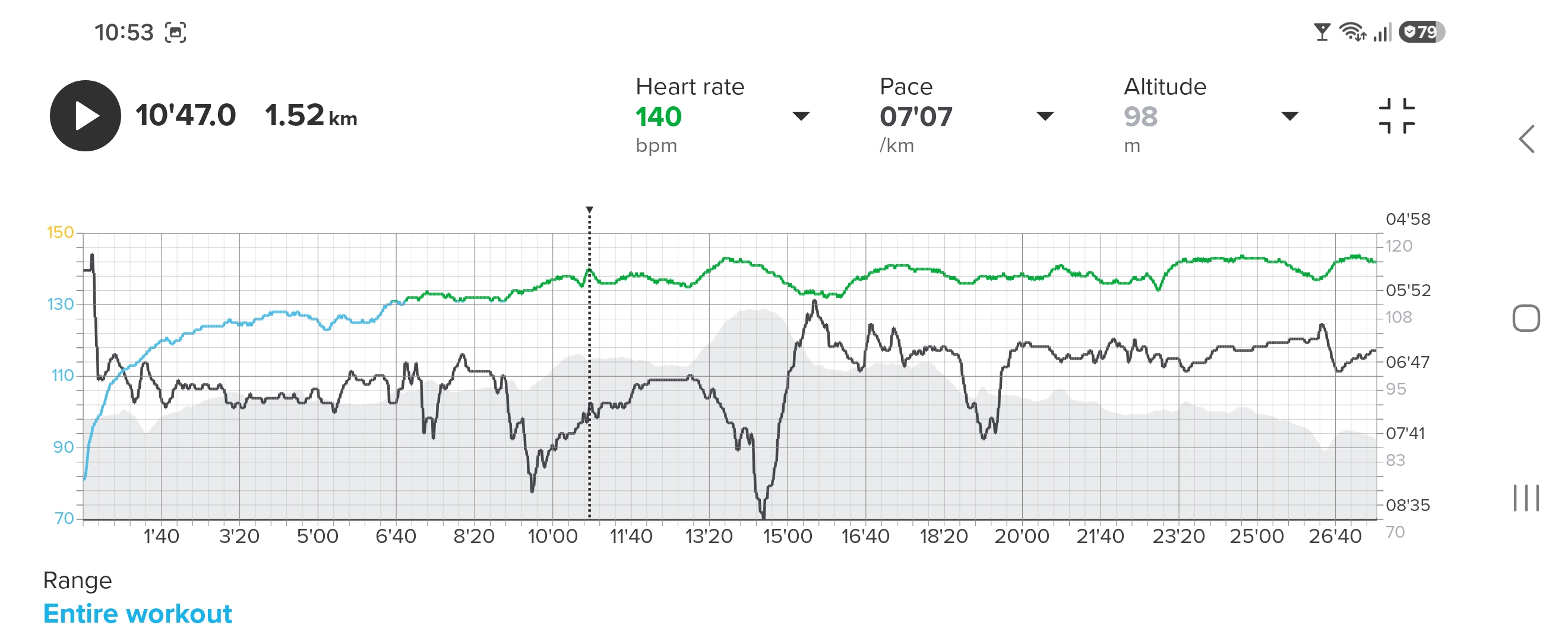
The FR955 OHR has a more smoothed graph and less change/variation:
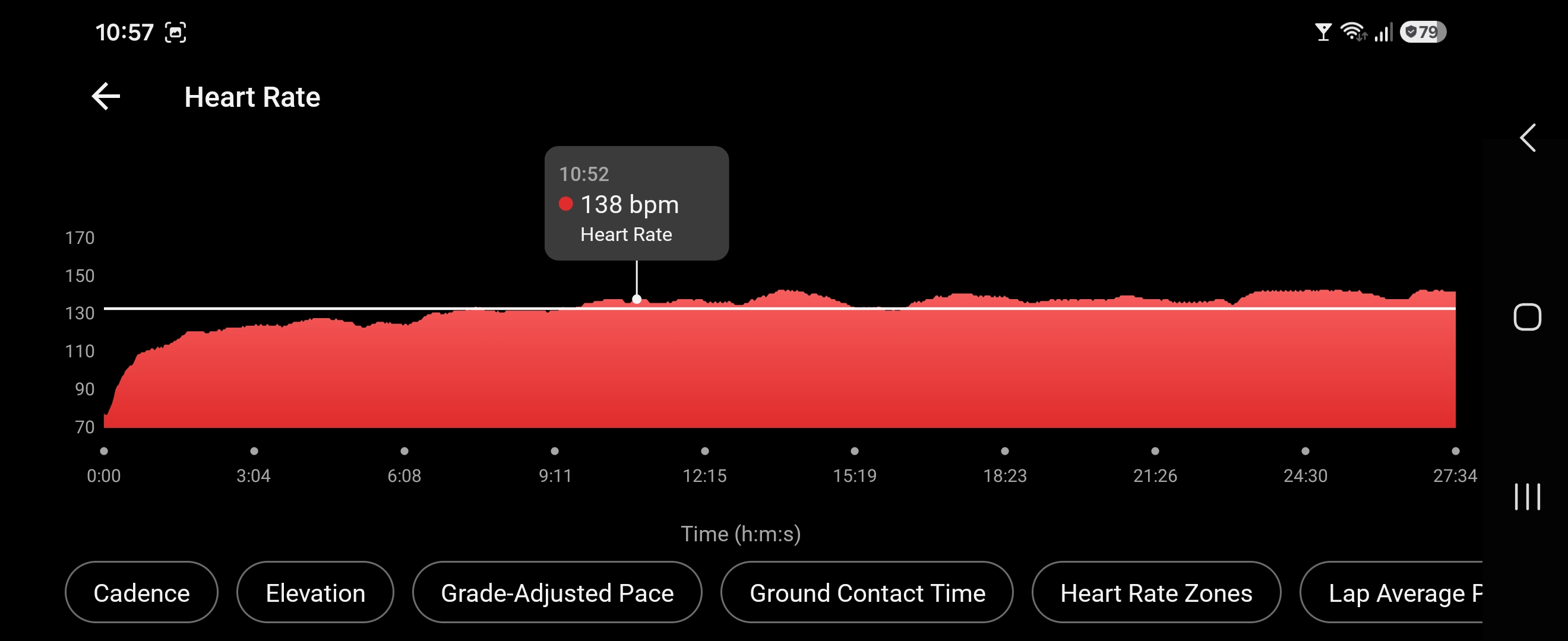
So. I can live with this hardware hack. It shouldn’t be necessary, but… Depending on level of air dryness I’ll probably see some R-R points outside of reality at times due to electrostatic charges jumping through air to the pod surface, but the HR registered should stay sane overall.
I will report back if something changes to the worse. Think I’ll also turn on running dynamics in the pod now. Having cadence from the torso is much better than the wrist version.
To end, a picture of the ‘prophylactic’:
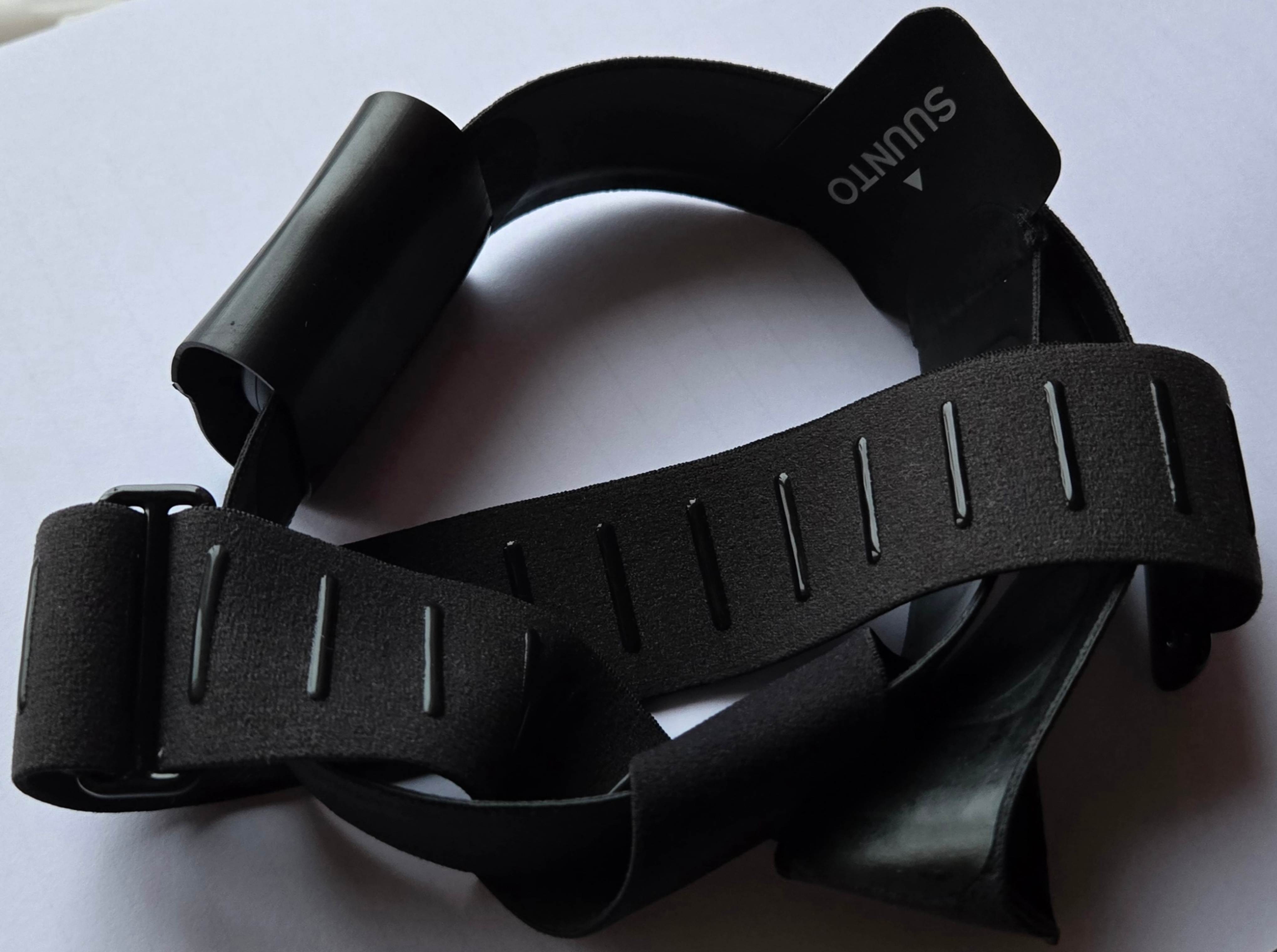
Suunto Race S
-
I used a sleeve of inner tubing from an old bicycle tire. Cutting a small piece for the SHRM2
Looks like very effective solution

-
@Inge-Nallsson I am very impressed by your not giving up and finding a workaround for you problem!
-
@Inge-Nallsson Thank you very much! I´ll try your hack too
-
@Inge-Nallsson That’s crazy. Thumbs up—I’m impressed. I guess no one at Suunto thought of that. Unfortunately, I decided to send the HRM2 back. I was hoping support for the Vertical 1 will come, and I also feel like the older belt fits me better after all. We’ll see what the future brings.
-
@Inge-Nallsson damn, kudos! now, if insulating the module’s outer surface eliminates the noise, the coupling path would be via that surface (specs mention a stainless steel cover plate) and not via the skin.Therefore, the stated “shielding” would not protect against it, and this makes me think of a possible hw-level ESD immunity weakness or issue, hard to fix via firmware alone although Inge’s test cannot distinguish insulation from reduced shirt-module friction

-
@Inge-Nallsson Great work, but honestly I don’t like to run with a rubber tube on my breast. I hope Suunto will reuse your analysis to correct the algorithm on SW side (if possible) or provides a replacement or a cap or something.
I don’t understand that a big company couldn’t do what you could do alone in a few days -
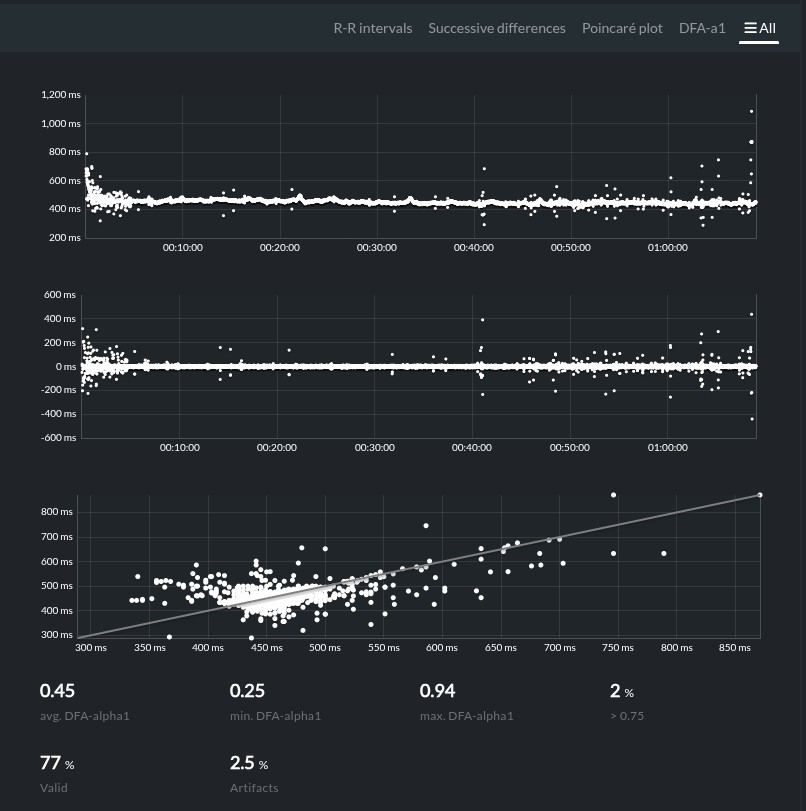
@Inge-Nallsson I’ve been spritzing the front of my shirt right in front of the module, and while it’s reduced starting noise, I’m still seeing it in the run. So I’m curious about insulators that I can use to cover the module, like perhaps electric tape or heat-shrink rubber.
The noise at the end of this run is while I was in a headwind. I’m guessing the shirt dried enough that ESD started becoming a problem again.
-
-
All <-- Thank you for the thumbs up asf, but I was just following a logical path. Regretfully my education has been mainly within the Humanities so I have almost nothing to contribute when it comes to electrical engineering. Asking Google about alternatives to the rubber tube they listed some materials but also pointed out that static electricity has a tendency to find paths and discharge into a highly conductive steel cover plate (although measuring I find no conductivity anywhere on the pod, probably due to the coating). And looking at the construction with the push-button area I would consider that an easy path inside for discharges. For peace of mind I will continue with a rubber tube since (Google):
“Your rubber tube, on the other hand, acts as a permanent physical and dielectric barrier that doesn’t care about wind, drying times, or layer-to-layer friction. It completely isolates the pod mechanically”
It helps that I have so many years of running with rubber tubing beforehand

-
Regretfully my education has been mainly within the Humanities
So, you didn’t know it couldn’t work - and that’s precisely why you came up with a working solution! Thanks a million for the excellent analysis and the solution!
Only one question remains - if Suunto dev team will get this information and what they do with it. Is there anybody able to pass the info to the dev team?
-
@Dusan-Holub said:
Only one question remains - if Suunto dev team will get this information and what they do with it. Is there anybody able to pass the info to the dev team?Someone already shared the link to the post
-
@isazi Thank you!
-
Tried it today with a simple sticker as insulation and the anomalies were the same or worse. So thats not enough

-
I hate beating this drum, but feel that three runs with the rubber sleeve proves the point to my own satisfaction (once is nothing, twice could be a fluke, thrice removes doubt). Also, today the temperature dropped enough for me to switch from T-shirt to a long-sleeved top - still 100% polyester - which would provide even more surface for electrostatic generation against the windbreaking jacket. The result was not as squeaky clean an R-R graph as from the previous session, but the Runalyze fault numbers are in line with the great ones from session one and two:
Anomalies: 0.0%
Artifacts: 0.2%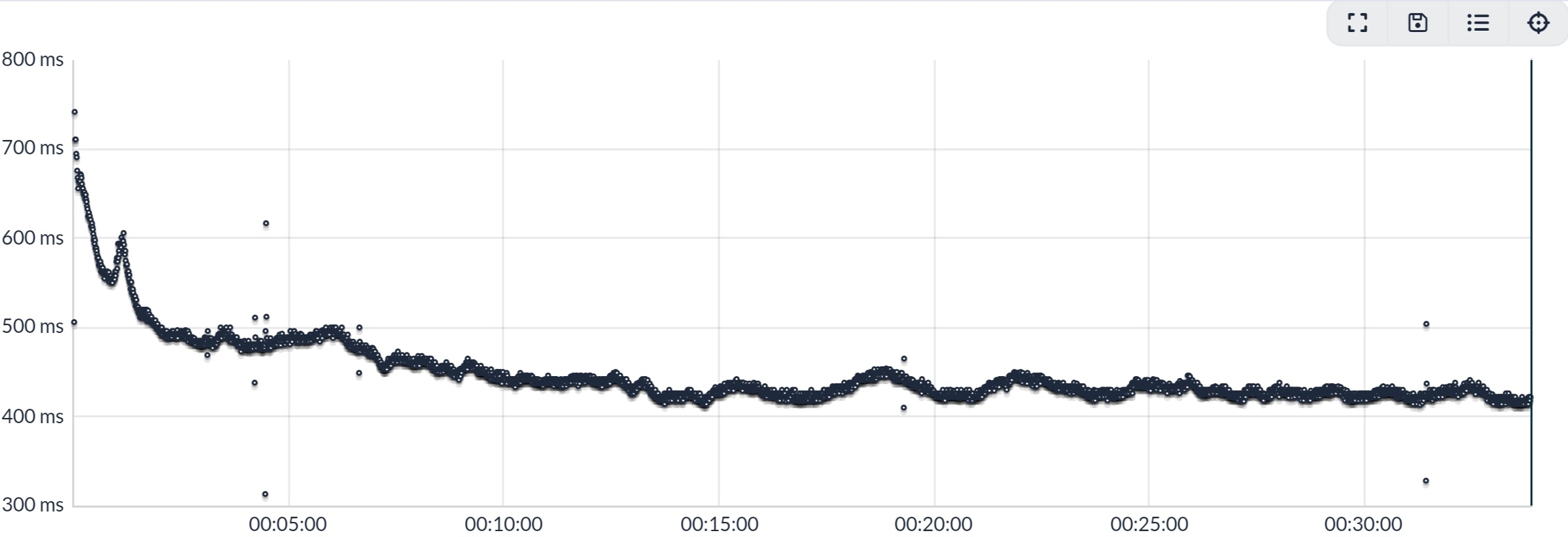
And, once again, the R-R zigzag at the beginning mirror a real HR drop from 108 bpm to 101 - confirmed by the OHR FR955 control watch.
This posting also gives me an opportunity for a piece of advice: Check the SHRM2 connectivity before stepping outside for an exercise!
When I stood in the middle of the village and discovered that the pod hadn’t been automatically activated by putting the (wet) strap on my chest, I didn’t feel like stripping down for pod examination. Home again it turned out that neither looking at the registered HR device listing, nor going into an activity, would wake the pod up. A quick press of the pod button did nothing (and the LED didn’t light up). A slightly longer press did nothing. Finally with a perhaps 3 seconds long press of the button both the LED lit up and the watch could make a connection.
Perhaps there is a hard shutdown timer in the SHRM2; it had been more than 48 hours since the previous exercise. Or perhaps my touching the outer shell at various points with the leads of a multimeter had triggered an emergency shutdown - I was looking for the beeping tone of a zero resistance area, and found none.
This episode also revealed a disadvantage of using a rubber tube. It prevents easy access to the pod button…
-
Tried it today with a simple sticker as insulation and the anomalies were the same or worse. So thats not enough
From technical point of view - I think you have made a different setup because Inge’s 1. is a loop of enough conducting rubber shielding / shortening static. 2. It creates a gap between clothes and electronics which reduces tansfer of electrostatic charge into electronics.
I guess both factors are important. Shielding is not trivial problem in electronics. Let us wait for others to test and we will see. Till now, Inge’s solution makes sense to me more than putting a sticker / insluation directly in electronics box. If you are willing to test something, wrap it with aluminium foil all arround, be careful not to shorten electrodes in the belt. That would be interesting experiment proving if shileding is enough or there must be also a gap. -
How should we interpret the Avg GCT:FT Ratio these days? The percentage seems quite high. Does anyone understand what this metric means and how to interpret it correctly?
-
@SODIUM
It is as the name says, Ground Contact Time divided by Flight Time.The help text says Elite Level is 1.1 - 1.4. What is a bit confusing is that the value is shown in the app as a percentage. So for a recent run I had 1.34 which is shown as 134%.
I would guess that Suunto measures GCT and cadence and then compute FT and this metric from GCT and cadence.
-
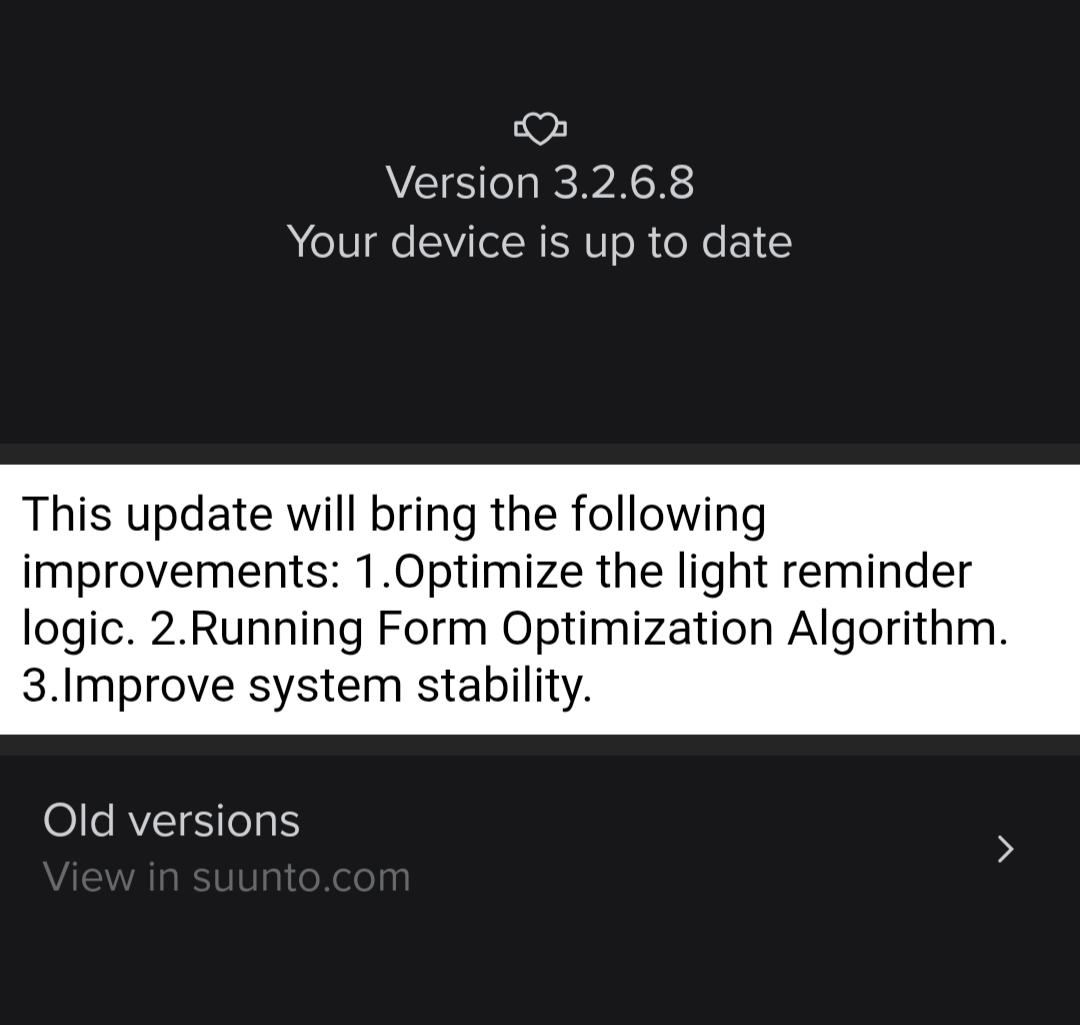
fw 3.2.6.8 available
-
Interesting. Does anyone know what 1) and 2) in the list is? Running Form and Light Reminder?







Hello! It looks like you're interested in this conversation, but you don't have an account yet.
Getting fed up of having to scroll through the same posts each visit? When you register for an account, you'll always come back to exactly where you were before, and choose to be notified of new replies (either via email, or push notification). You'll also be able to save bookmarks and upvote posts to show your appreciation to other community members.
With your input, this post could be even better 💗
Register Login