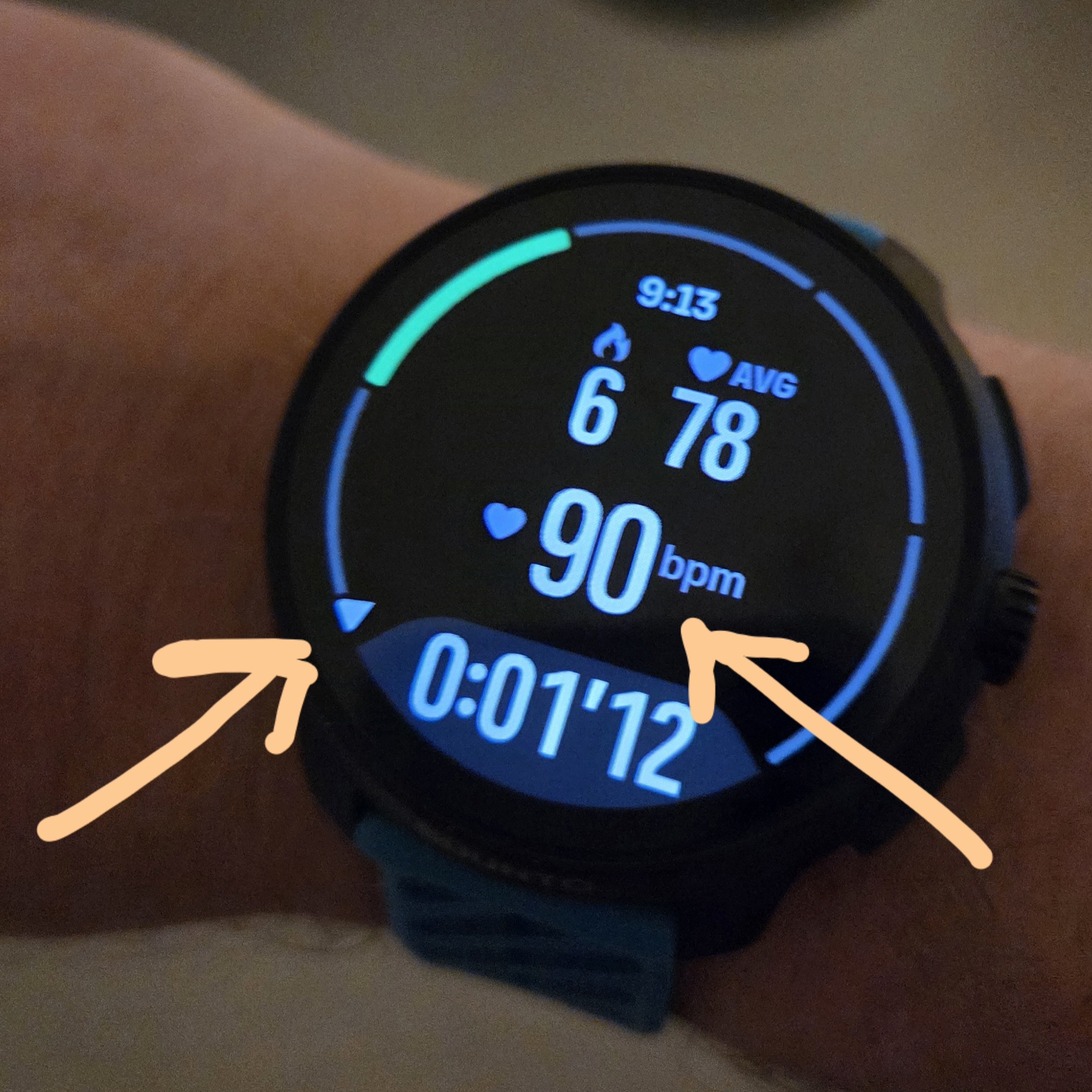
@Dimitrios-Kanellopoulos I gave this a try. I’m currently injured, so I’m not running, but I can walk and the test results should come to the same conclusion.
For the test, I attached a bag to a 1-meter pole and placed the pole in the center of a sand volleyball court at a city park. I need a tight enough loop to maintain a Bluetooth connection between the watch and Stryd, but large enough to be outside of random GPS noise. I had a clear, unobstructed view of the sky.
The dimensions of the volleyball court at its widest is roughly 11 m × 22 m for a circumference of 66 m (according to Google Maps, and Suunto Raceplaner). So, 15 loops around the perimeter should yield approximately 990 m.
Stryd attached to pole, watch on wrist: https://maps.suunto.com/move/aarontoponce/696ee80180e2ab73f69ae67d
Watch attached to pole, Stryd on shoe: https://maps.suunto.com/move/aarontoponce/696eebc8eb45b7069143f5b0
Completed 15 complete laps for both tests. With the Stryd attached to the pole and the watch recording GPS track, 0 meters were traveled.
With the watch attached to the pole and the Stryd recording foot motion, 952 meters were traveled. I might have miscounted and walked 14 laps instead of 15. The online measurement tools could be off also.
I’m both surprised and confused by this conclusion. Surprised, because given the communication I’ve had with Stryd support and my own analysis of the collected data, I expected to see distance when the was watch in motion and the Stryd stationary.
I’m confused however because of that analysis. When I’m on the treadmill, Suunto and Stryd agree 100% on distance and pace. When I’m outdoors, they always disagree. Why?