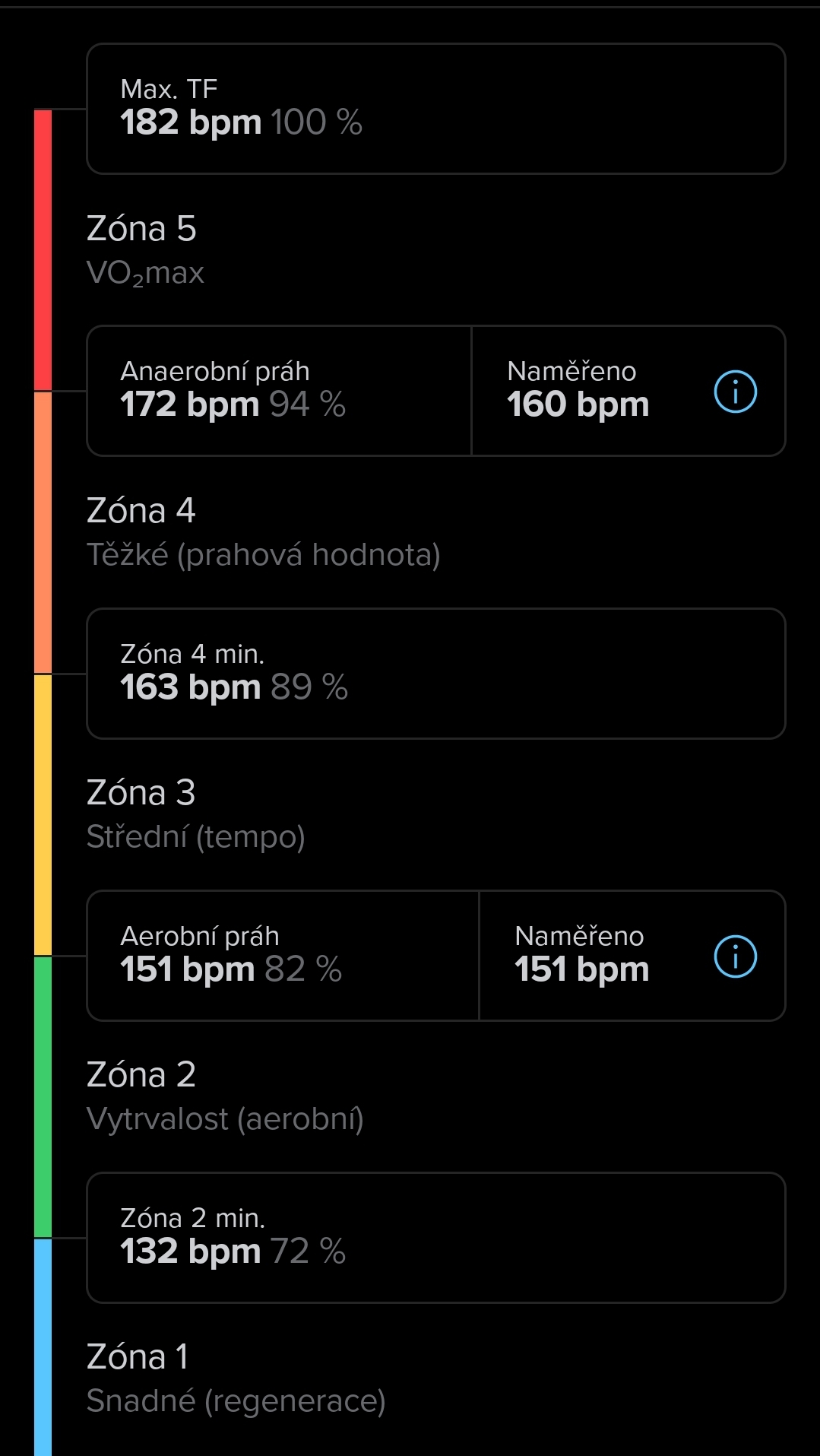
SHRM2 aerobic - anaerobic threshold.
-
I looked at the aerobic threshold for a series of 80 runs. The standard deviation was 5.6 bpm. The average was 144 bpm compared to my lab-tested value of 138
how many lab-tested value(s) you have? If it is just one, maybe the aerobic threshold derived from a series of 80 runs is more significant, at least from a statistical point of view.
-
@Stefano-M64
I am no statistics guru. But the problem is the standard deviation of the measured values.If I try to run the numbers - it would require 120 samples to get the Aerobic Threshold with a guaranteed (95% confidence) error of +/- 1 bpm.
So my point is that if 4+ months of data is required before you can confidently adjust the limit, at least for me the method appears less useful.
-
@matram IMO the point is that we can expect some slight deviation of your aerobic threshold from one run to another, due to your physical condition that may vary (one day could be 138, and another 140 e.g.). So computing the average of the threshold estimations and corresponding SD make no sense for me to judge the accuracy of the method used to get the estimations. It is like trying to get the accuracy of a scales weighting yourself each day, and computing the average and the SD. And comparing it to one (or a couple more) measurements from another reliable scale in a different day.
The best way to check the accuracy of zonesense IMO is to check its LT1 estimation at the same time of a lab test. And repeat this many times to compute the mean and the SD of the delta between the two measurements (or the ratio between the two as you prefer)
Suunto Race 1 and SuuntoApp (beta) on Android 16.
-
@SergioB exactly this is the reason why ZoneSense is such a big thing.
HR zones and threshold vary from day to day and even during an activity.
There is no absolute truth with HR thresholds. -
@matram what I’m saying is that a single lab measure could be not representative of your “real” reference value
-
@SergioB fair point: day2day variability means the SD alone can’t tell us how accurate the estimate is but imo it doesn’t explain @matram’s offset. random daily fluctuations should average out over 80 runs, yet the mean is 144 vs 138 from the lab, about +6 bpm so I see three possible explanations:
a systematic bias in the estimate
a lab value that wasn’t representative (single test, as @Stefano-M64 suggested)
a real shift of the threshold between the lab test and the runs (i.e. training adaptation) -
Really interesting analysis across 80 runs. Have you noticed whether the spread tightens when you only use steady runs at a similar pace, or does the estimate stay this variable regardless of run type?
-
In my experience the reliability of Zone threshold estimates in ZS requires data above and below the threshold. I do not often run above my LT for workouts, typically only for running interval workouts. Short burst of hill climbing <30s won’t work. For a RI workout where I have 3-4 min above my LT I get threshold estimates in ZS that agree with lab tests and my breathing (not hard to tell when you go above LT). The ZS estimate for AT is usually to high for these workouts since the interval is mostly above LT and all recovery and warm up are below AT so there is not enough HR data between the two for a good estimate. I will get a very high AT estimate that I know is incorrect.
Similarly for AT, unless my exercises have HR above and below the AT for reasonable lengths of time my AT threshold estimate will be lower than lab tests. Steady state workouts typically provide consistent AT estimates for me.
So the conclusion here? I rarely get reliable estimates from one workout and I do not believe simply averaging the estimates is a good idea, the type of workout you are doing matters. Finally what @egika stated and I have stated many times…use ZS as a real-time indicator of effort not as a method to set absolute thresholds.
-
@MotivationSeeker Personally, they fall out during slow activity with a low heart rate. 3 days of slow aerobic activity 145,131,147, Anaerobic without detection. Now I’m going to try the opposite of fast and hard runs.
-
@MarTej_cz Now that you are going for the hard runs, do bear in mind that you should always start off at the same slow pace for the first 10 minutes so that ZoneSense can establish a representative baseline.




Hello! It looks like you're interested in this conversation, but you don't have an account yet.
Getting fed up of having to scroll through the same posts each visit? When you register for an account, you'll always come back to exactly where you were before, and choose to be notified of new replies (either via email, or push notification). You'll also be able to save bookmarks and upvote posts to show your appreciation to other community members.
With your input, this post could be even better 💗
Register Login