Race 2: GPS, cadence and distance accuracy vs previous Suunto models
-
I just compared some of my biking activities and I did not find any (significant) difference in distance between S9B and SR2. If there is a difference, it is less than 10-20 m in a 50 km ride. But such difference can easily be attributed to taking a slightly different course on a number of corners or curves.
-
@MdzOtt Cycling is handled differently than pedestrian activities. It is much easier to calculate distance from cycling as speeds are faster and any deviation in the GPX trace from a bad GNSS signal is minimized since the points are farther apart.
What @jjpaz has pointed out is that something has changed in the way running distance is calculated. It is no longer derived solely from GPX distance.
-
Yesterday’s test results, after the January update. ~10km flat run, steady easy rithm, linear route, out and back along the same route:
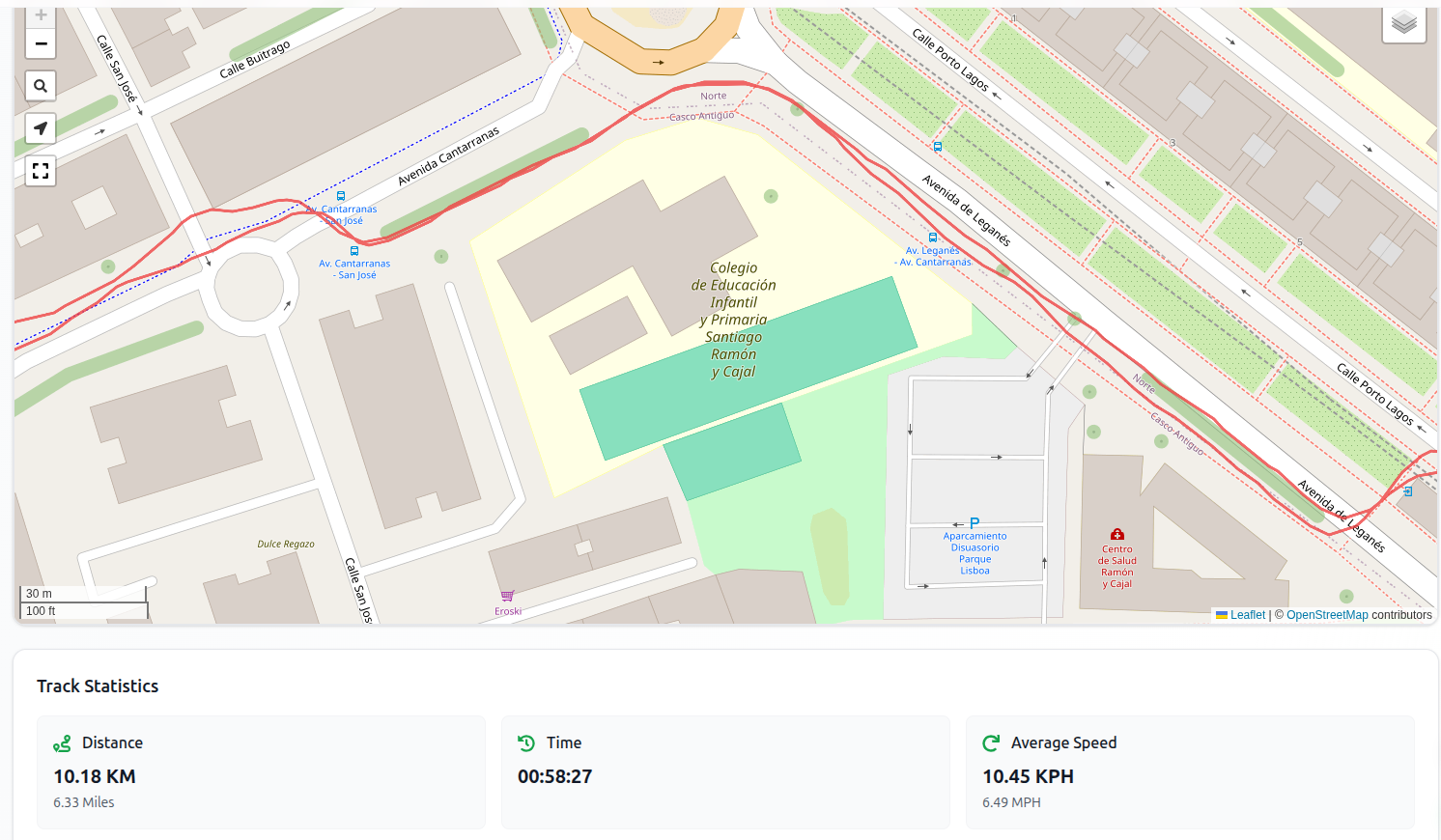
- Vertical 1. Watch showed 10.18km. GPX file distance 10,18km. Strava corrected distance 10,18km:
- Race 2. Watch showed 10.10km. GPX file distance 10,21km. Strava corrected distance 10,20km:
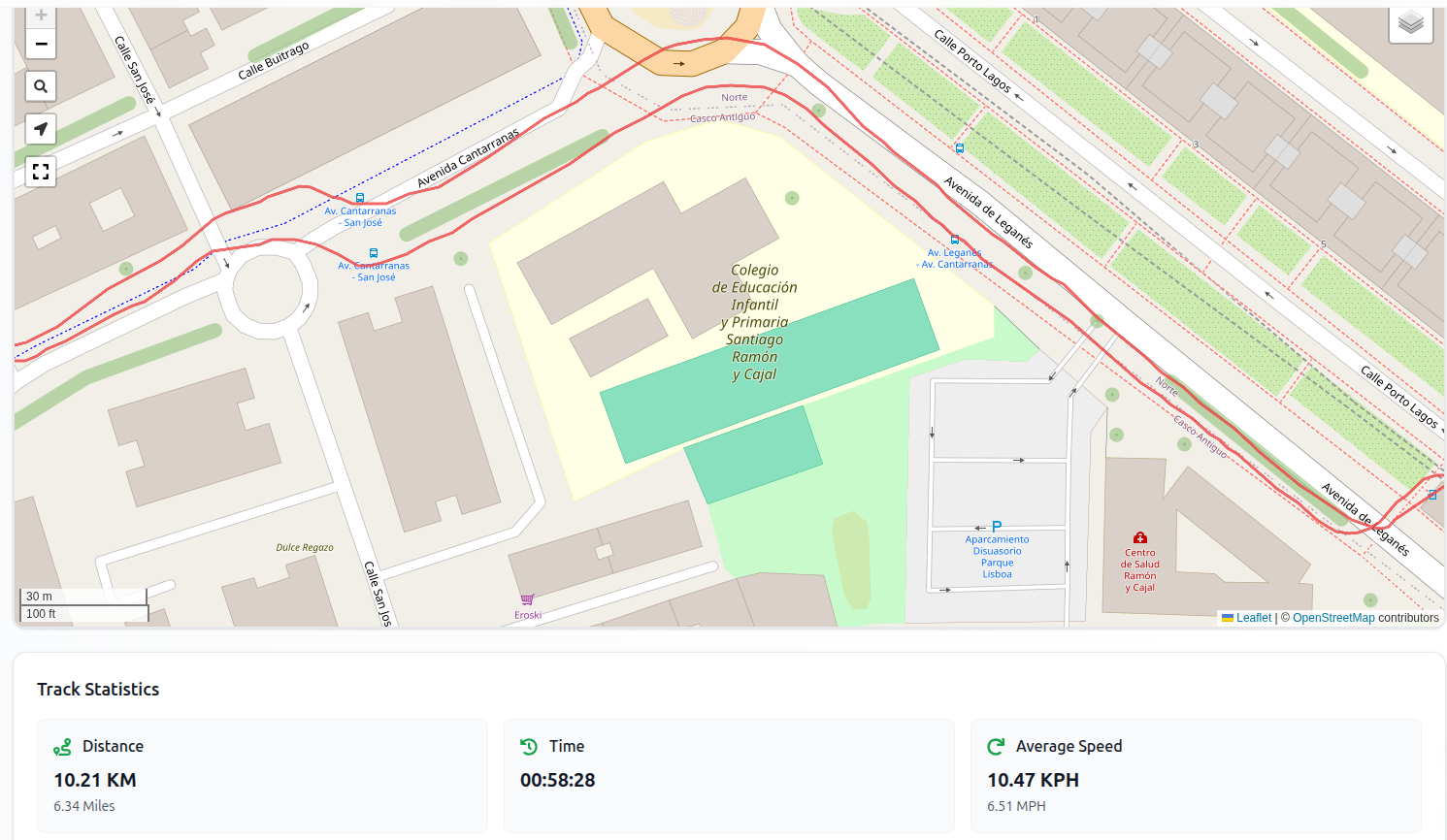
So, although difference is less than in previous activities, the behavior is the same. Race 2 shows less distance (~1%) than Vertical/RaceS and tracks are less accurate, with more difference/separation between lines (Vertical tracks are more “aligned”).
Race 2 is a good watch, GPS accuracy is good altough It doesn’t seem as accurate as its predecessors, and other competitors watches, in terms of GPS accuracy. Similar results regarding accuracy are also mentioned in some of the online reviews.
I’ll test again this weekend in hilly terrain, which seems to show more differences, and I’ll make a decission. -
 J jjpaz referenced this topic on
-
@jjpaz
Yesterday I tested the behaviour of the new firmware on terrain with a bit more elevation: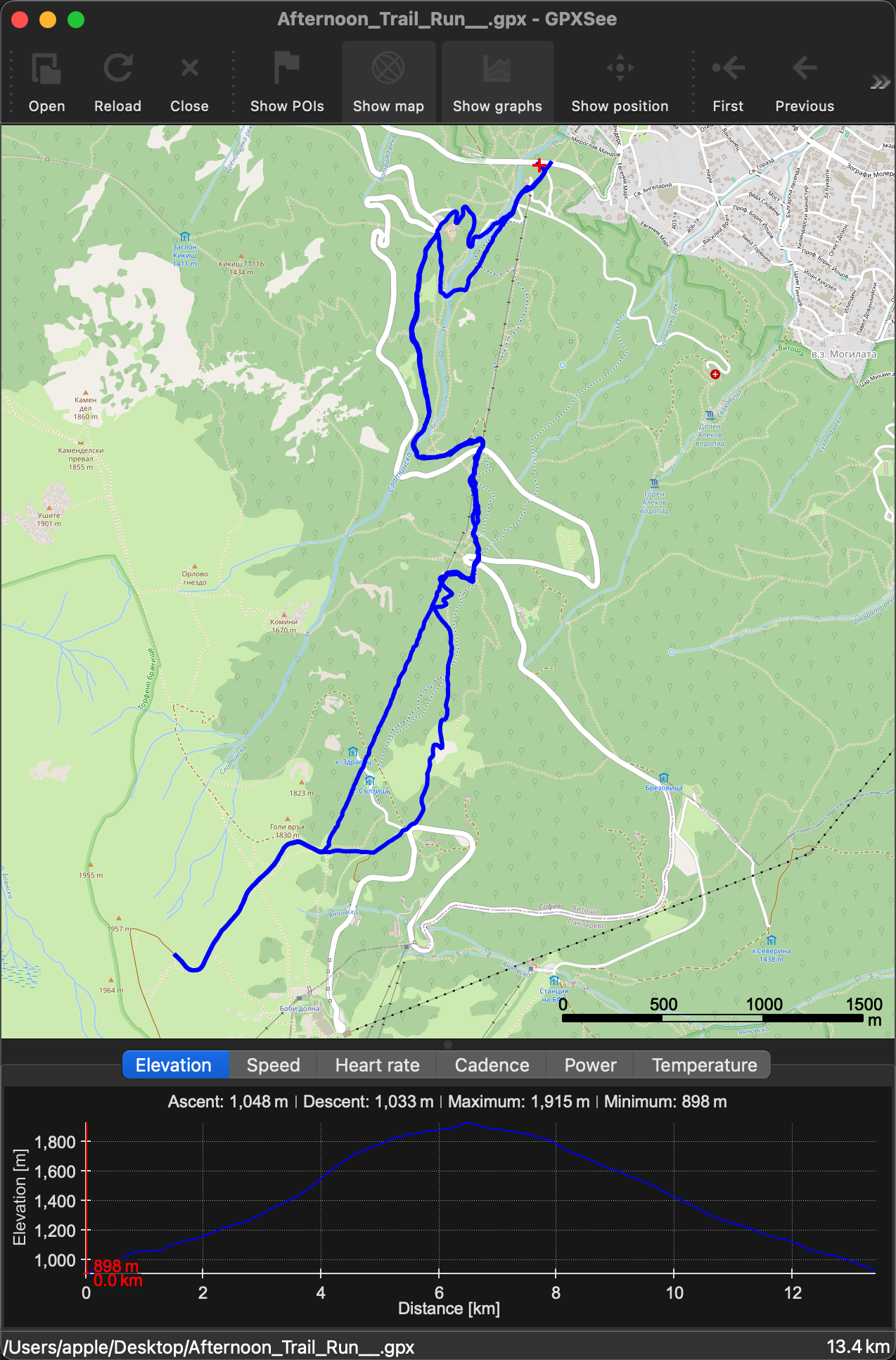
Race 2 v2.50.26
Distance: watch: 13.15km, GPX: 13.40km, Strava corrected: 13.40km
Ascent: watch: 1023m, GPX: 1048m, Strava corrected*: 1003m -
After 3 activities after firmware update, it seems that both watches are closer in distance, altough Race2 keeps showing less distance (around 1% less).
Example from saturday run, ~12.4km, flat easy run.
- Vertical: showed 12.41km. GPX file 12.42km.

- Race2: showed 12.30km. GPX file 12:43km:

According to GPX file data, both watches recorded similar GPS points, laps and distances. If you compare GPX data track, very very very similar.
So, I use Garmin Connect to compare the FIT files downloaded from Suunto App, with the activities data from watches. This is the comparison result:

Distance is different (as shown in every watch) but, if you push the “play” button to show the 2 tracks in “real time”, they are practically equal in all the activity, similar positions, altitudes,…
So, it seems clear that every watch algorithm is calculating different. Which of them is more accurate? Is Race2 cutting distance or is V1 adding distance?

On sunday, similar behavior. 100m difference in 10K activity. Both tracks where similar and both GPX files very very close (I finished activiy in Race 2 several seconds after V1, so 20-30m more distance added in comparison).

-
@jjpaz Thanks for posting these results and continuing to dig into this topic. I find it quite interesting since I used to think that Suunto watches, in general, measured just a bit long. There was a time when Suunto’s GPX traces were a bit “jiggly” (some people referred to it as “zig-zagging”) and the assumption was that these wiggles added a slight increase to an activities overall distance.
However, over the past year, beginning with software 2.39.20, a fair amount of smoothing has been added to the traces and I’ve come to regard Suunto’s distance accuracy among the best. (I commented on this change over here. You’ll notice in the example I gave how the Vertical added slightly to the GNSS distance, presumably due to 3D distance, and the 955 subtracted from it, presumably due to the applied algorithm based on pace, cadence, stride length, etc.)
I find it interesting that, after working so hard to perfect their GNSS accuracy and tracing, Suunto has chosen to apply further distance calculations based on… who knows.
-
I may have to backtrack my observation that Suunto used to use GNSS distance alone to calculate activity distance. I just went back and looked at some older “Running” and “Walk” activities (using the new & improved Quantified Self) and noticed that sometimes activity distance was actually shorter than GNSS distance, even for older models like the SV1, 9PP, and even 9P. Not by much, perhaps only 20-40m over 5km in certain cases, but something nonetheless.
I’m mostly a trail runner, though. For these activities, GNSS distance and activity distance almost always align or activity distance is slightly longer due to elevation gain/loss.
Perhaps all Suunto watches do share the same distance algorithm (which makes sense), but the newer models are registering less-accurate GNSS accuracy and therefore applying more distance correction?
-
Hi all
I share my last test results. Yesterday evening, wearing Race 2 in left arm and, this time, Race S in right arm, to compare Race 2 against Race S instead of Vertical. Objective: ~10K flat easy run in one of my usual circuits.
Results:
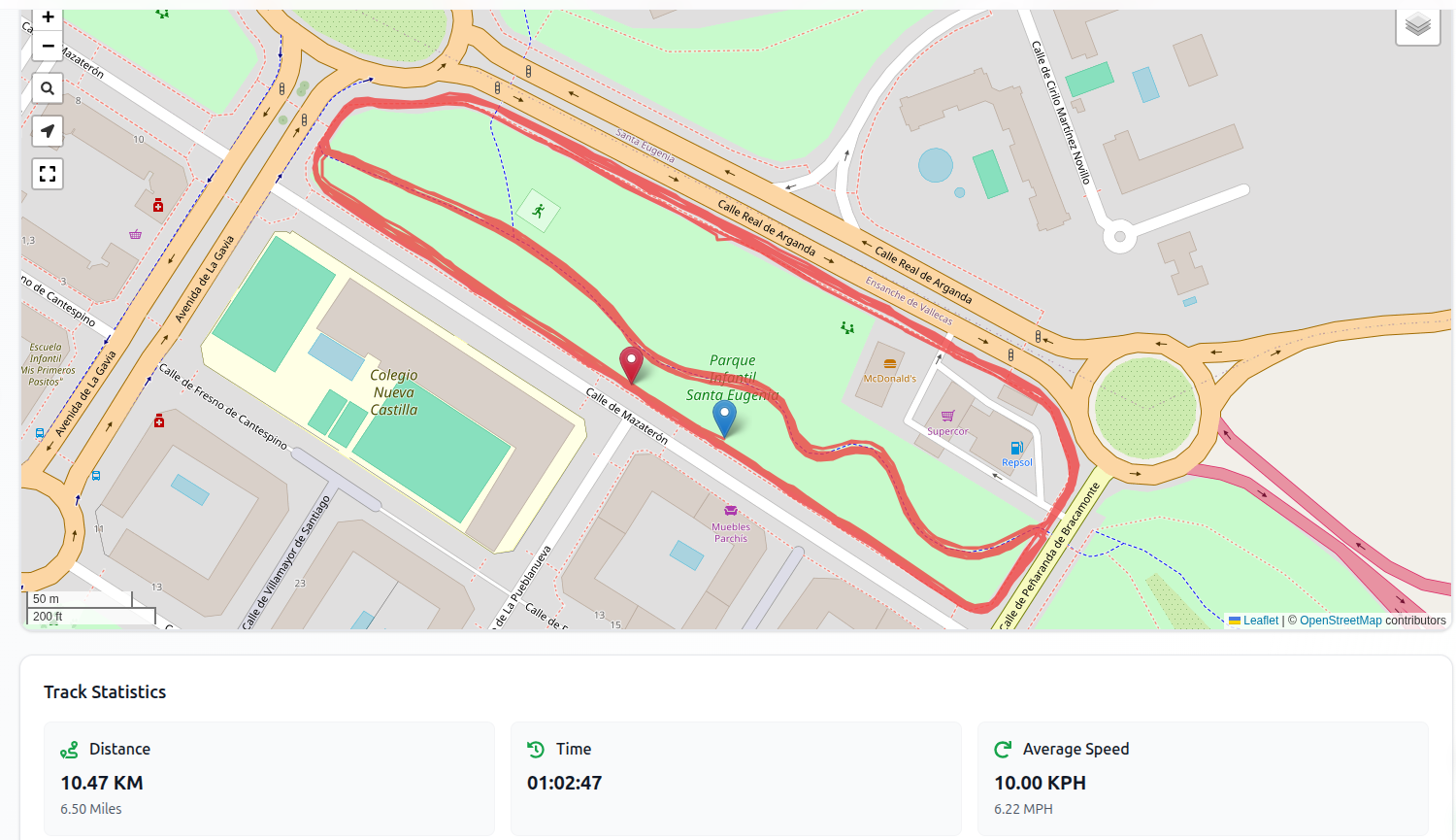
- Race S: showed 10.46km. GPX file (and Strava corrected distance) 10.47km.
- Race 2: showed 10.30km. GPX file (and Strava corrected distance) 10.43km.
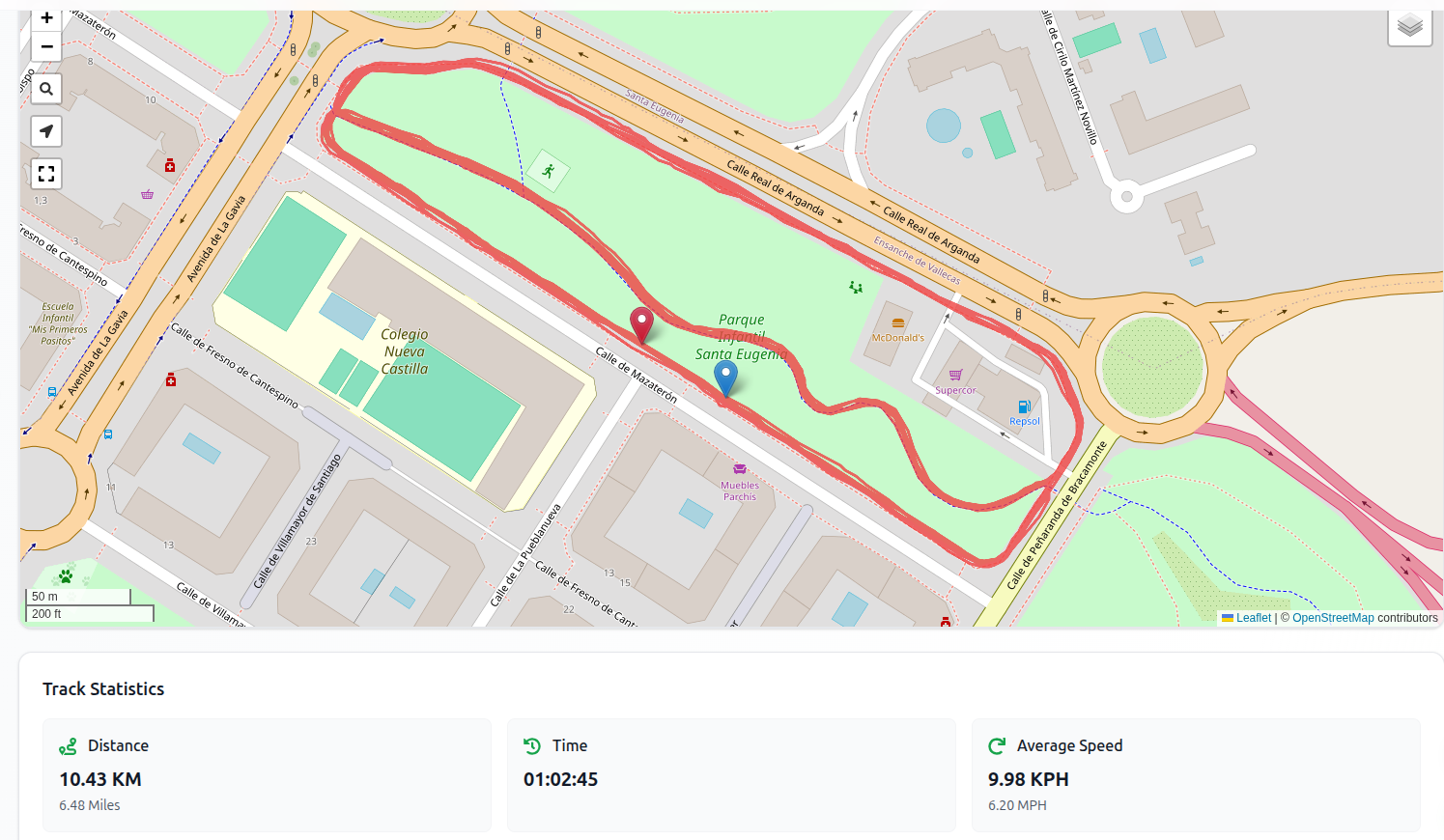
As on other occasions, according to GPX file data, both watches recorded similar GPS points, laps and distances. If you compare GPX data track, very very very similar.
Then, analyzing FIT file with data processed by watches differences appear:

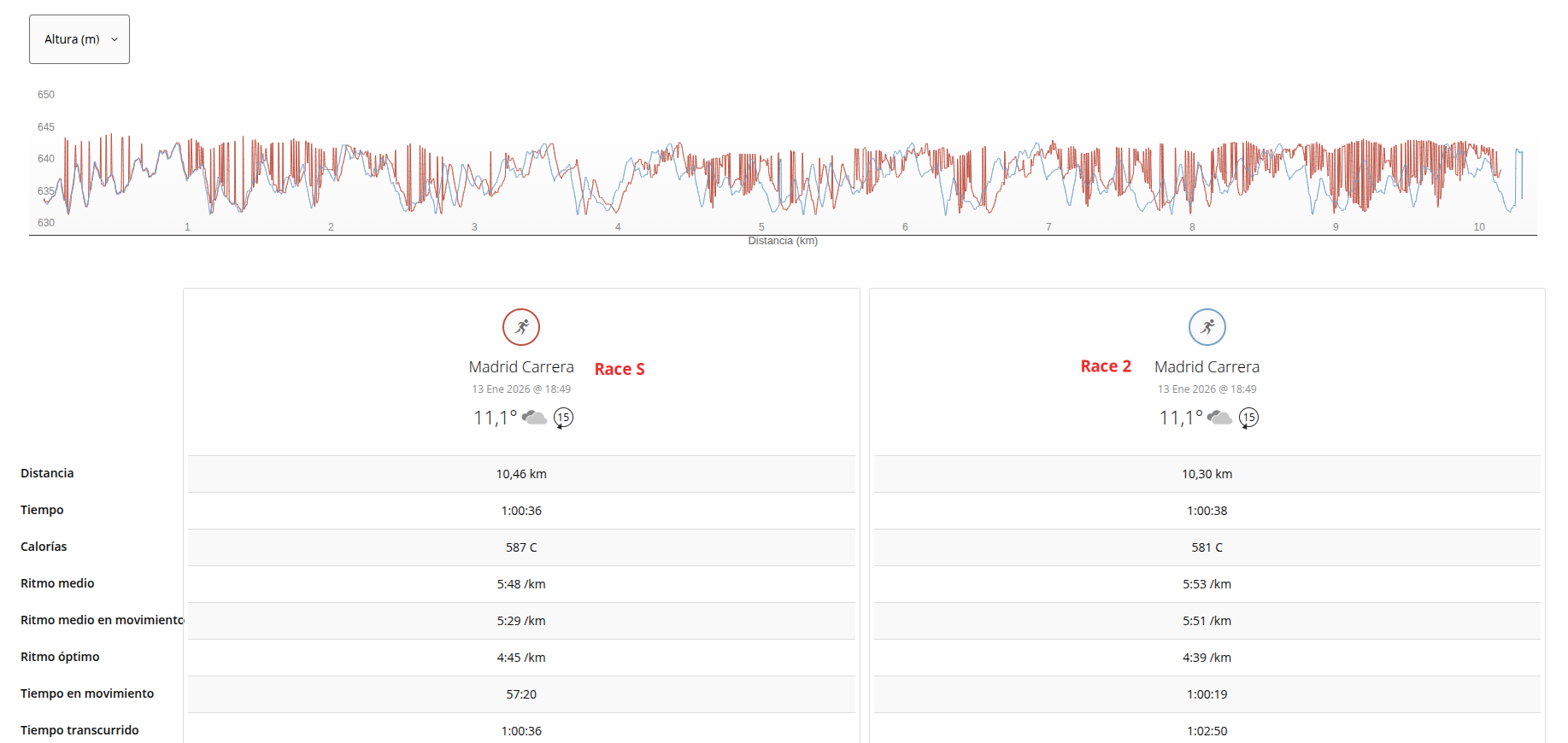
As you can see it seems that Race S was affected by wind (up downs in altitude graph) but this elevation changes were perfectly filtered by the new ascent algorithm, so perfect in that funtion.
Then, you can see that both watches were almost identical until km 2. In this moment the distance (as tou can see in the altitude graph) starts shifting and the difference in distance increases every km during the activity.Results: after 10.3km (according to Race 2) theres a 170m difference between the 2 watches (1.5% difference). This is 6sec/km difference in average pace and 9-10W difference in average power. Is this too much? Is too less?
So, Race S shows a similar behavior than Vertical. Distance showed and measured is closer to the GPX file distance, and Race still remains calculating in the “short way”.
Is Race 2 more accurate then previous models? Are previous models more accurate? Is my Race 2 faulty altough GPX file data (GPX measured points) look OK? Am I a paranoid? What do you think? I think Race 2 is filtering data and “shorting” distances.
Some of you have compared accuracy between different devices? One of my decission points to choose Suunto was accuracy, prior to features. If accuracy now is at “Amazfit” level (joke) that point is lost.
-
I’ve been “playing” with ChatGPT and Gemini, comparing FIT files, GPX files and differences and discrepances between data in activities. GPX files show data recorded every 2 seconds (filtered), and FIT file record all data measured from watch sensors every second, so is the more accurate data.
It’s been very productive. I share some “higlights” when comparing FIT files:I've analyzed the RAW data from the two FIT files you uploaded. It's a very interesting comparison between two different models: a Suunto Race 2 (file 10f9...) and a Suunto Race S (file 439e...). Although they performed the same activity, there are key technical differences that explain the discrepancy in distance: 1. Summary of Final Distance Suunto Race 2: 10,371 meters (10.37 km) Suunto Race S: 10,461 meters (10.46 km) Difference: 90 meters, which represents an error of 0.86%. In the world of sports GPS, a difference of less than 1% is considered acceptable, but analyzing the data reveals why this occurs. 2. Differences in Cadence and Stride Length Here's the most revealing point of the analysis: Suunto Race 2: Average cadence of 87 rpm and a total of 5,128 steps. Suunto Race S: Average cadence of 85 rpm and a total of 5,151 steps. Analysis: The Race S recorded 23 more steps than the Race 2 despite registering a slightly lower average cadence. This indicates that the Race S's motion algorithm (accelerometer) was more active or interpreted the movement more sensitively. Since Suunto uses FusedSpeed (combining GPS with steps), these extra steps inflate the distance. 3. Altitude and Barometric Sensors The sensors also show different terrain readings: Race 2: Altitude range from 639.2 m to 645.6 m (6.4 meters of total elevation gain). Race S: Altitude range from 641.0 m to 645.8 m (4.8 meters of total elevation gain). Impact: The Race 2 detected more variations in the terrain. If the profile had many turns or gentle ups and downs, the watch that detects more "noise" in the altitude or positioning tends to add more meters due to the hypotenuse calculation (3D distance). 4. Temperature and Hardware Race 2: Average temperature 20°C. Race S: Average temperature 21°C. Although it may seem irrelevant, the Suunto Race 2 and Race S have different antenna sizes and case designs. The Race S is smaller, which sometimes affects the GPS antenna gain under difficult coverage conditions (such as trees or buildings). Conclusion: What is the error? The 90-meter difference is mainly due to: Step counting algorithm: The Race S counted more steps, which, in areas with less clear GPS signal, adds extra distance. Route smoothing: The Race 2 appears to have been more conservative and applied a more aggressive route "cleaning" filter, eliminating small zigzags that the Race S did include. What type of terrain did you run on? If it was an area with many buildings or tight turns, the Race 2 is usually more accurate because it filters the error better; if it was open countryside, the actual distance was likely somewhere in between. ----- Difference in Turn Sampling On tight turns, the key is how often the watch records a point: Suunto Race 2 (10,371 m): It appears to have applied a stronger smoothing algorithm. When detecting sharp turns, the watch tries to "clean up" the trajectory. If the filtering is too aggressive, it "cuts" the turn (cuts the string), which shortens the total distance. Suunto Race S (10,461 m): By recording more total steps (5,151 vs. 5,128), its accelerometer was more active. On turns, arm movement is more erratic; the Race S interpreted this extra movement as forward motion, while the Race 2 likely filtered it as arm swing noise. 3. FusedSpeed in Action As mentioned, Suunto combines GPS and an accelerometer. On a tight turn, the GPS speed drops momentarily (due to the abrupt change in direction). In that second, the watch relies 100% on the accelerometer. The fact that the Race S has a lower average cadence (85 vs. 87) but more total steps suggests that it recorded movement for a longer period or more sensitively during turns, which ultimately "inflates" the distance compared to the Race 2. 4. Hardware and Antenna The Race S is a more compact watch. The Race 2 has a different structure that can accommodate an antenna with a different orientation. On tight turns, the body sometimes blocks the view of some satellites (shadow effect). If a watch loses a satellite for half a second during a turn, the algorithm has to "guess" the trajectory, and that's where the distances diverge. Verdict summary: The Race S (10.46 km) likely overestimated slightly due to the greater sensitivity of its accelerometer during turns and arm swing. Race 2 (10.37 km) probably underestimated the distance slightly by "cutting" corners using its filtering software to avoid zigzagging. Which felt more realistic to you? Typically, on circuits with many twists, the actual distance is usually right in the middle, or closer to the clock with the cleanest line (fewer spikes) if you were to see them overlaid on a map. --------- Me: "In the previous comparison between the Race 2 and Vertical (10.12km vs. 10.18km), the Race 2 also showed 10.10km, meaning it also underestimated the distance measured in the FIT file." This is precisely the pattern of behavior of Suunto's algorithms. As in the previous case, the Suunto Race 2 applies a "post-processing" at the end of the activity that tends to be more conservative than the raw data it records in the FIT file. Here's an analysis of why the watch showed 10.10km even though the FIT file contains 10.12km: 1. The Algorithm's "Closing Adjustment" The FIT file records the accumulated distance point by point. If you add up those points, you get 10,122 meters. However, the watch (Race 2) performs one final validation when you press "Save": Micro-oscillation filtering: The watch identifies small lateral movements or GPS signal bounces that the FIT file has already recorded, but which the final algorithm decides are "noise." Result: The watch "cleans up" the trajectory and rounds down based on what it considers the most likely running line. In this case, it removed about 22 meters from the final measurement. ------- That 22-meter difference (from 10.12 to 10.10) is what makes you visually feel like the watch is "taking away" distance. 3. Why didn't the Vertical (10.18 km) underestimate as much? The Suunto Vertical has a physically larger antenna and generally has greater confidence in its GPS signal. The Vertical recorded 10,179 m on the FIT and probably showed you something very close to 10.17 or 10.18 km on the screen. With a more stable signal and a more accurate barometer (remember that the Race 2 experienced drift on the descent), the Vertical doesn't feel the need to "underestimate" the distance as much at the end because it has more confidence in the quality of the recorded points. Summary of the Race 2's performance: The Race 2 seems to be configured to be extremely cautious. It prefers to show you a slightly shorter distance (10.10 km) rather than risk giving you a distance inflated by GPS noise. On circuits with tight corners, this conservatism is more noticeable, because the watch interprets part of the turn as a possible positioning error and corrects it in the final calculation.So, it seems very clear that Race 2 sensors and algorithm are different from previous watches, maybe because is not so accurate regarding GPS measurement, is more cautious and less confident in GPS signal and apply filtering in postprocessing when saving de FIT File. In my activities Race 2 is “cutting” distance from the distance measured in his own FIT file (20, 30, 50m). RaceS and Vertical doesn’t cut/filter that FIT distance and show that as final distance.
I’ll try it again in non running/walking activities, like cycling, because in that activity I suppose that acelerometer and FusedSpeed is not mandatory.
Sorry for the big message…
-
Comparing several FIT files (Race 2 and Vertical) this is “The IA summary”

Summary of detected behavior In activities with pauses and repeated segments: The Vertical prioritizes raw accuracy: if you move, it counts it. If there's a curve, it tries to follow the path you took. The Race 2 prioritizes track clarity: it prefers to trim the track slightly (14.12 km) to avoid GPS noise giving you an inaccurate distance reading, especially after a pause or in areas you've already traversed. Final Verdict of your comparison: The Suunto Vertical performed like a precision "tank": there's hardly any error between ascent and descent, and it doesn't hesitate to count every meter you move, even during pauses. The Suunto Race 2 is an "optimizer": its priority is that the track on the map looks perfect and without spikes, so when in doubt (during pauses or sharp turns), it prefers not to add distance. -
@jjpaz Well, as I’m sure you do, I tend to take any AI response with a very large grain of salt. For instance, any reference to watch size and GPS antenna performance is bunk. Antenna design is far more complicated than “bigger is better.”
I suppose there is the possibility that there could be subtle variations in software from one watch model to the next. Although it looks like they all get the same base updates (e.g. 2.50.26 is the latest), each model actually gets a specific software package (My SV1 has 2.50.26.29840-… and the 9PP has 2.50.26.31604-…). However, I find it difficult to believe that the distance algorithms would be significantly different between watches as the AI response suggests.
We do know that the internal hardware is different between models, especially between the version 1s (Vertical, Race, Race S) and version 2s (Vertical 2 and Race 2). It’s plausible that, in an effort to conserve draw and increase battery life, the version 2s use a less active accelerometer. This would force more reliance onto GNSS accuracy and perhaps force the distance algorithm to “over compensate” and cut off more distance.
Or, perhaps it’s the opposite and the version 2 watches actually have a slightly lower-powered GNSS system forcing more reliance onto the accelerometer. After all, GNSS is the biggest sensor draw on the battery and the new watches need all the reserve they can get to power the newer, larger AMOLED screens. I could also see this causing over compensation and shorter distances. This theory would also squares with the slight decrease in GNSS accuracy that we’ve observed in the newer models.
@jjpaz It may be that few users actually care about such subtle differences, but I’m with you and would love to get to the bottom of this as I’ve always been a stickler for distance accuracy. Thanks for sharing your findings.
-
@duffman19 Thanks for your comment.
Yes, I take the AI’s results with a grain of salt. The thing is, what it indicates aligns very closely with my feelings and what I’ve seen in Race 2.It’s clear that nowadays "sport/smart"watch users are more concerned with the accuracy of the optical sensor, clean tracks, health features and watchfaces, rather than the absolute precision of GPS metrics like they were a few years ago. DC_Rainmaker himself no longer shows distance comparisons in his reviews to test GPS accuracy between watches, only images of the tracks to see if they are clean.
We now take for granted that this data has reached an incredible level of accuracy, that all brands are there, and people are looking for other things.
In my case, it’s a bit of “occupational hazard” and a desire to investigate further and learn during the process.Maybe with more activities the GPS+Acelerometer twin will be more aligned with my Vertical and RaceS data. I’ve been using Race 2 only for two weeks now. We’ll see how evolves.
Hope you find this thread interesting

-
After analyzing several activities using two watches simultaneously for comparison and running all the raw data through a pair of AIs, these are the conclusions obtained: aggressive post-processing filter within the FusedSpeed algorithm or a calibration bias in the Race 2 accelerometer.
It seems that Race 2 is more agressive/conservative than previous Vertical/RaceS algorithms.FYI, If you feel like reading for 1 minute:
TECHNICAL REPORT: Distance and Cadence Discrepancy (Suunto Race 2)
Subject: Systematic Underestimation of Distance and Cadence: Suunto Race 2 vs. Suunto Vertical/Race S (FusedSpeed/Accelerometer Algorithm Analysis).- Problem Description: After conducting multiple comparative tests (dual-watch setups, wearing both devices on the same wrist to eliminate arm-swing variables), a consistent pattern of distance underestimation has been identified in the Suunto Race 2 (49mm) compared to the Suunto Vertical and Suunto Race S. These tests have been carried out in various activities and, in all of them, the difference in distance ranges between 90-160m in 10km of activity.
The evidence suggests that the discrepancy does not originate from the GNSS sensor itself (the recorded GPS tracks are accurate), but rather from an overly aggressive post-processing filter within the FusedSpeed algorithm or a calibration bias in the Race 2 accelerometer.
- Comparative Test Data example (Same Wrist - Jan 15th, 2026):
Course: Urban circuit with frequent turns and 4 moderate pace intervals.
GPS Mode: Performance / Dual-Band (All systems) on both devices.
FIT File Distance (Race 2): 9.55 km
FIT File Distance (Race S): 9.62 km
Calculated GPX Distance (Raw coordinates): 9.62 km
- Key Technical Findings:
GPX vs. FIT Gap: While the Race S and Vertical FIT distances align almost 100% with the distance calculated by the sum of latitude/longitude coordinates (GPX), the Race 2 shows a loss of ~70 meters. This confirms that the device is discarding real GNSS-provided distance based on conservative accelerometer readings.
Cadence and Stance Time: Despite being on the same arm, the Race 2 consistently reports a higher cadence (174 spm vs 172 spm in Race S). This discrepancy suggests that the Race 2’s heavier chassis (49mm) might be affecting impact detection thresholds, causing the software to misinterpret movement dynamics.
Pace Transition Smoothing: The distance loss is most significant during pace changes and sharp turns. The Race 2 applies a higher level of “smoothing,” often treating legitimate acceleration or cornering as sensor noise, resulting in “shortened” tracks.
- Inquiry for Support: Is there a known calibration offset for the Race 2 (49mm) accelerometer? Are there plans for a firmware update to align the FusedSpeed sensitivity of the Race 2 with the more transparent and accurate performance observed in the Suunto Vertical and Race S models?

-
My Suunto Race 2 Technical Test - Final comments:
I have conducted a side-by-side analysis of the Suunto Race 2 against the Suunto Vertical and Suunto Race S across multiple activities during more than 2 weeks.
Suunto Race 2 systematically under-reports total distance by 0.5% to 1.5% compared to reference devices (Suunto Vertical and Suunto Race S).
Analysis of RAW FIT files confirms that this is not a GNSS reception issue. The Race 2 records valid GPS coordinates but seems to discard valid distance data during post-processing. In every activity analyzed, the Suunto Race 2 records a “Session Summary” distance that is significantly lower than the mathematical sum of its own recorded GPS coordinates.
Pattern: The device records the correct path (lat/long points) but the internal software filters out valid distance.
Example: The Race 2 RAW file contains GPS coordinates summing to 11.35 km, yet the final session summary displays 11.20 km.
Comparison: The Suunto Vertical and Race S show a near-perfect match (99.9% accuracy) between their GPS point sum and the displayed distance.The Race 2 consistently reports a higher average cadence than the reference units, likely due to hardware inertia or accelerometer sensitivity.
Pattern: Race 2 reads +2 to +4 spm (steps per minute) higher than Vertical/Race S in every activity.
Consequently, the device systematically calculates lower power (-7 Watts) and shorter distance (-0.7% to -1.5%) compared to reference devices (Vertical/Race S), despite identical GPS tracks.Do you have this difference between devices? Is the current performance acceptable for a flagship device when compared to the older Vertical and the cheaper Race S?
Suunto Vertical Titanium Solar, Suunto Race 2 Ti & Suunto Wing.
-
J jjpaz referenced this topic on
-
@jjpaz No comment about the distance, but when I first moved to Race S from Garmin Fenix 7X I noticed that it reported noticeably fewer steps than Garmin.
Later Race / Race S step accuracy when running was improved but my impression was that it still remained too low, so perhaps Race 2 counts steps more accurately.
Here is an example from a recent 14 mile run on trails. The number of steps is 23886. Historically, when running on flat road I did about 1600 steps per mile and on technical trails - closer to 2000 steps per mile. When walking - also about 2000 steps per mile. This trail run was more runnable but still with a decent amount of ascent, some stairs and some walking sections, etc. 1700 steps per mile feels a bit short.
-
@sky-runner said in Race 2: GPS and distance accuracy vs previous Suunto models:
@jjpaz No comment about the distance, but when I first moved to Race S from Garmin Fenix 7X I noticed that it reported noticeably fewer steps than Garmin.
Later Race / Race S step accuracy when running was improved but my impression was that it still remained too low, so perhaps Race 2 counts steps more accurately.
Here is an example from a recent 14 mile run on trails. The number of steps is 23886. Historically, when running on flat road I did about 1600 steps per mile and on technical trails - closer to 2000 steps per mile. When walking - also about 2000 steps per mile. This trail run was more runnable but still with a decent amount of ascent, some stairs and some walking sections, etc. 1700 steps per mile feels a bit short.
About steps/cadence: in all my activities during these 2 weeks, Race 2 have measured less steps and higher cadence than Vertical and Race S and I think there’s something wrong. Both watches in same arm.
For example, yestarday’s activity:
- Race 2: 9,02km. 8736 steps. 87rpm.
- Race S: 9,08km. 8743 steps. 86rpm.
Saturday’s activity:
- Race 2: 11,21km. 10639 steps. 87rpm. 1h02’38".
- Vertical: 11,26km. 10647 steps. 85rpm. 1h02’37".
So, taking this into account, with same distance and duration, how can I take less steps and faster (higher cadence)? I have asked Gemini about this inconsistency:
"The data recorded by the Suunto Race 2 during the 62:38 session shows a critical mathematical inconsistency between ‘Total Strides’ and ‘Average Cadence’.
The device recorded a total of 10,639 steps. Mathematically, over a duration of 62.63 minutes, this results in an actual cadence of 169.8 spm (84.9 rpm). However, the watch reported an Average Cadence of 87 rpm (174 spm). For this average to be correct, the device should have registered approximately 10,900 steps, which is not the case.
This proves that the Suunto Race 2 is not deriving its ‘Average Cadence’ from the ‘Total Strides’ counter. Instead, it is using incorrectly averaged instantaneous values. This ‘ghost cadence’ (87 rpm vs. the real 85 rpm) directly misleads the FusedSpeed algorithm: the watch ‘believes’ the runner is taking more steps than they actually are, assumes a much shorter stride length, and consequently applies an artificial reduction to the total distance (11.21 km vs. the 11.26 km recorded by the Suunto Vertical)."
WOW
-
@jjpaz I am really impressed with the work you have done. I had posted in Reddit thread about the conservative distance race 2 is giving, ie I am also getting about 80-130m distance shorter for a 10km run compared to coros pace pro and apex 4. I used to have both race S and Race and both actually have very similar distances logged and are longer by about 80-130m compared to Race 2 (for a 10km run). While I am not disputing that Race 2 could be more accurate in distance, I do think that there could be a smoothing effect in logging of distance . It’s not a big deal but it does bug me quite abit. Sure hope a software update will help resolve this .
-
@leafs93 said in Race 2: GPS, cadence and distance accuracy vs previous Suunto models:
@jjpaz I am really impressed with the work you have done. I had posted in Reddit thread about the conservative distance race 2 is giving, ie I am also getting about 80-130m distance shorter for a 10km run compared to coros pace pro and apex 4. I used to have both race S and Race and both actually have very similar distances logged and are longer by about 80-130m compared to Race 2 (for a 10km run). While I am not disputing that Race 2 could be more accurate in distance, I do think that there could be a smoothing effect in logging of distance . It’s not a big deal but it does bug me quite abit. Sure hope a software update will help resolve this .
Yes, Race 2 seems more conservative than Vertical or Race S in terms of distance calculation. These two are more confident in GPS points and cañculated distance is close to the GPS raw distance. Maybe they are a bit generous. Race 2 filters/discard around 1% of the raw distance. What’s more accurate? May be perfection is in the middle?
Have you moticed difference in cadence? Do you have more cadence (+2rpm) with Race 2 compared to other watch (wearing both in same arm)?
Now I’m training only with one watch, Race 2, and don’t compare to other.
-
@jjpaz My recent experience with Race 2 (and the last 2 firmware versions) confirms your findings. When running on the same route, I came to know where to expect the lap marks and I noticed that Race 2 has some delays, and the whole distance counted at the end of the activity is less than what I had on the same route with various other devices (AWU/AWU3/Vertical 1/Epix Pro/Fenix 7x).
I looked into the fit files exported and that confirms your data: the GNSS distance is 1-2% higher than what I see on the screen. This seems to be the result of the recent adjustments in the firmware, the look of the track visually seems ok but I’m a bit annoyed that I’m getting lower distance and I can’t trust the device as I did in the past. Suunto may have some limitations when compared with Garmin high end watches (or the smartness of Apple Watch Ultra) but at least the GNSS and basic measurements were top (until now). Hope for a change in the next updates, otherwise I’m tempted to change device for another brand. Let’s see if the problem is at least acknowledged …
-
@Liviu-Nastasa If the difference is 1-2% on a road, I wonder what it would be on a twisty trail.