Subject: Feedback on Zone Sense accuracy: Short intervals and Zone 2 threshold shifts
-
I see a very big difference in ZS feedback based on the sport. If I do XC skiing, it says my LT1 is 158 bpm. If I do treadmill running, it says my LT1 is 128 bpm. My breathing pattern tells me my LT1 is around 142 bpm. ZS is basically ± 15 bpm for me. It’s not enough for consistent training and is still not a replacement for a lactate meter. I understand the point about day to day variability, but going from 158 bpm to 128 bpm next day seems unrealistic. I wasn’t collapsing or anything, just the usual microcycle.
-
I totally agree. While daily variability is a physiological reality—especially with factors like fatigue or heat—a 30 bpm swing is simply unrealistic.
Zone Sense should use a rolling average or a baseline from your previous sessions. It shouldn’t ‘start from scratch’ every time you switch sports. Even if the internal load differs between XC skiing and running, the algorithm needs a memory of your history to stay consistent. Without that anchor, the data becomes too volatile to trust for daily training. -
@Brad_Olwin said in Subject: Feedback on Zone Sense accuracy: Short intervals and Zone 2 threshold shifts:
ZS is primarily intended for live values and its ability to detect zones will depend on how recovered you are
In that case ZS shouldn’t be used to detect zones but that is exactly what Suunto does. It remembers the last detected thresholds and tells me about them later. For example, a few seconds ago I looked at my watch and it showed me that my Lactate Threshold is 145, which is nonsense because that is just one or two beats above of where my AT is based on multiple years of observation. I can still mostly breathe through the nose at that effort.
-
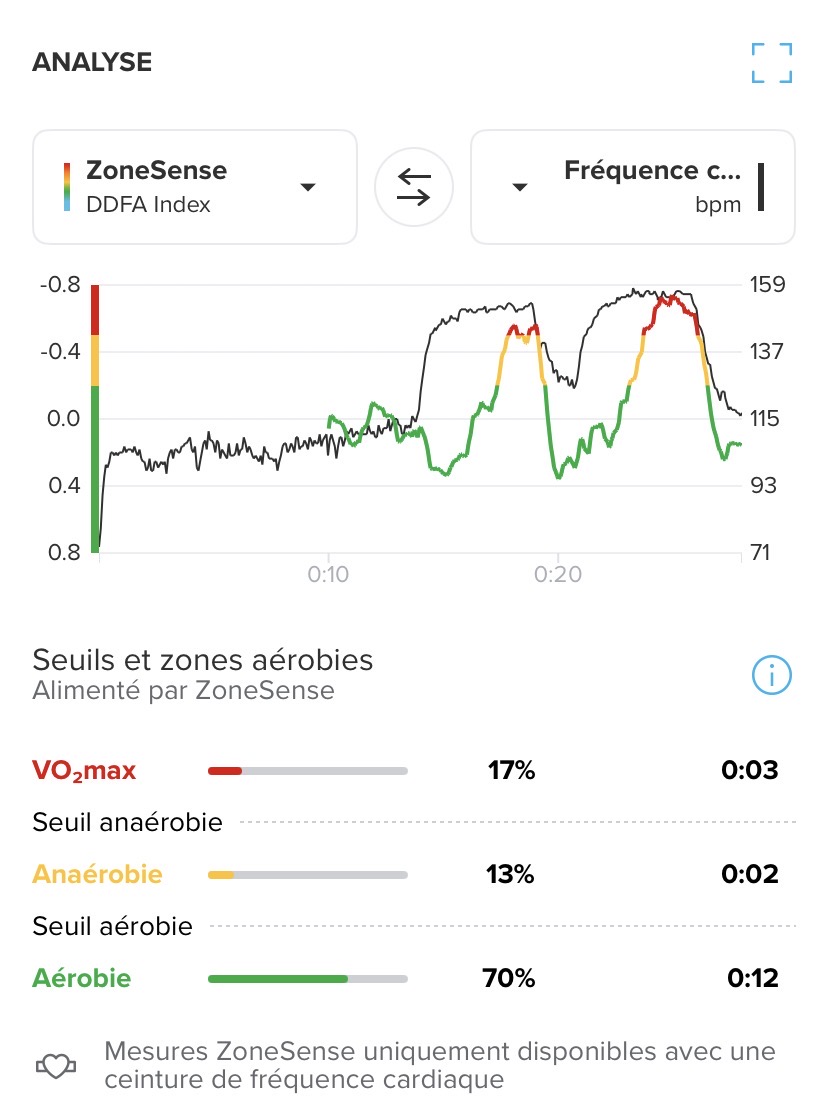
@sky-runner Treadmill session this morning: 2 × 5 minutes at 12 km/h, with 14 minutes of warm‑up at 8 km/h before the first acceleration, 2 minutes at 8 km/h between the two fast intervals, and 2 minutes of walking at 6 km/h to make a total of 28 minutes.
First issue: the Suunto Race 2 couldn’t connect to the Polar H10. So I used the Garmin HRM 200 chest strap instead, and that worked fine. Clearly, pairing problems with chest straps still aren’t fully solved.
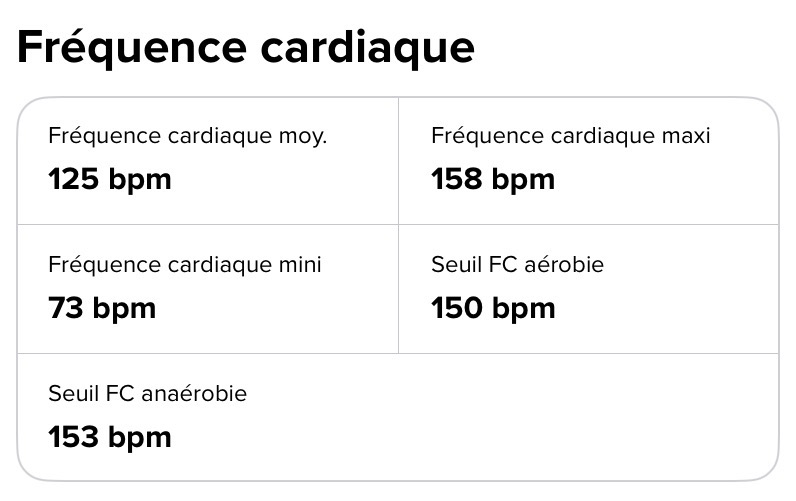
Zone Sense results: aerobic–anaerobic thresholds at 150 and 153 bpm, which doesn’t make sense. The 150 bpm aerobic threshold is consistent with Garmin’s zones. During the fast intervals I was in Zone 3, slightly below my lactate threshold. I think that’s why Zone Sense didn’t estimate the second threshold correctly — you need to go above it.
Conclusion: the first threshold is correct. Too bad that if I do an easy Zone 2 session tomorrow, it will probably calculate a second threshold that’s far too low. -
@Dieter1960 so, you have both thresholds calculated and they are only 3 bpm apart? Can you share a screenshot of this?
-
@2b2bff I too had thresholds detected at 3 bpm apart yesterday:
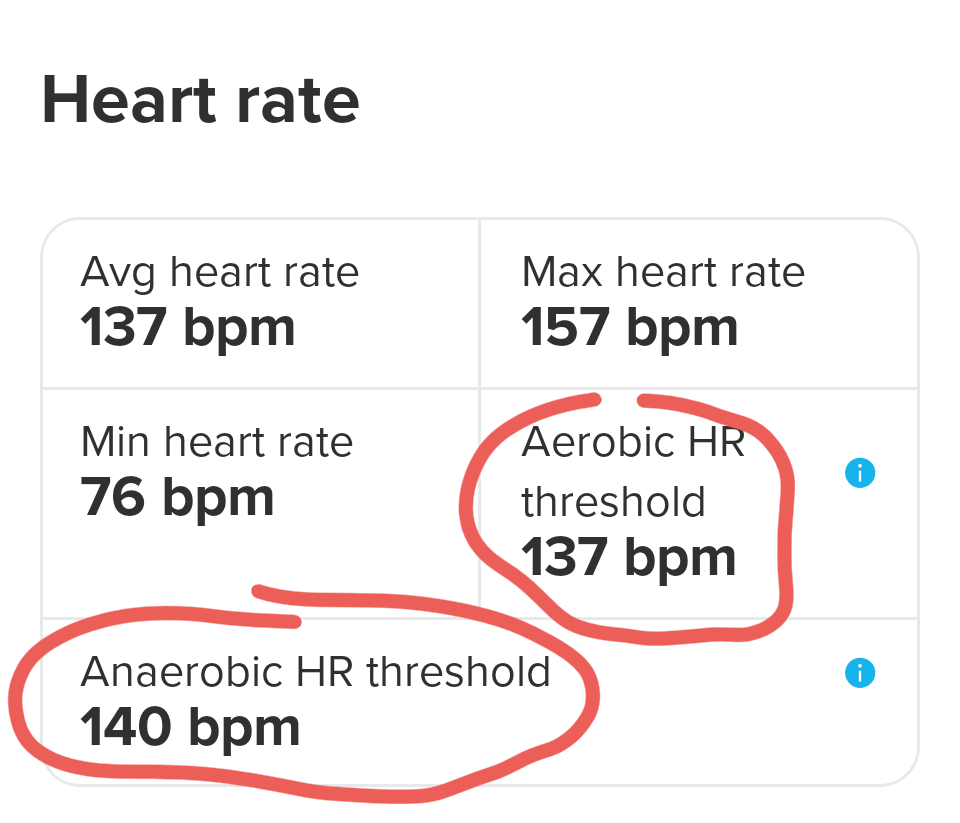
My actual aerobic threshold is at 143-144, so this is an example of ZoneSense detecting my anaerobic threshold below my actual aerobic threshold.
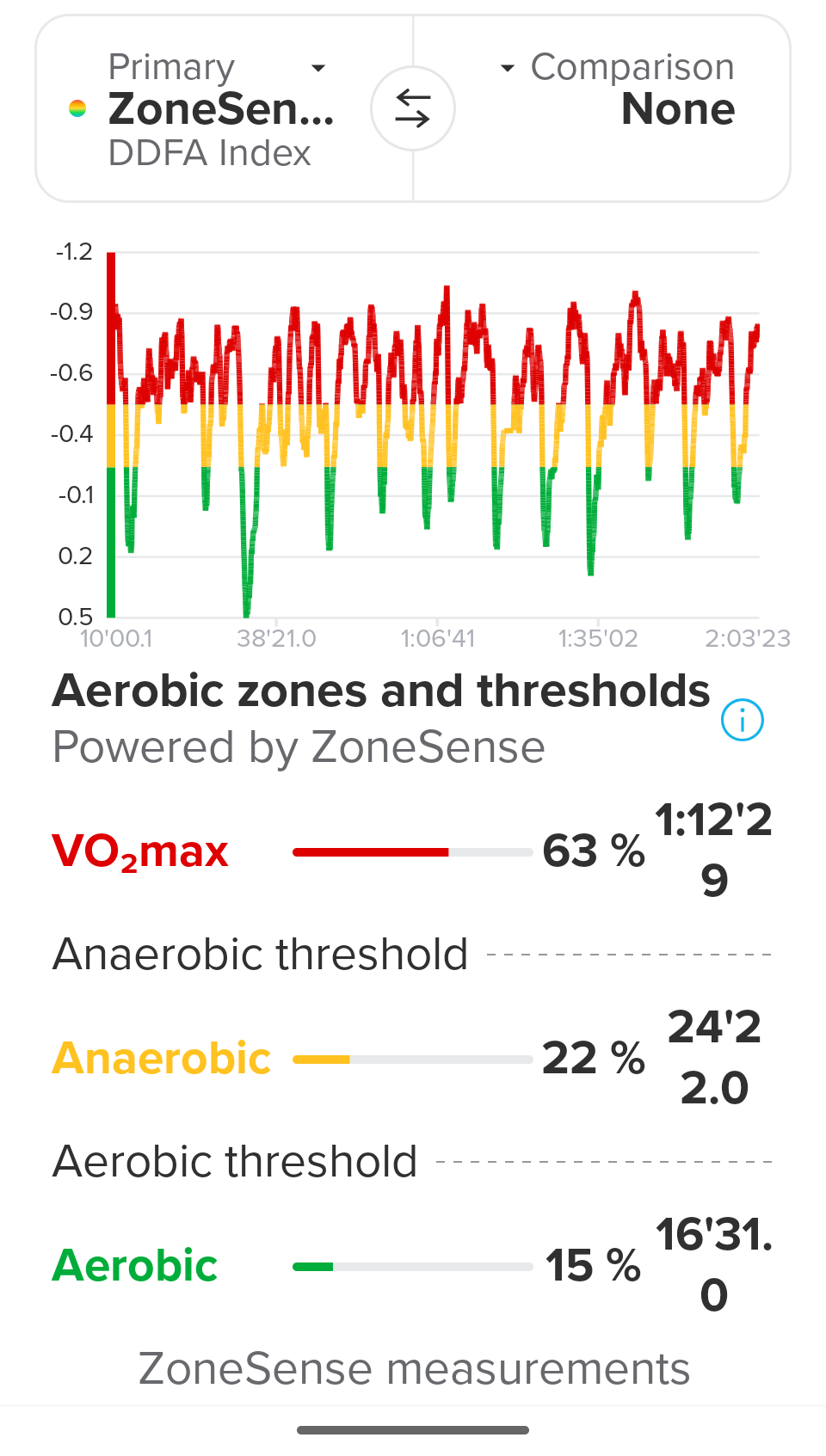
On today’s 2 hour run, which was a race like effort on hilly terrain it again detected my anaerobic threshold at 140, which makes total sense (that is a sarcasm) considering I was, according to Suunto, running at above anaerobic threshold for 63% of a 2 hour run.
Suunto: Ambit, Ambit 3 Peak, 9 Baro, Race S, Race Ti
Garmin: Forerunner 210, Forerunner 610, Fenix 6X, Fenix 7X Ti -
@sky-runner your graph does look absolutely useless, indeed. I wonder if you had 10 minutes easy effort to “warm up” ZoneSense…
It can be good, though. This has been a session of me with two segments pushing my threshold:

Graph looks good, but no detected thresholds have been recorded in the activity, what is odd.
-
@2b2bff I started to climb a steep slope 4-5 minutes into the run, and even though I walked the slope until about 10 minutes into the activity, my HR quickly raised to the top of zone 3. But arguably, ZoneSense shouldn’t be detecting thresholds in this situation.
-
-
-
Sent two images from Google Drive, don’t know if it works …
-
please, stop posting the same link. Attach the image here
-
@sky-runner There is something strange here. I rarely get an LT threshold from ZS, only when I am doing Tempo (at my LT) intervals or running intervals (above my LT). I do not get LT thresholds with typical Endurance runs done mostly in Zone2 with some Zone3.
As I have stated before my AT threshold will differ by a lot, when fresh it equals my lab-based number, done when I was well rested but when training hard my AT can be near the bottom of Z2 for me, which makes total sense as I am fatigued.
Again, I don’t think ZS should be used to set your zones unless you have a lot of data. I do not change my zones based on ZS predictions but I find ZS helpful in real time as:- Keep me from going to hard early in a long run/race as I feel good.
- To go harder on long training runs when I might slow down as I am getting tired.
To conclude, there is something wrong with your data, using ZS for a long time I have never seen what you show here. I do not know what HR belt you are using. Moreover, I don’t think that the discussion on ZS should be primarily on where zones are predicted.
Vector/T6c/Vertical 2 Ti
-
@sartoric How do you do ?
-
-
-
A simple copy-paste? Seriously? That’s it
? -
In the areas where Zone Sense marks the curve in red (anaerobic), I was clearly in zone 3. I could count or recite the alphabet without any trouble, yet the watch showed me at the absolute limit of the red zone.
-
@Dieter1960 VO2M in ZoneSense VO2M spans from your LT to your max, so potentially a large range. You could be right at LT with red ZoneSense and would be able to say a few words.
-
@Dieter1960 said in Subject: Feedback on Zone Sense accuracy: Short intervals and Zone 2 threshold shifts:
In the areas where Zone Sense marks the curve in red (anaerobic), I was clearly in zone 3
Today ZoneSense determined my LT (anaerobic threshold) at 131. That is the bottom of my Z2, just above Z1. My true anaerobic threshold is somewhere around 161-163. This is ridiculous! I was hiking up at easy effort for the first ten minutes. My muscles were fatigued after yesterday’s effort, but that isn’t the reason for it to be so wrong because aerobically I wasn’t stressed at all.