Armband and ZoneSense
-
@Gunnar, according to to Texas Instruments Technical Article from May 2018 OHRs can and do measure R-R intervals. They state:
“Here’s further detail on some of the measurements possible with optical heart rate sensors:
…
R-R interval (heart-rate variability) – The R-R interval is the time between blood pulses; generally, the more varied the time between beats, the better. R-R interval analysis can be used as an indicator of stress levels and various cardiac issues.” (page 2)I would presume that also Suunto’s OHR measure R-R intervals as they calculate night time HRV.
That being said AFAIK the R-R measurements from OHR are not good (precise) enough for ZoneSense calculations which are thus limited to ECG (chest) straps. So even if Coospo OHR, or another OHR, does broadcast R-R interval data it would probably result in wrong/not accurate ZoneSense data.
https://pmc.ncbi.nlm.nih.gov/articles/PMC8927864/
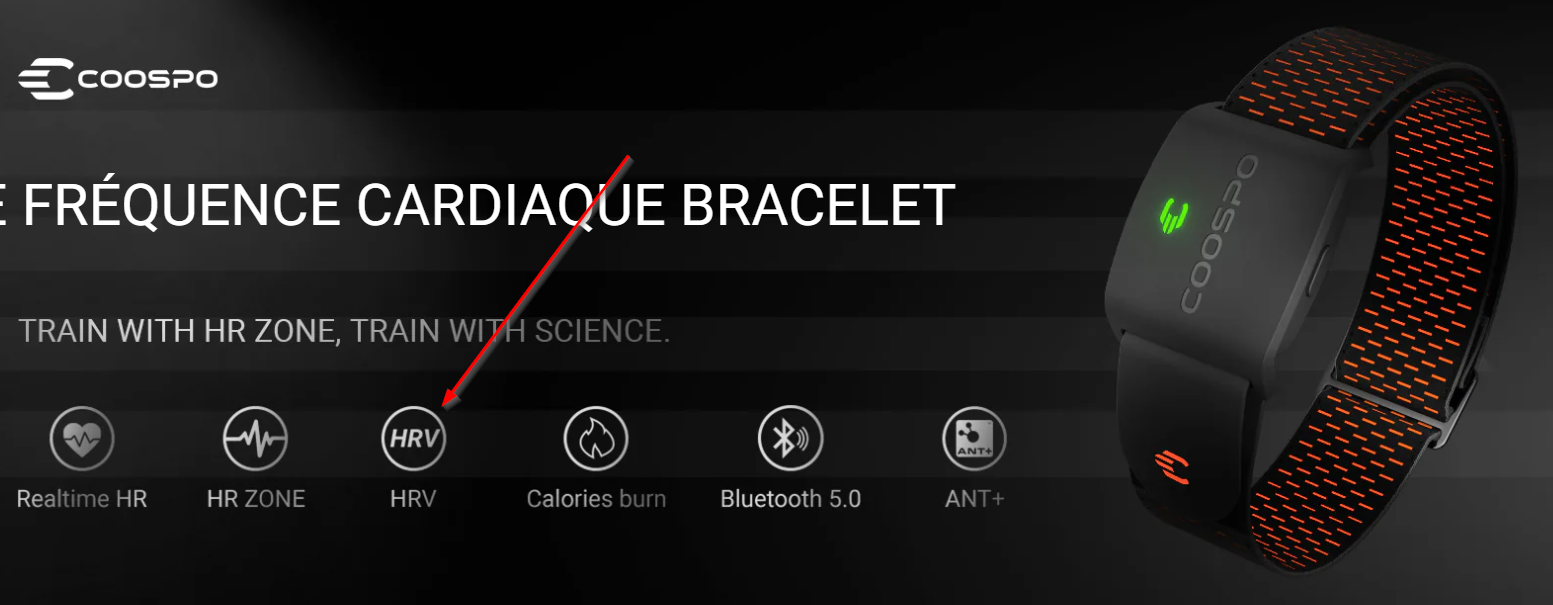
Note that the HRV marketing of the Coospo might refer only to night time HRV calcualtion (as is the case with Polar Verity Sense).
-
@ADidier I had the same sensor and tried it with ZoneSense, but it didn’t work.
-
I have the Rhythm +2 band and recently updated its firmware to the new version that supports HRV. I’ve not tested but I don’t think it’s possible to do HRV alongside HR in a workout because you have to switch to HRV mode by triple-pressing the button. The docs indicate HRV mode is for apps such as HRV4Fitness rather than during workouts.
But I’ll try and see

-
@Freezer Thank you for the detailed explanatiion. Lothar Matthäus would say “Again what learned”

-
The thing is that the OHR sensors (watch and armbands) can measure R-R doing estimations as they can measure the HR. They do not measure directly the electric pulses as the chest straps. Is for that that that they do not work with Zonesense.
-
@cosme.costa I think ZoneSense needs r-r data. I don’t know whether the watch can differ between ECG or OHR generated one. The HRM just has to deliver the r-r data to the watch to make it work.
-
@2b2bff optical HR sensors can never be as accurate as measuring the electrical signal with a chest strap. The higher the heart rate, the shorter the R-R intervals, so the measurement error of optical signal detection are a higher percentage of the R-R interval as the HR increases. This throws the math of ZS way off.
-
the raw signal picked up by chest straps is incredibly noisy. The HR monitors need to perform some serious heavy lifting to clean up the signal and track the heart. In many ways, the optical devices actually have an easier time of it. However, optical devices consume a lot of power and one way to improve power use is to drop the sample rate. When the sample rate is too low the r-r data is obviously going to be distorted. But I wouldn’t say optical HR monitors will never be accurate enough - it should be possible if there’s enough demand for manufacturers to develop high-sample-rate devices with enough accuracy.
-
@far-blue They can be noisy (who cares) if they are the most accurate and the only reliable.
-
@far-blue the R-wave is a spike in the electrical signal, therefore much more usable for measuring time passed between two spikes. The optical HR measurement looks at the blood flow in the capillaries, which will never have such clearly measurable spikes, but are rather smoother waves. This limits the accuracy of optical vs. electrical measurement.
-
@halajos @2b2bff This is what I said in my post. Optical HR uses the reflection of the emitted light for our veins/arteries to estimate the HR and then the R-R. All of them are estimations, so the better the algo the more accurate values. On the other hand, chest straps measure the electrical impulse, so they get the real value of the R-R, of course the noise has to be filttered but the real value is there and if you know what to look for the filtering is relatively easy.
If you want to be serious about ZS, and use it seriously, you must use a chest strap. I do not say that in the future you can’t use OHR but right now OHR has too much user dependent limitations (skin color, tatoos, position of the sensor, temperature…) to make it reliable for ZS. -
I tried zonesense with my polar verity sense optical armband. I didn’t expect it to work perfectly but thought I might get some sort of reading on the watch (then just use it for comparison purposes going forward - ie I didn’t really care if the reading was technically accurate, just that I had something to compare with actual HR or perceived effort and see any changes over time). But the zonesense screen just showed no readings at all. Has anyone had any readings from an armband, however accurate or otherwise?
I still have a heart rate belt and will eventually give that a try but I do find the armband to be much more convenient and comfortable and as far as I can tell pretty accurate.
I have found that the accuracy of HR belts, including the vaunted polar H10 deteriorates significantly after a few months of regular use - dropping signal, sticking or giving ridiculous high readings. As far as I can tell it’s due to micro cracks appearing in the surface of the monitor pads. (If you have one try gently folding it back so the pad is convex - you might then see the same. I’ve gone through numerous belts). -
@MarkG I agree with you that OHR armbands are way more comfortable than the Chest straps, in my personal case I can’t use chest straps when the warm comes, they hurt me and I get nasty scars. I only use chest straps when I want to do real easy runs (ZS green) or know/check my zones, for the rest of the cases I use the Coros armband. I own the Suunto chest strap, Polar H10, Polar OH1 and Verity Sense and Coros armband, so I can talk with knowleadge.
Regarding accuracy in OHR, they are “accurate” for HR but not so for the R-R values, I have read that ZS filters the R-R values and if they are not good enough it doesn’t work. Related to this, I can guess that if ZS could work with OHR, Suunto would have enabled it, I do not think that they want to limit their potential customers.BTW, I have read in the Spanish Suunto forum that Suunto will have an OHR armband very soon. An user was asking for advice of OHR armbands and the moderator told him to wait for the Suunto one.
-
@cosme.costa Having Suunto OHR armband would be cool. Sorry being offtopic
-
M maszop referenced this topic on
-
P pavel.samokha moved this topic from Accessories and other products on
-
Suunto has already explained this in the official ZoneSense FAQ:
Why does ZoneSense require a heart rate belt?
To get accurate measurement of one’s heartbeat requires a heart rate belt. This data is essential for detecting differences between R-R peaks in heart rate. Optical heart rate monitors can only perform this type of measurement reliably at rest, such as during sleep.
Can ZoneSense be used with an arm heart rate monitor?
Arm heart rate monitors use optical heartrate. This cannot be used to measure the beat to beat data accurately during exercise, therefore ZoneSense is not available for these sensors.



Hello! It looks like you're interested in this conversation, but you don't have an account yet.
Getting fed up of having to scroll through the same posts each visit? When you register for an account, you'll always come back to exactly where you were before, and choose to be notified of new replies (either via email, or push notification). You'll also be able to save bookmarks and upvote posts to show your appreciation to other community members.
With your input, this post could be even better 💗
Register Login