Suunto Smart Heart Rate Belt 2
-
Tried it today with a simple sticker as insulation and the anomalies were the same or worse. So thats not enough

-
I hate beating this drum, but feel that three runs with the rubber sleeve proves the point to my own satisfaction (once is nothing, twice could be a fluke, thrice removes doubt). Also, today the temperature dropped enough for me to switch from T-shirt to a long-sleeved top - still 100% polyester - which would provide even more surface for electrostatic generation against the windbreaking jacket. The result was not as squeaky clean an R-R graph as from the previous session, but the Runalyze fault numbers are in line with the great ones from session one and two:
Anomalies: 0.0%
Artifacts: 0.2%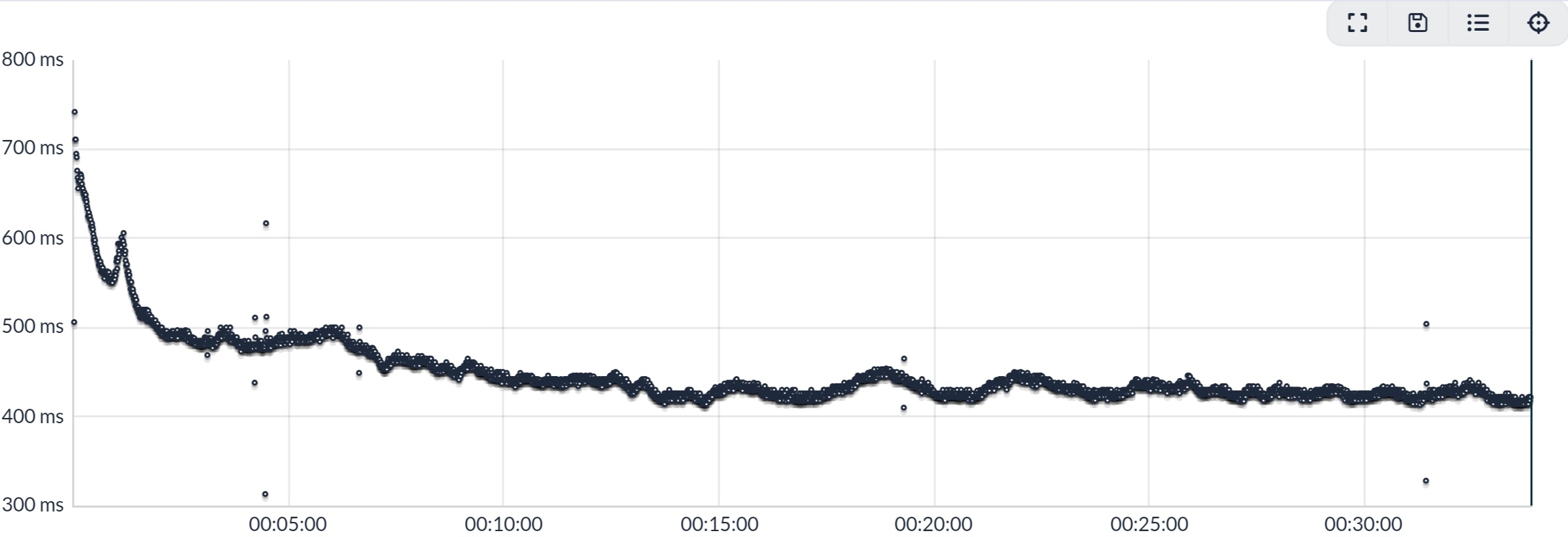
And, once again, the R-R zigzag at the beginning mirror a real HR drop from 108 bpm to 101 - confirmed by the OHR FR955 control watch.
This posting also gives me an opportunity for a piece of advice: Check the SHRM2 connectivity before stepping outside for an exercise!
When I stood in the middle of the village and discovered that the pod hadn’t been automatically activated by putting the (wet) strap on my chest, I didn’t feel like stripping down for pod examination. Home again it turned out that neither looking at the registered HR device listing, nor going into an activity, would wake the pod up. A quick press of the pod button did nothing (and the LED didn’t light up). A slightly longer press did nothing. Finally with a perhaps 3 seconds long press of the button both the LED lit up and the watch could make a connection.
Perhaps there is a hard shutdown timer in the SHRM2; it had been more than 48 hours since the previous exercise. Or perhaps my touching the outer shell at various points with the leads of a multimeter had triggered an emergency shutdown - I was looking for the beeping tone of a zero resistance area, and found none.
This episode also revealed a disadvantage of using a rubber tube. It prevents easy access to the pod button…
-
Tried it today with a simple sticker as insulation and the anomalies were the same or worse. So thats not enough
From technical point of view - I think you have made a different setup because Inge’s 1. is a loop of enough conducting rubber shielding / shortening static. 2. It creates a gap between clothes and electronics which reduces tansfer of electrostatic charge into electronics.
I guess both factors are important. Shielding is not trivial problem in electronics. Let us wait for others to test and we will see. Till now, Inge’s solution makes sense to me more than putting a sticker / insluation directly in electronics box. If you are willing to test something, wrap it with aluminium foil all arround, be careful not to shorten electrodes in the belt. That would be interesting experiment proving if shileding is enough or there must be also a gap. -
How should we interpret the Avg GCT:FT Ratio these days? The percentage seems quite high. Does anyone understand what this metric means and how to interpret it correctly?
-
@SODIUM
It is as the name says, Ground Contact Time divided by Flight Time.The help text says Elite Level is 1.1 - 1.4. What is a bit confusing is that the value is shown in the app as a percentage. So for a recent run I had 1.34 which is shown as 134%.
I would guess that Suunto measures GCT and cadence and then compute FT and this metric from GCT and cadence.
-
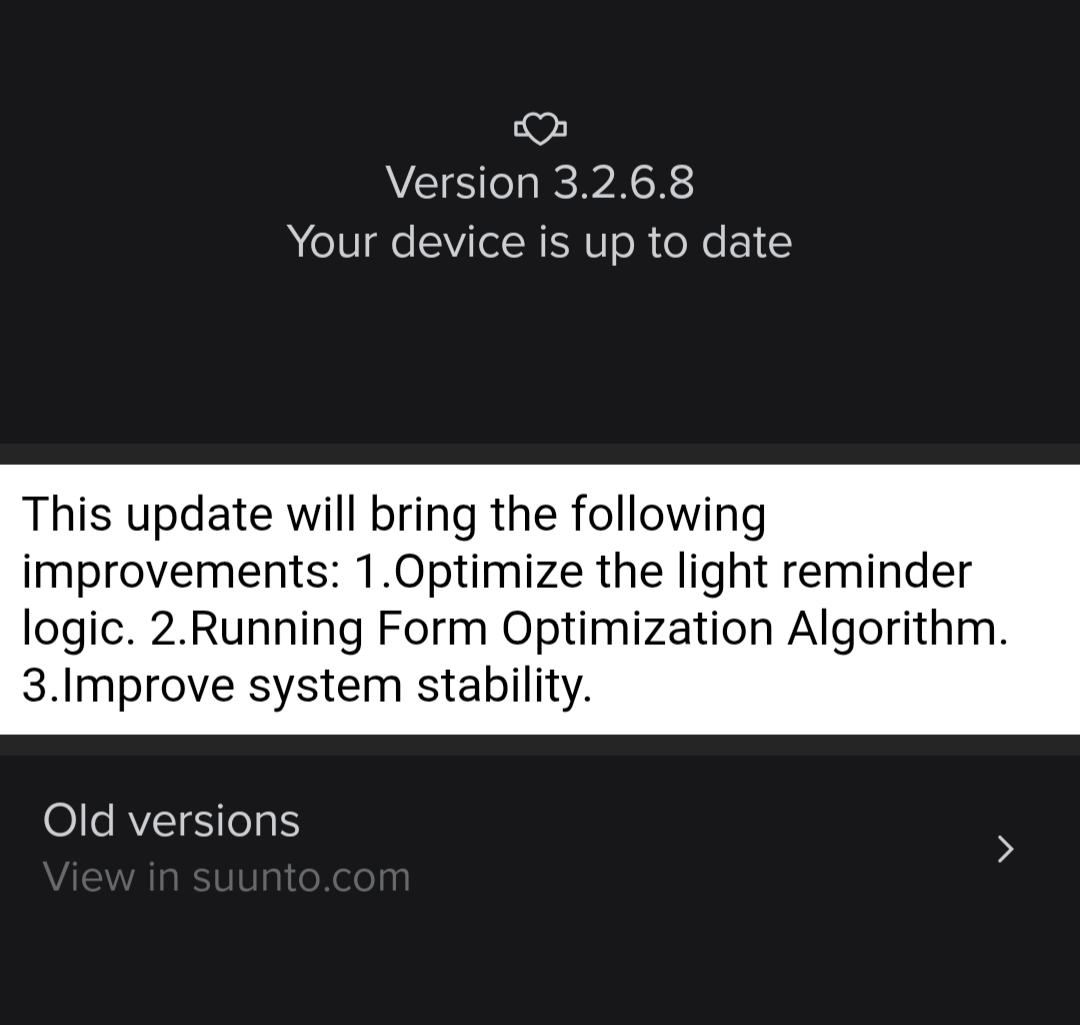
fw 3.2.6.8 available
-
Interesting. Does anyone know what 1) and 2) in the list is? Running Form and Light Reminder?
-
@VoiGAS I guess light reminder is the LED info and running form are GCT, VO, etc
-
@snow that would make sense
-
M matram referenced this topic
-
So, the new Belt is officially not compatible with S9PP, but it works, may not with all new functions on the watch… and I have to find a solution like some thingie around the sensor so it works properly? Do I read this right?
-
@jthomi 9 Peak Pro is not listed here, but since it has been successfully tested with 9 Peak, the chances are very high it works with 9 Peak Pro as well.
And yes, additional running form data will not show.

I am not wrapping anything around my belt and would regard this as voodoo.
Suunto has ESD labs and compared different devices and measures there. I would trust this more than a piece of bicycle tube. -
@Egika I do agree that wrapping a bicycle tube around the sensor seems to be ludicrous. However one can’t say that it is working properly. Herewith some examples from the last 3 weerks:
- The firsts run was immediately the worst. I tightened the belt afterwards, this helped.
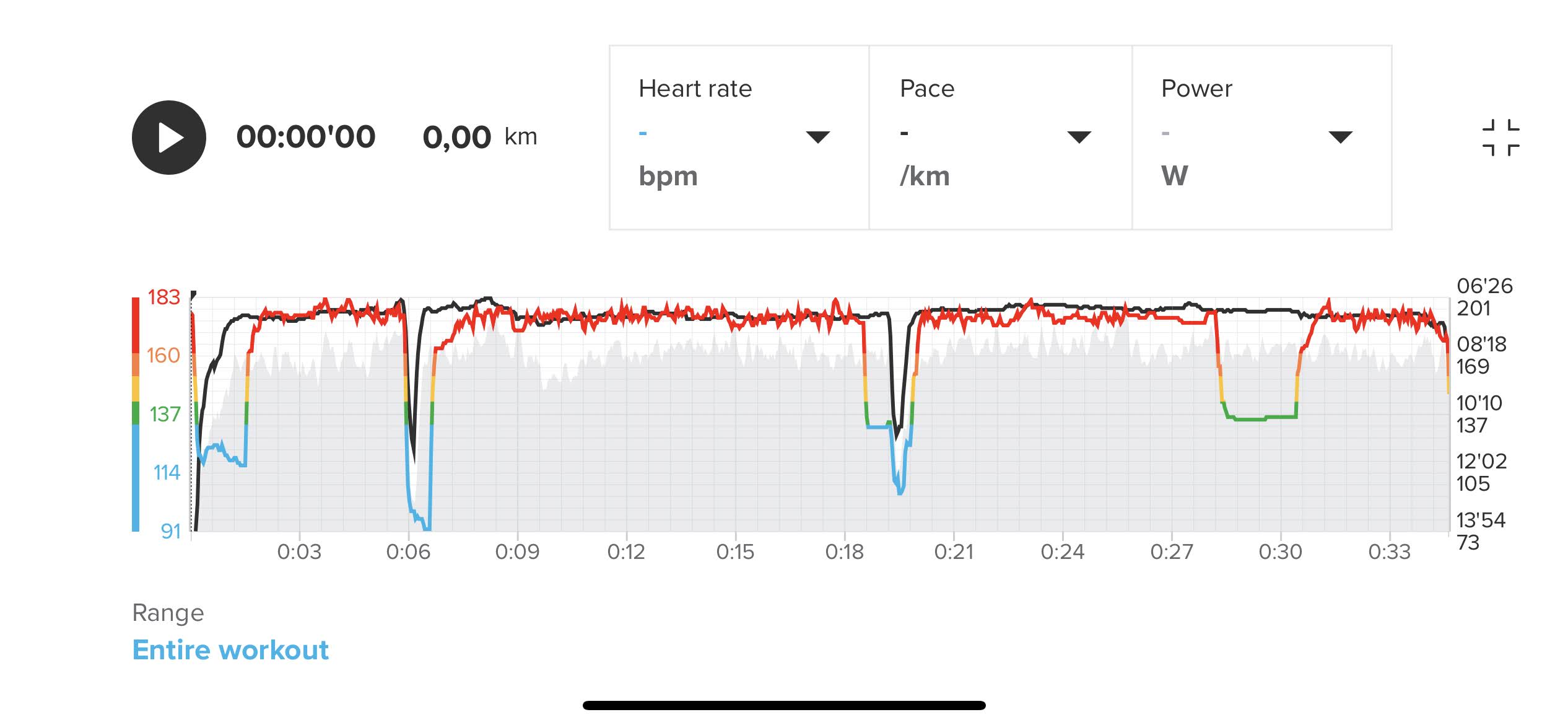
- The most recent run. Here it took about a half hour to pick up on my actual hearth rate. First a too low reading then to high and then too low again. The belt was sufficiently tight and moist.
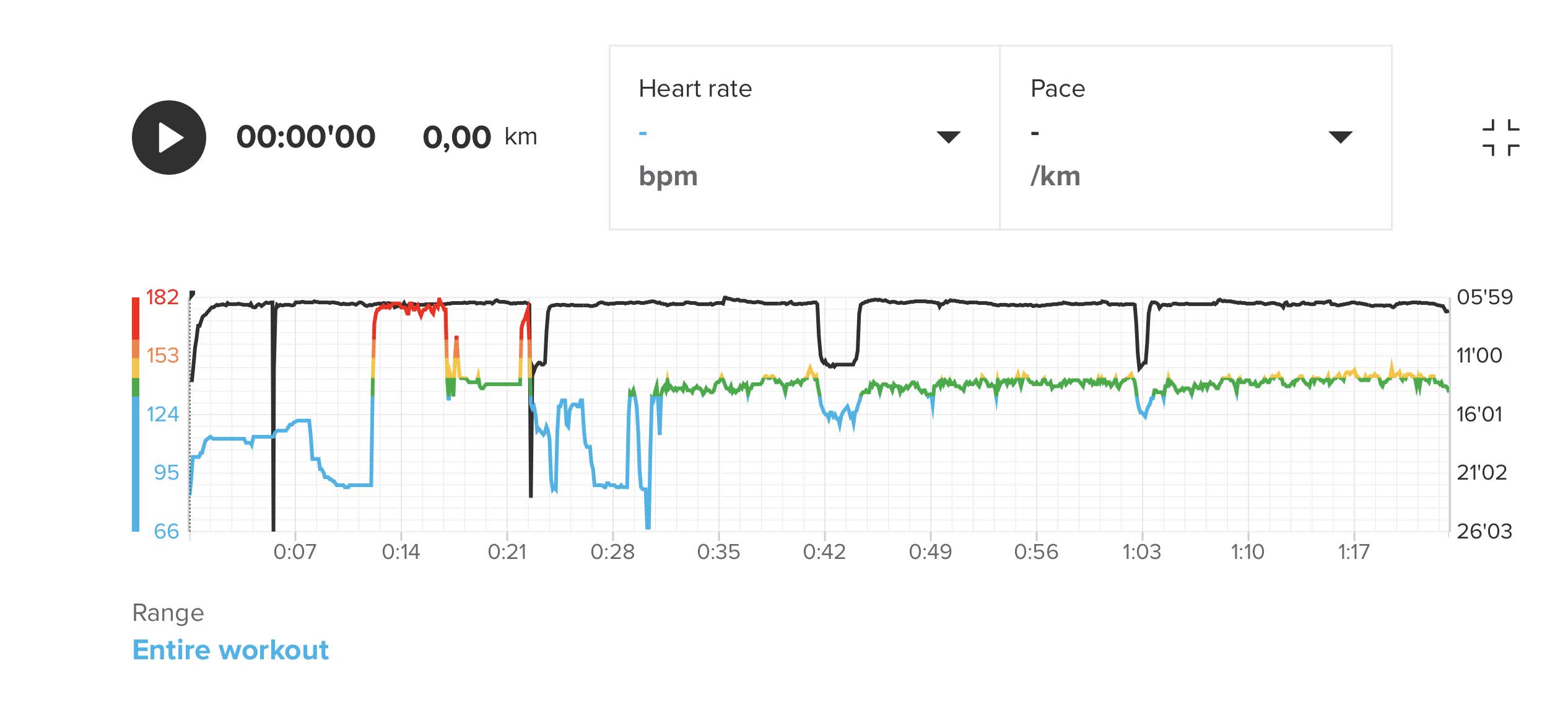
- Another run. Here it took ‘only’ 10 minutes.
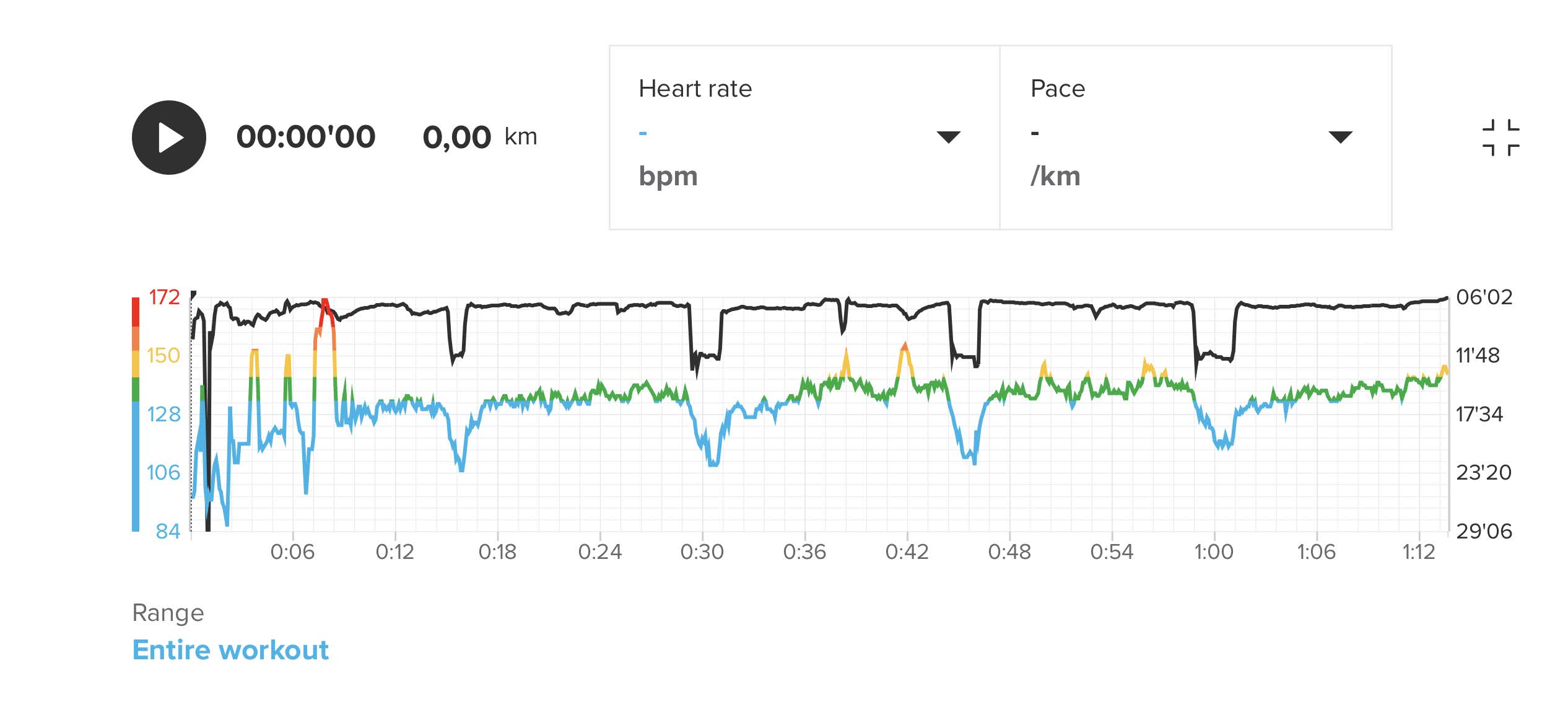
- Another run. Here it took 19 minutes (of a 33 min run) for a good reading.
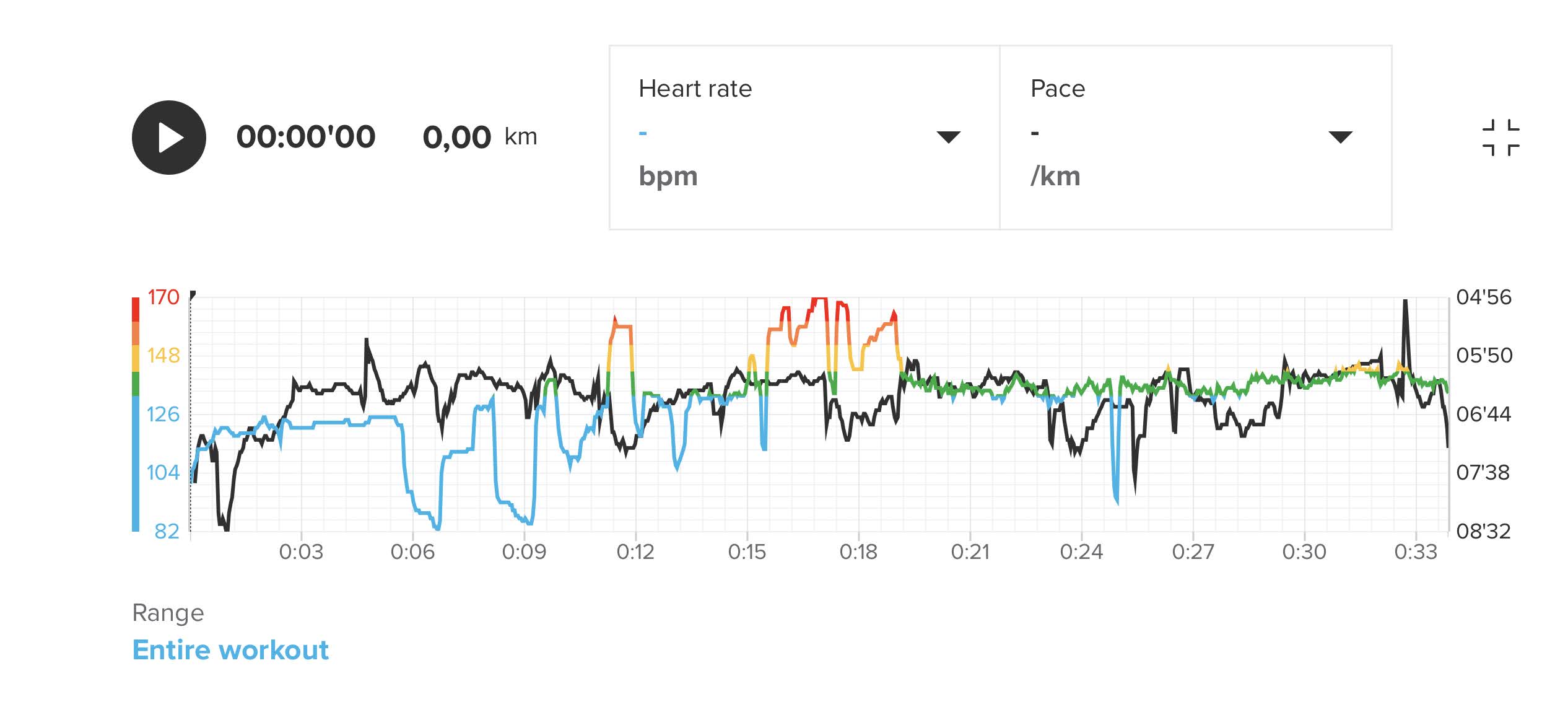
I also have issues with bike rides. Sometimes the HR just peaks to 180+ without any external reason but this is more difficult to show on the graphs. I switched from a H10 for the memory function of the SHRM2, but never had these issues before. Needless to say that I am seriously considering to return the unit. The only thing that is stopping me is the fact that Suunto has a history to make their hardware better with firmware updates.
- The firsts run was immediately the worst. I tightened the belt afterwards, this helped.
-
Coming back to the running metrics. Especially for GCT:FT is there somebody that has values in the ranges of the description? I just wonder whether the data / description is wrong, or I might be really bad at this. Even during the last race I did the mean is 282.7%, well in the “inefficient” range…
-
@2b2bff
The foot stays in contact with the ground approximately 2.8 times longer than it stays in the air. This is why the app displays a value of 282.7%.I suspect this figure may need to be divided by two because GCT is measured separately for the left and right feet. If we divide 2.8 by 2, the result is approximately 1.4.
However, this is only my hypothesis at this stage. We need to wait for Suunto to confirm how the GCT:FT Ratio is calculated before drawing any conclusions.
-
@Speed-Man in my books there are three possibilities:
- Calculation is wrong
- Explanation text is wrong
- My form is worse than I think it is
All of this could be the case at the same time. I just want to know

-
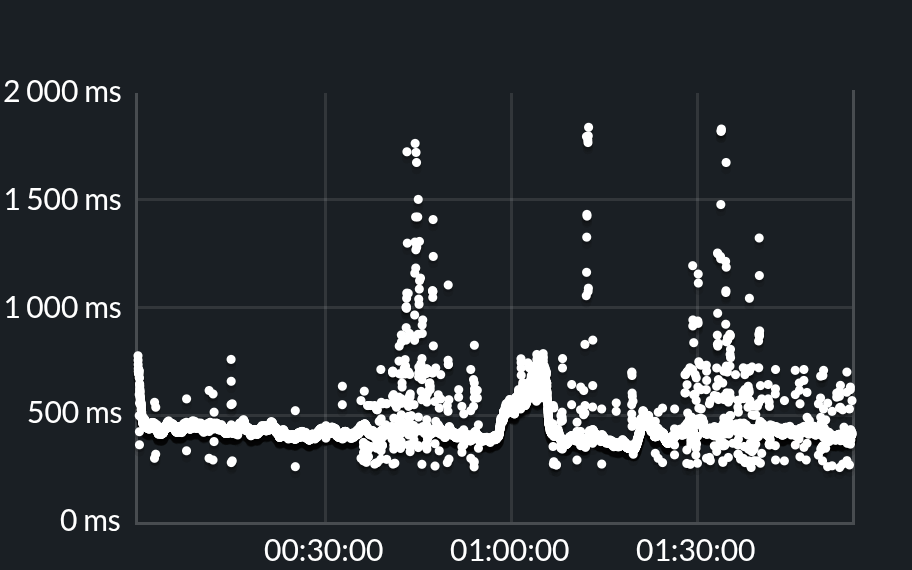
Today, (different) merino shirt and electrode gel - its a mess
-
@VoiGAS I’m not sure if it’s caused by the way you’re wearing it or its position, but it seems to vibrate.
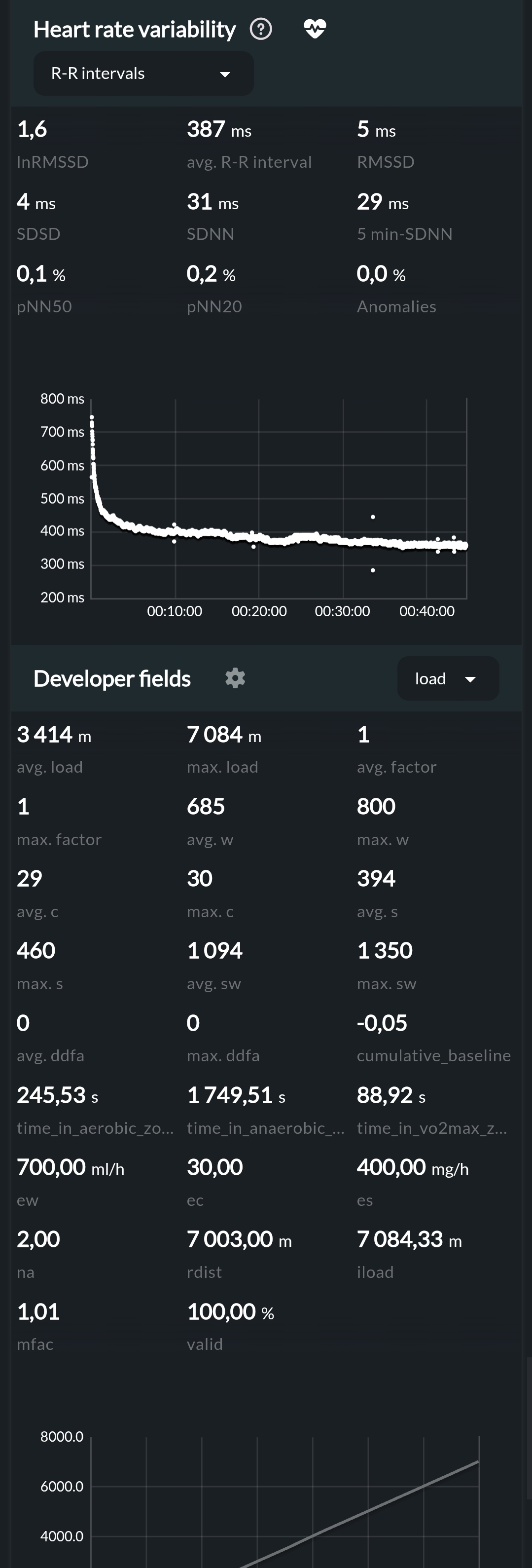
For me, it works well, even when wearing a 100% polyester shirt, as long as it’s a lightweight sleeveless top. I do occasionally experience some dropouts, possibly when increasing speed or due to vibrations during movement.
-
@Speed-Man Interesting, thank you! It was a Trail Run and indeed this time I felt it was moving a lot.
Strange, because it was quite snug. I wear it on the lower half of the rib cage - is there a ‘perfect position’ for it?
Race S
Vertical Titanium Solar
Ambit3 Vertical
Eon Core -
-








Hello! It looks like you're interested in this conversation, but you don't have an account yet.
Getting fed up of having to scroll through the same posts each visit? When you register for an account, you'll always come back to exactly where you were before, and choose to be notified of new replies (either via email, or push notification). You'll also be able to save bookmarks and upvote posts to show your appreciation to other community members.
With your input, this post could be even better 💗
Register Login