Race 2 heart rate issues
-
@radum is this using an external monitor or the OHR on the watch? Seems a case of cadence locking, typical with nordic walking and poles
-
@radum I experience the same with walking.
HR is around 90 BPM on straight road, then I start climb uphill and even I feel that the HR goes up, the watch still shows values around 90 BPM. Usually it is enough to stop for a while until watch recognizes increased HR and after that it seems as the OHR works ok.
It may be some kind of cadence lock but even I tried to tighten the strap, move watch on the hand, it behaves the same. Mostly just the pause for a while helps the watch to recognize increased HR. -
My HR with the Race 2 and the latest firmware is not working either for me. This is a very new device. It worked 35 minutes but then, there’s a moment that the sensor is stuck in very high bpm readings (completely off).
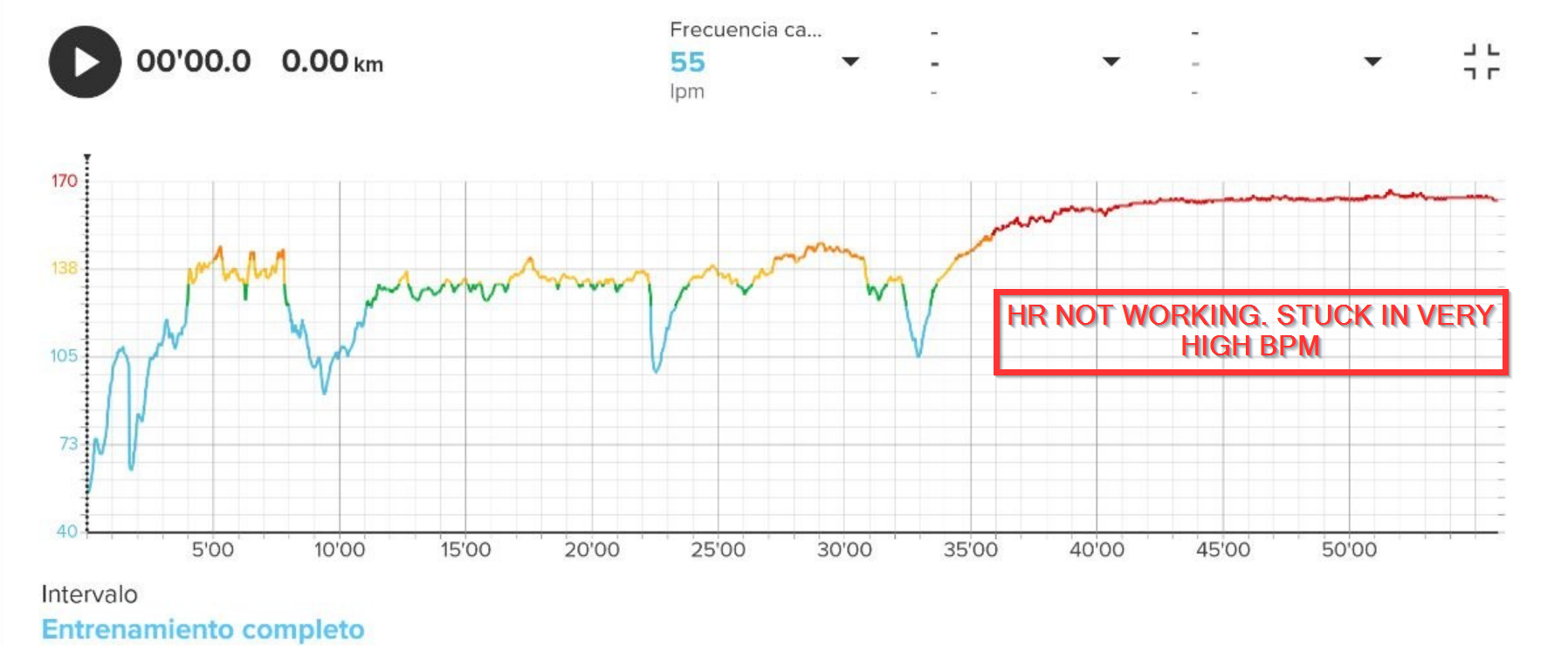
I didn’t expect this at all. In fact, I remember I had a similar issue with the Race 1, and despite having a diferent sensor.
-
Hi @isazi, this is indeed using the OHR.
In the meantime, I’ve purchased a heart rate belt which I sometimes use during peak & valley power walks. The described behavior cannot be reproduced when using the belt, which operates accurately.So, it seems to be rather a problem of the OHR
-
I have the same issue. I sent watch data to Suntoo. I want to ask, does factory reset remove my own intervals?
-
Hi all,
I want to share my recent experiences regarding the Optical Heart Rate (OHR) sensor on the Suunto Race 2, as it has become a major dealbreaker for my daily training.
The Core Problem: Initial Lock Failure
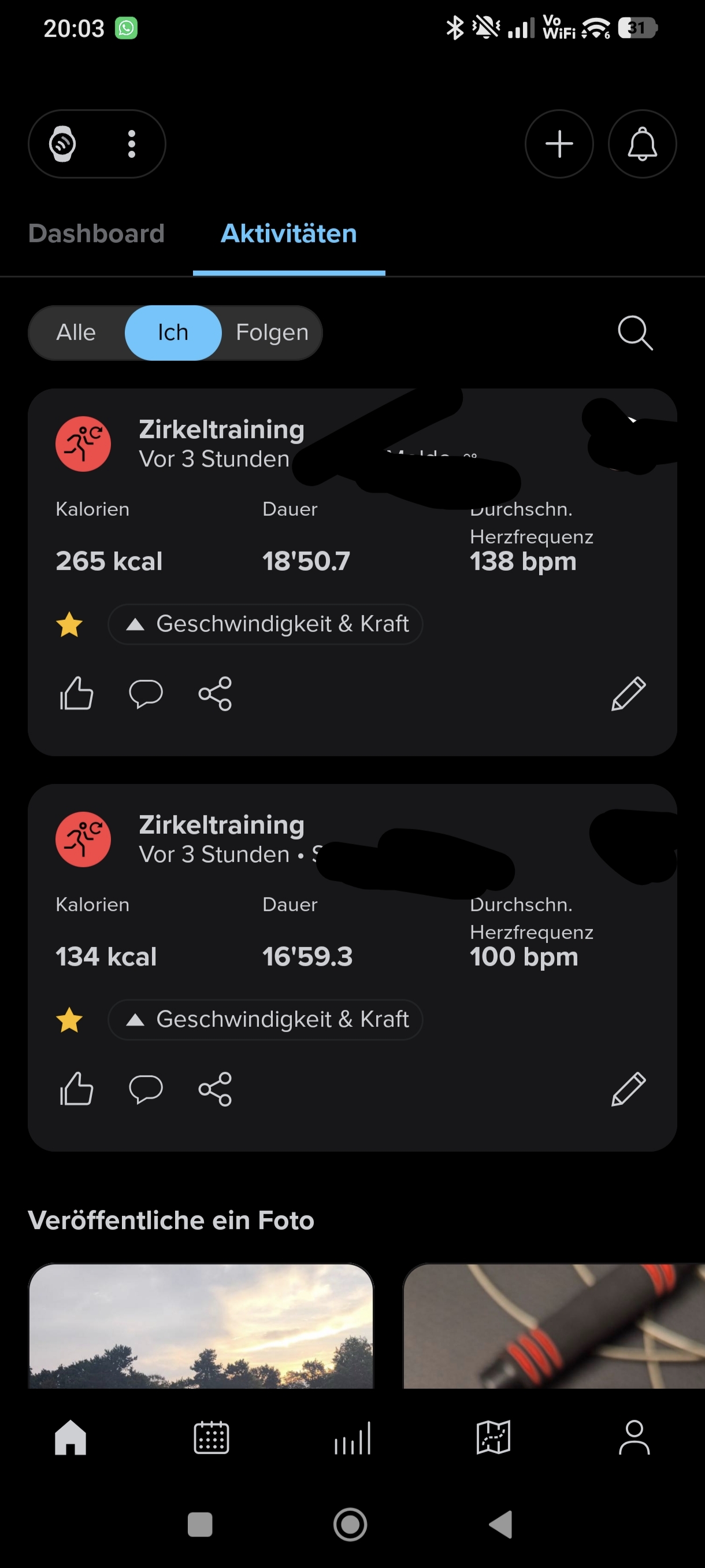
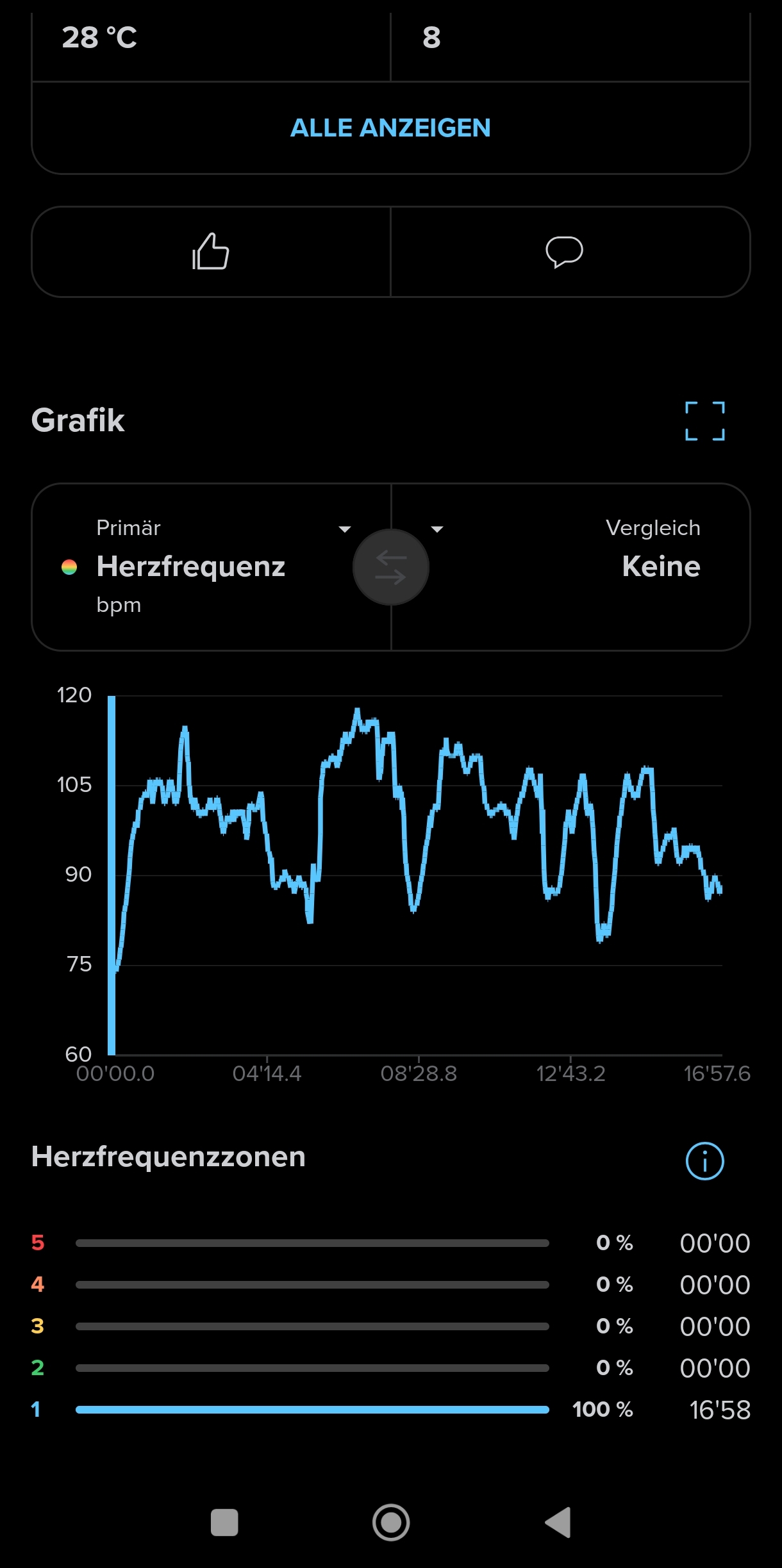
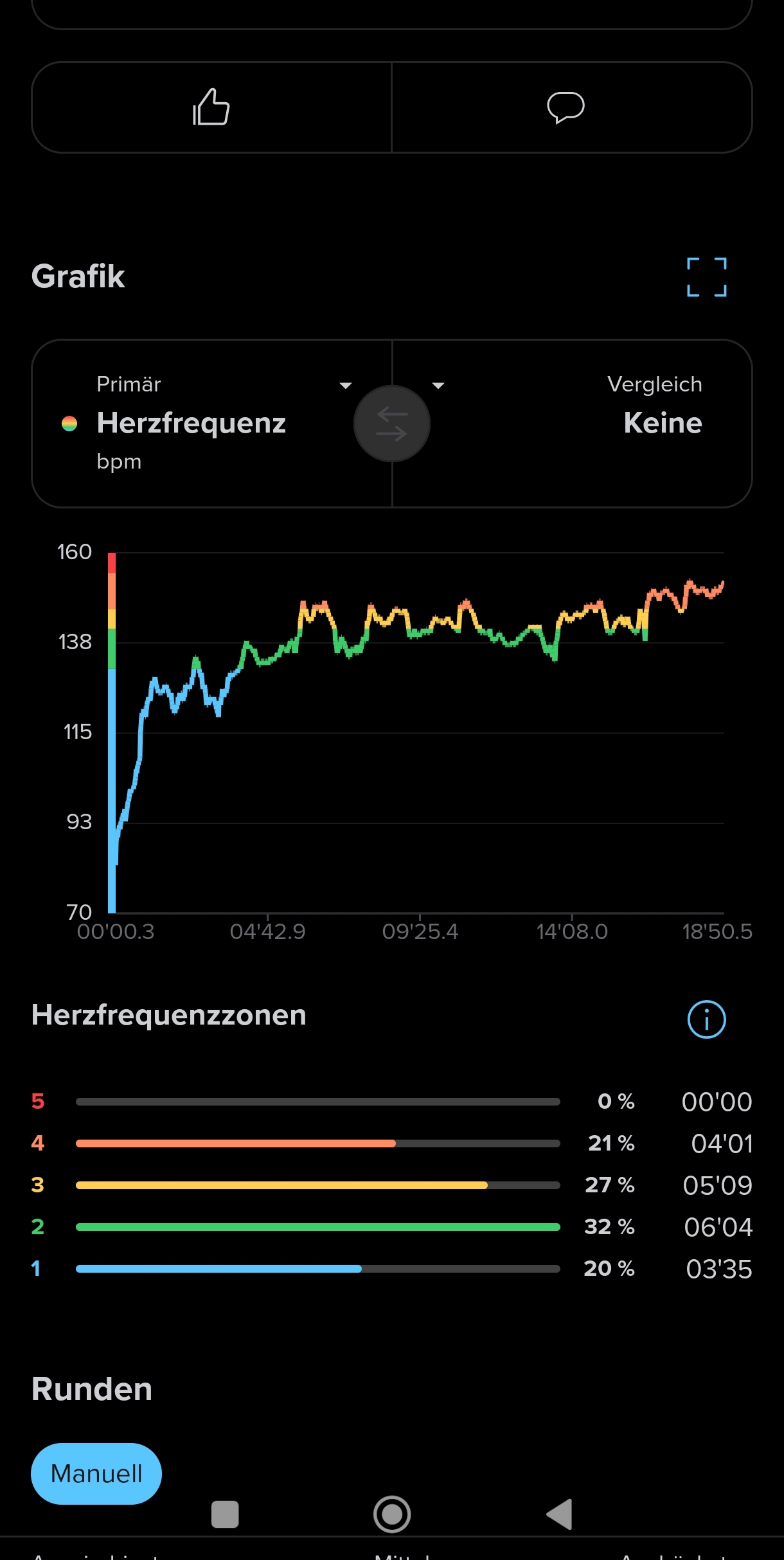
During the first 10–15 minutes of dynamic or high-intensity workouts, the OHR sensor repeatedly fails to track my actual heart rate:Example (36-Minute HIIT Circuit): For the first 17-minute attempt, the watch froze at ~100 bpm (Zone 1), completely missing the intense physical load. I had to stop, save, and restart the activity. Immediately after the restart—without any change in positioning or effort—the sensor picked up perfectly, averaging 138 bpm with accurate peaks in Zone 4.
Why This Ruin The Entire Ecosystem
An accurate heart rate reading is the absolute foundation of a sports watch. When the initial 30% of a workout is logged as Zone 1 instead of Zone 4/5:TSS and Training Load (CTL/ATL) are completely corrupted.
Recovery calculations become useless.
User trust in the data is entirely destroyed.
Conclusion
I love the build quality, the UI, and the Suunto app philosophy. However, having to trick the sensor by restarting workouts or doing complex “pre-heating” routines is unacceptable for a €700 flagship device. Other manufacturers prove that reliable wrist-based HR and accurate stress tracking are very possible today.If a sports watch cannot reliably track heart rate out of the box without requiring a chest strap for basic workouts, it fails its core purpose. I genuinely hope the upcoming Q4 firmware update ports the improved OHR algorithms from the Run series—otherwise, many of us will have no choice but to look elsewhere.
-
I haven’t come across a watch with a optical sensor that works for me. My race s sometimes gives excepted values and sometimes it doesn’t Just like any other watch with an optical sensor I ever had.
Some people claim to have perfect results. Some sport gadget bloggers claim to have no problems at all.
I guess it’s more person related than sensor related. (Although I’m white, no tattoos, no hairy arms. Very visible veins on my arms. My hands are always a bit cold).
Just accept it and use a chessstrap. I recently bought a polar oh1+ optical sensor that you wear on your upper arm, which gives values within the expected range.
(And don’t try to quantify your life/running to the max. But that’s my personal view)
-
@elbee I don’t fully agree that it’s only person related.
I’ve used several watches with optical heart rate sensors, including the Pixel Watch 3 and 4, the Galaxy Watch Ultra, and the Garmin Fenix 7X Pro. All of them provide reliable heart rate readings on my wrist without any noticeable issues.
With the Suunto Race S, and now with the Race, I still experience occasional cadence lock and workouts where heart rate is clearly underreported or not captured correctly. What’s confusing is that some activities are recorded perfectly, while others are not.
Since other brands work well for me under the same conditions, I don’t think the issue can be explained purely by individual physiology. There seems to be something specific about Suunto’s optical HR implementation or algorithms that makes it more sensitive in certain situations.
That’s what I struggle to understand. If optical heart rate measurement generally didn’t work for me, I would simply accept it and use an external sensor. But based on my experience with several other watches, optical HR clearly does work for me. That’s why I find these inconsistent results on the Race and Race S difficult to explain.
-
@_Luki for me it improved with updates of watch. And i don’t watch it so closely anymore but in past i noticed first 10minutes that OHR was way off from real HR. But i do hiking/walking/cycling so i believe it can be worse with running. I can compare only to previouse Suunto 5 and i can tell that it is much better but not perfect. I don’t compare to hr belt anymore so hard to tell how accurate it is but graph usually looks believable. Not sure if 2025 Q4 or 2026 Q1 improved a lot.
-
@_Luki actually it is not so much a “does work or does not work at all” situation for an individual, but it has a lot to do with algorithms. For me the Race S HR sensor was just random before they changed the algorithm to an in-house developed one. Now it is okay, but not great.
Apple Watch worked great for me. Garmin Fenix 6S Pro worked great. Garmin Epix had its own faults, although newer than the Fenix. Race S can be good but can be garbage as well.
Lesson learned: I’m just using a chest strap. Now with the added benifit of running metrics… -
@2b2bff But tracking heart rate is really the most important thing you can measure in sports. All other analyses depend on the heart rate data. If the first 10 minutes are wrong, the rest is wrong too. I also have a comparison with a heart rate strap. And if the overall average of the workout is 15 beats lower, that’s quite a lot. And as an ambitious amateur athlete with triathlon ambitions, I need to be able to rely on it, because I use AI to analyze and plan my training. And I just don’t really want to wear a strap because I can’t consistently rely on the measurements. Like I said, Garmin, Polar, Samsung, Pixel… no problem. I also don’t think the hardware is the issue.
It just has to work. Thats it.



Hello! It looks like you're interested in this conversation, but you don't have an account yet.
Getting fed up of having to scroll through the same posts each visit? When you register for an account, you'll always come back to exactly where you were before, and choose to be notified of new replies (either via email, or push notification). You'll also be able to save bookmarks and upvote posts to show your appreciation to other community members.
With your input, this post could be even better 💗
Register Login