Suunto Smart Heart Rate Belt 2
-
@thailon I had this with all kinda sensors. Sometimes its 100% sometimes 80%. These batteries / readings are not really reliable.
Community Manager / Admin @Suunto
Creator of quantified-self.io — a next gen training dashboard with MCP access, cross-service activity and route sync
-
@Dimitrios-Kanellopoulos said:
@thailon I had this with all kinda sensors. Sometimes its 100% sometimes 80%. These batteries / readings are not really reliable.
ok, thank you for update. I was curious about battery consumption, 20% per 1 hour and 15 min sounded horrible

-
@thailon The LiPo cells in the watch has a charge meter, that monitors pretty well how much energy goes in and out of the battery.
Sometimes a calibration is needed to tell the charge meter, where the 0 and where the 100% ar lying.The HR strap is powered by a simple button cell. There is no charge meter in place (it it would not make sense, unless there were batteries with a certified charge built in.).
Thus the capacity is simply derived from the cell voltage. Temperature and other factors play a role here as well so that the battery information is a rather coarse one. -
Hi, would you mind sending me the fit file for this activity via PM?
I’m really hazy about the workings of this forum regarding chats, sending files etc. So I’ll just try to put it here instead (all my exercises are public through the app anyways). I’m guessing you’d want to see if the HR values are changed in the App visavis the watch file:
-
@thailon The LiPo cells in the watch has a charge meter, that monitors pretty well how much energy goes in and out of the battery.
Sometimes a calibration is needed to tell the charge meter, where the 0 and where the 100% ar lying.The HR strap is powered by a simple button cell. There is no charge meter in place (it it would not make sense, unless there were batteries with a certified charge built in.).
Thus the capacity is simply derived from the cell voltage. Temperature and other factors play a role here as well so that the battery information is a rather coarse one.Let me provide some technical background on the issue. Measuring the charge level of a coin-cell battery in low-power devices is very difficult. The main factors affecting accurate measurement are: 1. The discharge curve is very flat. Consequently, measurement requires precise voltage readings that are independent of temperature and humidity—something difficult to achieve cost-effectively. 2. Batteries from various manufacturers can be used, and they may have slightly different specifications. 3. Once the battery is somewhat depleted, there is a significant difference between the voltage during data transmission and the voltage at idle. The battery might show an acceptable voltage at idle, but during transmission, the voltage can drop enough to corrupt the data or prevent it from arriving altogether (which, technically, amounts to the same thing in BLE transmission).
I recently dealt with a battery issue in a Garmin HRM-Dual. It had been in use for three years and covered about 300 km of running. The strap was transmitting data that looked “normal,” but the readings didn’t actually correspond to the level of exertion. The Race 2 watch reported 85% battery life, so one would assume everything was fine. I replaced the battery with a new one; the Race 2 still reports 85%, but the strap is now providing accurate data.
So, my advice is to start by replacing the battery, adjusting the strap’s tightness, and moistening the electrodes. If that doesn’t work, the problem lies with either the strap or the watch. -
Hi, would you mind sending me the fit file for this activity via PM?
I’m really hazy about the workings of this forum regarding chats, sending files etc. So I’ll just try to put it here instead (all my exercises are public through the app anyways). I’m guessing you’d want to see if the HR values are changed in the App visavis the watch file:
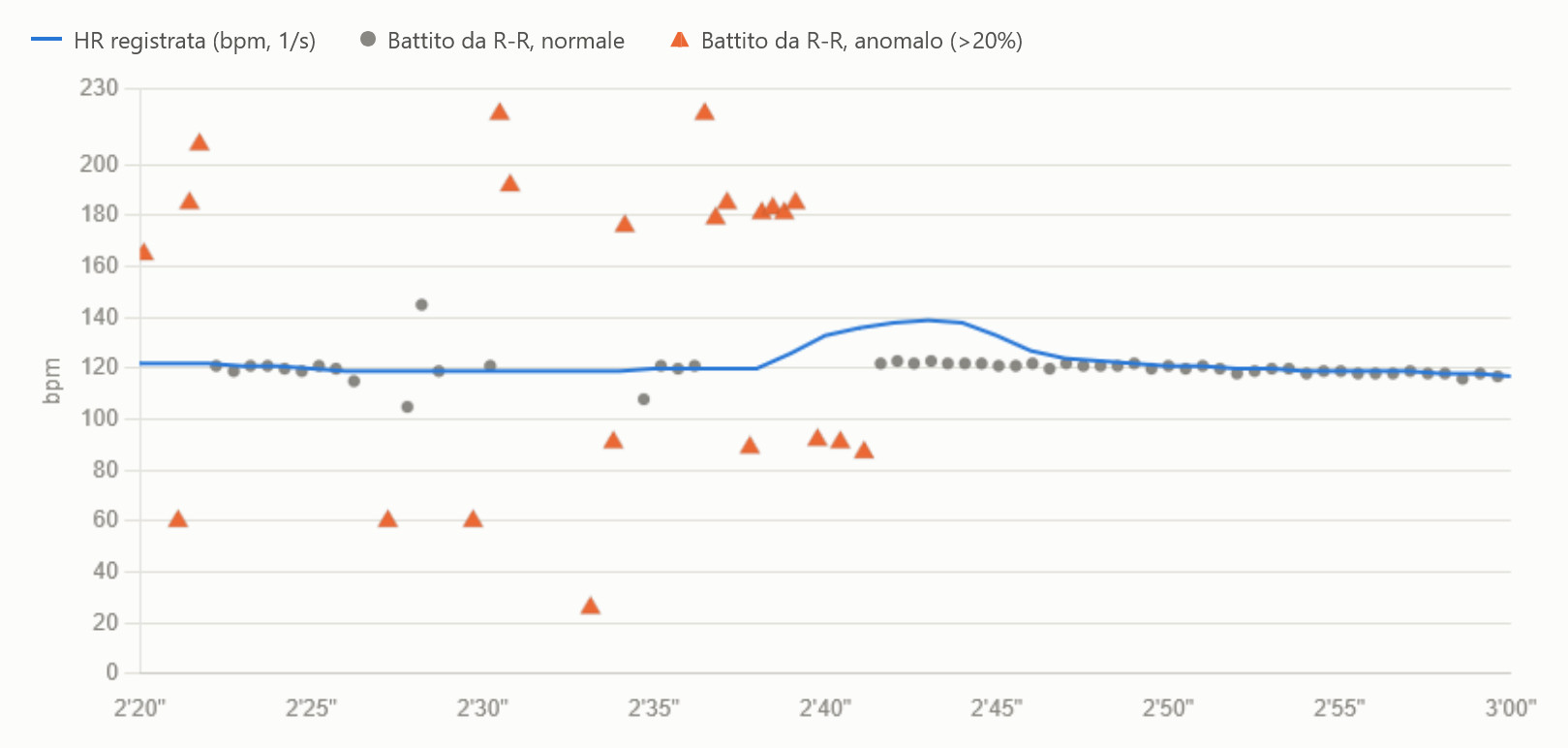
Each dot is one RR interval converted to bpm. Grey dots are consistent with the previous beats; orange triangles deviate from them by more than 20% (a threshold I applied). The blue line is the HR recorded by the watch. I’ve narrowed the data down to the spike zone only.
2’20"–2’34": isolated abnormal intervals, no effect. Several scattered triangles, ranging from 26 to 220 bpm, but the blue line stays flat at about 119–122, so the watch ignored them.
2’36"–2’41": the burst. Here 11 abnormal intervals come in a row: first 8 at about 180 bpm, then 3 at about 90. There’s no normal beat in these 5 seconds.
2’39"–2’50": the spike. The blue line rises right during the burst, peaks at 139 at 2’43", and is back to 121 by 2’50". Meanwhile, from 2’41" on, the grey beats are already steady again at about 122.
That said, the spike matches the only long run of consecutive abnormal intervals, and the beats before and after show no real increase in HR. This suggests a calculation effect: that sequence of intervals was, at least in part, included in the displayed heart rate, as you had surmised. Whether those intervals are strap artifacts or real irregular beats can’t be told from the file, that would need an ECG.
I keep using both SHRM2 and H10 but yet to see something as happened to you.
I forgot to mention that I assumed the RR data was raw, unfiltered data. -
@snow Nice analysis! Though I can assure anyone reading that I don’t have irregular beats jumping between such extremes (I have worn a Holter monitor a whole week not long ago in a separate investigation). So I would say hardware artifacts.
Also, the pulse did not race (the spike) almost 20 beats. Such a race has happened about 4 years ago where the puls went from 125 to 139 (14 beats) and down to 126 beats over the course of 60 seconds. That time I simply stopped running because it felt like a snare drum going off in my chest - it was a very distinct feeling. At the time I was using both the Polar H10 chest strap and ear buds with OHR sensor. Both devices showed the race in all its glory.
Both my chest and the FR955 said the pulse was calm at the 2:20-2:50 running portion yesterday.
Edit: The burst you said was 8 abnormal at about 180 bpm and 3 at about 90 bpm… That looks suspiciously like cadence in one and two leg versions. If you look at my running cadence for the whole 400 metres (and absolutely at the 2:36-2:41 mark) it is 90 rpm (180 runners cadence). Perhaps the artifacts are cadence lock algo hallucinations.
Suunto Race S
-
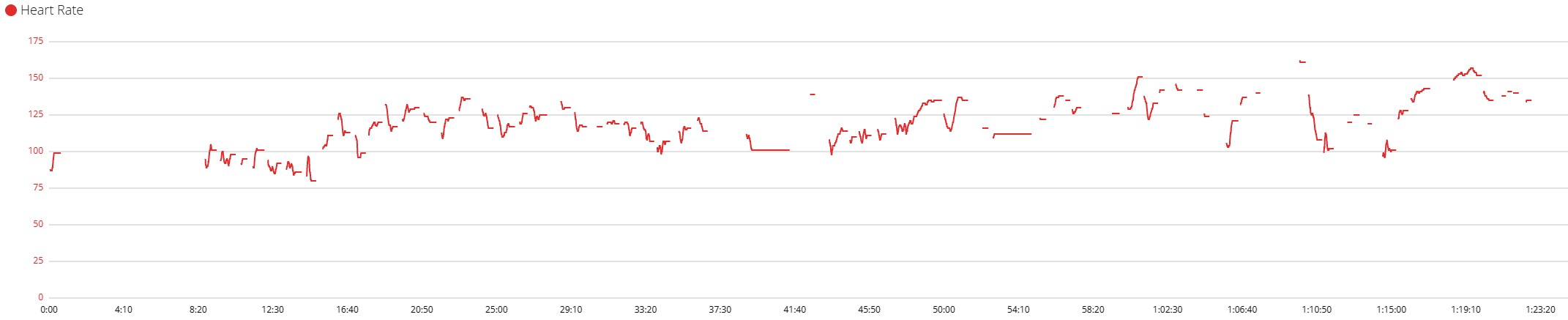
This is how the data from HR Belt 2 looks like in Garmin Edge 530 - belt gets connected, disconnected, connected, disconnected. All the time. Not sure it is a problem with Belt or Edge data receiving.
-
My Smart Heart Rate Belt 2 had been working perfectly since I got it, but yesterday it suddenly stopped connecting to both my Vertical 2 and my phone.
I removed the pairing on both devices, but after that I couldn’t pair it again at all. A normal reset didn’t help either.
What finally fixed it was doing a full factory reset of the belt by holding the button for around 20 seconds, then pairing it again from scratch. After that it connected normally and is working again.
So if anyone runs into the same issue, the full factory reset is definitely worth trying before giving up on the belt.
-
As has been mentioned here several times, a factory reset helps. So if anyone is having a problem, they should try that as a first step.
-
@martintrail Yup, but it’s kind of annoying to have to factory reset a brand-new belt. As far as I remember, I never had to reset any of my previous Garmin HRM straps or my Polar H10.

 ️
-
@Belial I agree, I’ve never had to do that with an HRM or an old Suunto belt either.
-
@snow Nice analysis! Though I can assure anyone reading that I don’t have irregular beats jumping between such extremes (I have worn a Holter monitor a whole week not long ago in a separate investigation). So I would say hardware artifacts.
Also, the pulse did not race (the spike) almost 20 beats. Such a race has happened about 4 years ago where the puls went from 125 to 139 (14 beats) and down to 126 beats over the course of 60 seconds. That time I simply stopped running because it felt like a snare drum going off in my chest - it was a very distinct feeling. At the time I was using both the Polar H10 chest strap and ear buds with OHR sensor. Both devices showed the race in all its glory.
Both my chest and the FR955 said the pulse was calm at the 2:20-2:50 running portion yesterday.
Edit: The burst you said was 8 abnormal at about 180 bpm and 3 at about 90 bpm… That looks suspiciously like cadence in one and two leg versions. If you look at my running cadence for the whole 400 metres (and absolutely at the 2:36-2:41 mark) it is 90 rpm (180 runners cadence). Perhaps the artifacts are cadence lock algo hallucinations.
I have removed Suunto HR Belt 2 from Edge and Edge work fine right now. So the problem source has been belt - but not sure, whether belt is self of Edge’s capatibility to work with several BT sources (radar, belt). But I Edge worked well without any probles with previous Suunto HR Smart belt.
-
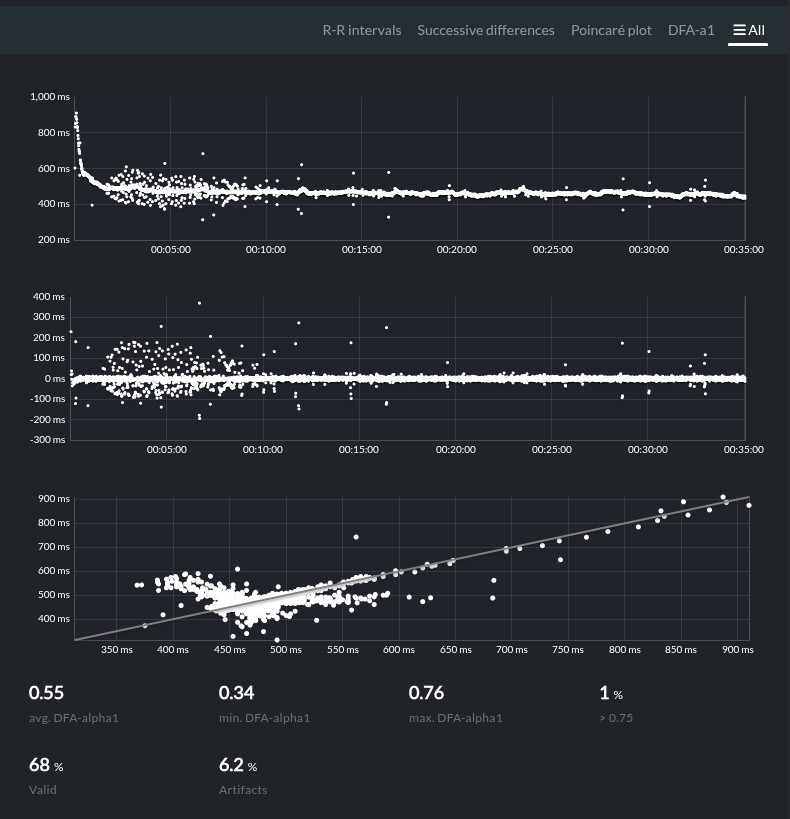
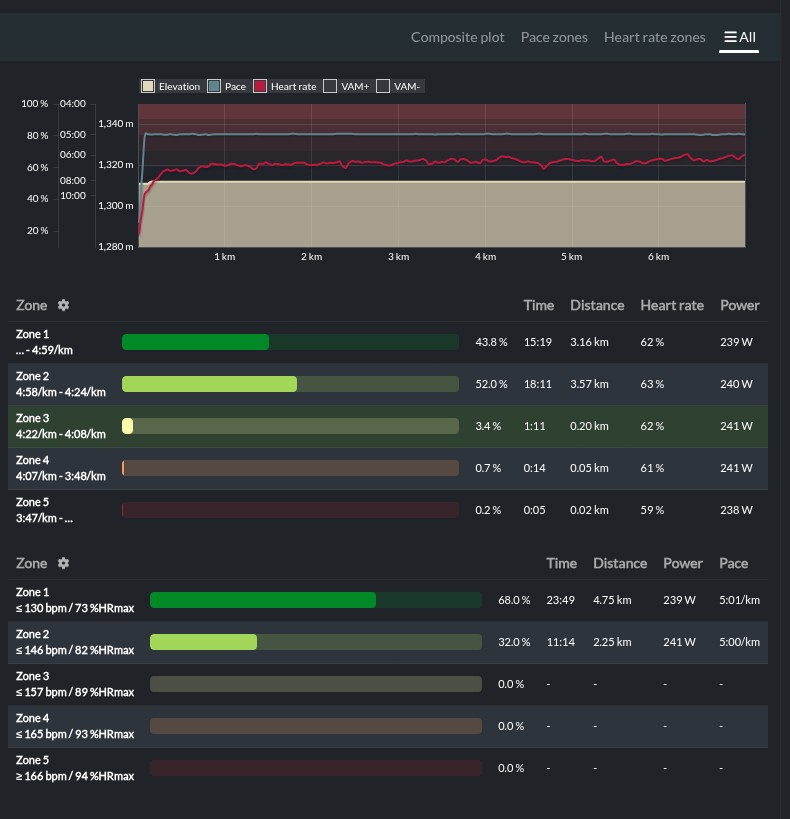
Today was an easy 35’ on the treadmill, my first run since a best-effort marathon 9 days ago. I did a factory reset of the SRMB2 before this run in hopes to address the early HRV chatter. I guess this is just my physiology. I don’t know what else to do.
-
I guess this is just my physiology. I don’t know what else to do.
Well, you are not alone with this alleged incompatible physiology. I’ve now done multiple factory resets of the new SHRM2 unit and all my runs still start out with bad readings of the beat to beat data for the first 10 minutes. What really makes this a ‘sour grapes’ situation is the claim from Suunto about better HRV reading which should benefit the ZoneSense technology. Since ZS calibrates itself during the first 10 minutes can we, with the ‘physiology’, trust the ZS levels?
Another irritant is the inconsistency between HRV and HR. Sometimes the HRV is registered badly and the HR follows suit, e.g. getting stuck at about 90 bpm the fist 6 minutes. At other times the HRV is bad but the HR only exhibits a slight hiccup. For example my latest run where Runalyze claims 3.4% Anomalies:
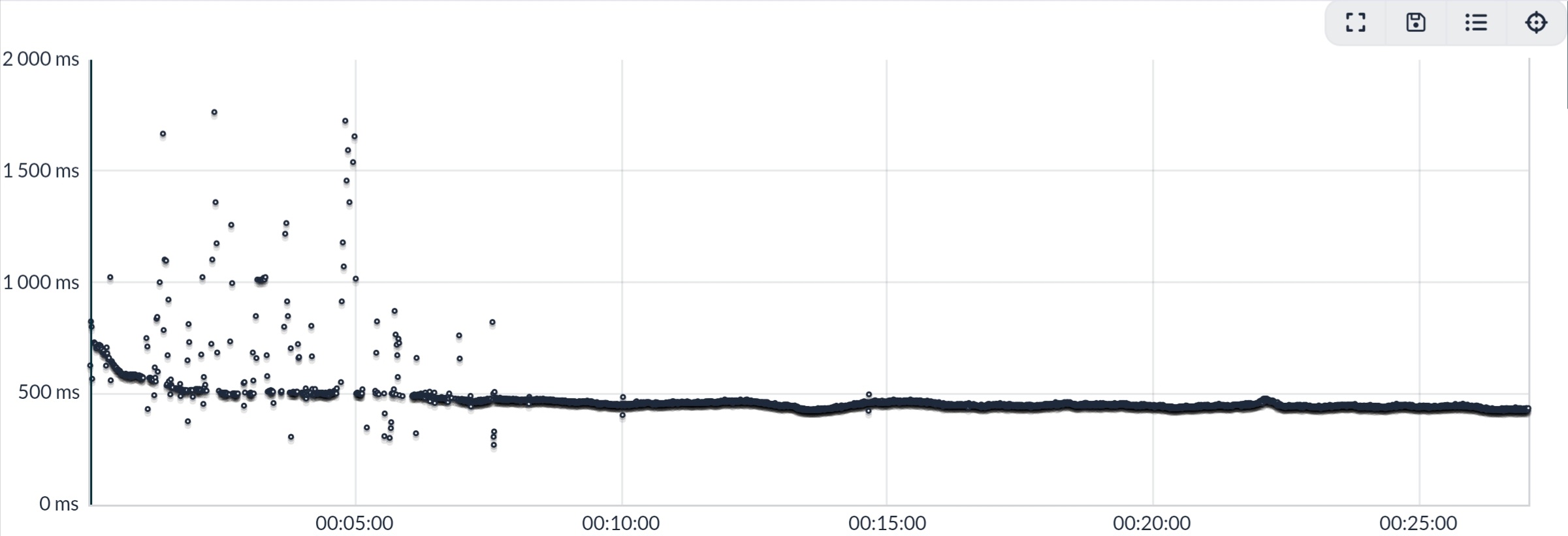
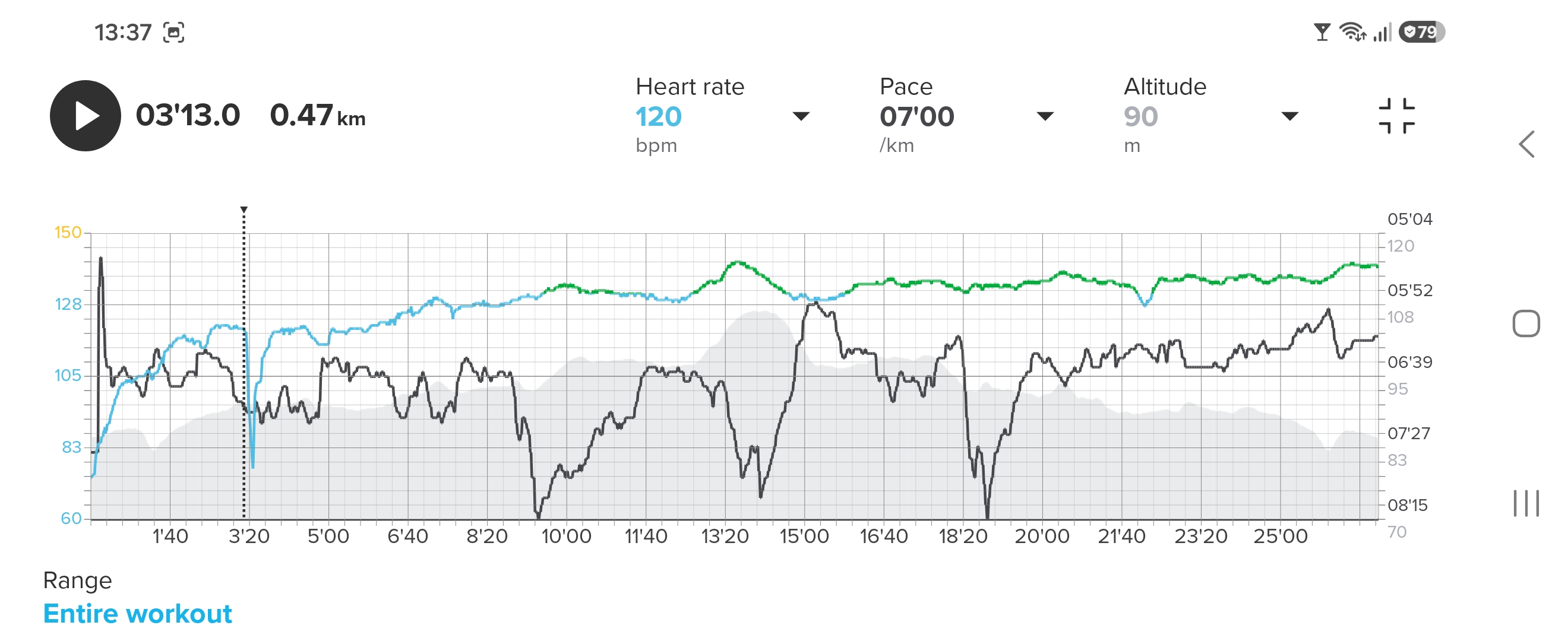
But both the Race S and the Suunto App showed just this little dip down from 120 to 76 bpm after 3 minutes 13 seconds:
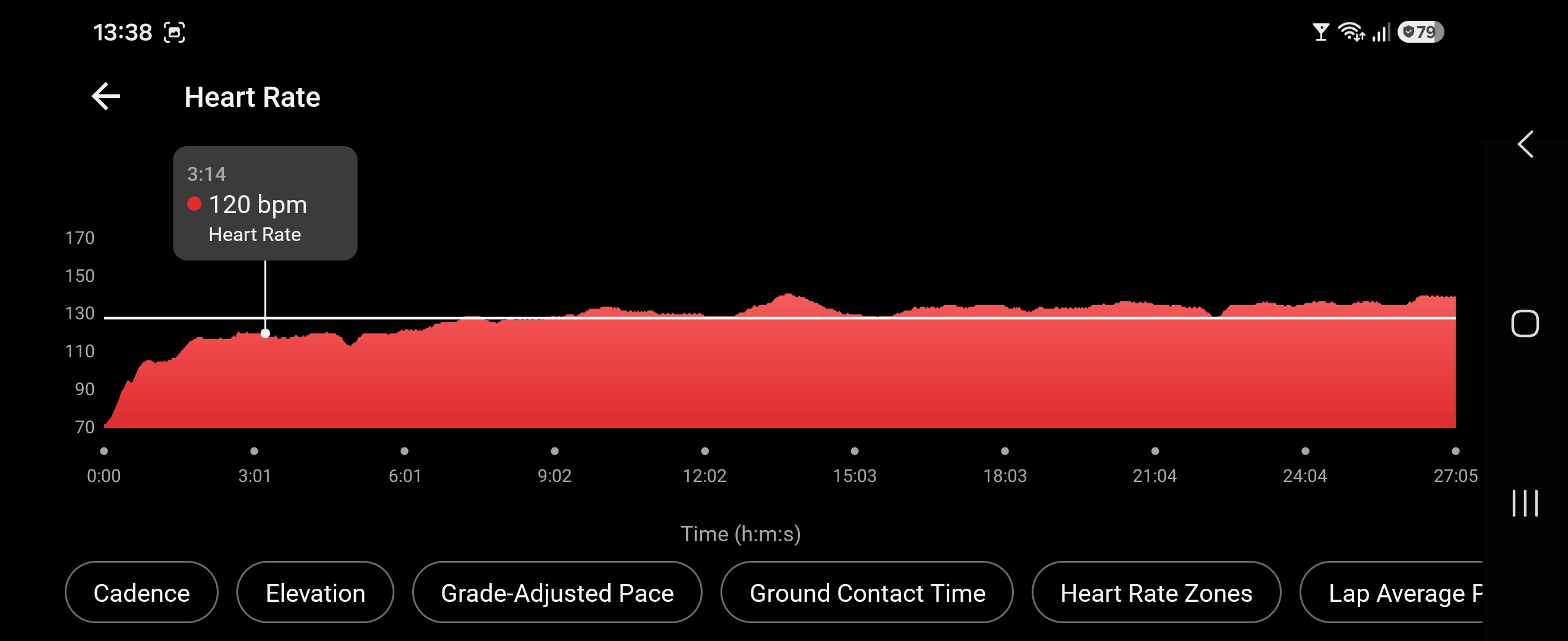
While the reality seen through the control watch (Forerunner 955 using OHR) was without a dip:
I am so tired of having to use a control watch!
FR955 Avg HR 128 bpm, Max 141. SHRM2 Avg HR 129 bpm, Max 141.
Edited: Changed the dip low bpm to real figure of 76 bpm (wrongly wrote 90).
Suunto Race S
-
What really makes this a ‘sour grapes’ situation is the claim from Suunto about better HRV reading which should benefit the ZoneSense technology. Since ZS calibrates itself during the first 10 minutes can we, with the ‘physiology’, trust the ZS levels?
This is exactly why I ditched my Polar H10 for the Suunto SHRB2. I was getting consistent HRV noise in the first 10-15 minutes of every run. I always assumed this was electrostatic discharge from my shirt to the H10 module before my shirt got wet from sweat. But I’ve also had nothing but consistent battles with my H10 regardless, so I was eager to find something new.
When the SHRB2 was released with the promise that it had artifact rejection at the module, specifically addressing ESD, I was sold. But after wearing it, I’m seeing the same early HRV noise, despite moistening the strap, adding electrode gel, pre-run lunges, slightly shifting the module to the left, tightening and loosening the strap, and performing a factory reset.
Maybe it’s shirt fabric. I was wearing a 50/50 cotton/poly blend. I would hope the SHRB2 would be catching ESD at the module, but maybe it’s not. I should see if 100% cotton or linen shirts reduce my early HRV noise. If so, ESD might be the problem and the module isn’t doing what’s claimed. Or I’m misunderstanding the marketing.
-
Maybe it’s shirt fabric. I was wearing a 50/50 cotton/poly blend. I would hope the SHRB2 would be catching ESD at the module, but maybe it’s not. I should see if 100% cotton or linen shirts reduce my early HRV noise. If so, ESD might be the problem and the module isn’t doing what’s claimed. Or I’m misunderstanding the marketing.
Please come later with results once you get them. My running T-shirts are all 100% poly and I have never saw any weirdness like this with Garmin HRM Dual (I have run with HRM about 300 km.)
Thanks!Suunto Race 2 Titanium
Garmin Forerunner 255 -
Maybe it’s shirt fabric. I was wearing a 50/50 cotton/poly blend. I would hope the SHRB2 would be catching ESD at the module, but maybe it’s not. I should see if 100% cotton or linen shirts reduce my early HRV noise
This is my latest R-R collection following the many good ones I had after the reset:
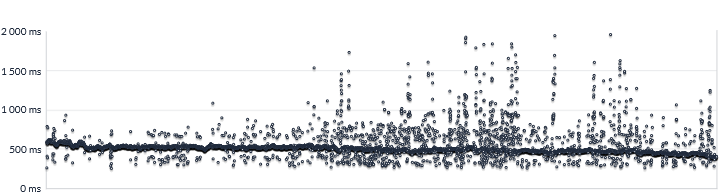
Apparently, something (who knows what) triggered this oddity. Also tried shirts made of 100% cotton or linen, and didn’t notice any difference compared to those made of polyester or other materials. Btw HR was spot on compared to H10 -
While there definitely are effects of plastic shirts or dry skin, the RR measurement itself is rather simple. It is the exact milliseconds between heartbeats.
The calibration during the first minutes of an exercise is not calibration of the sensor. The sensor is just reading the time between heartbeats.
It is “calibration” of the body. Or better: reading what the base line of the individual body is. Everyone is different here…
Also HRV during activity is not something that changes quickly with effort as HR itself. This is the reason why the ZoneSense readings only make sense when running at a rather steady state and it does not work for short intervals. -






Hello! It looks like you're interested in this conversation, but you don't have an account yet.
Getting fed up of having to scroll through the same posts each visit? When you register for an account, you'll always come back to exactly where you were before, and choose to be notified of new replies (either via email, or push notification). You'll also be able to save bookmarks and upvote posts to show your appreciation to other community members.
With your input, this post could be even better 💗
Register Login