[Discussion] Share your projects
-
@Łukasz-Szmigiel
For sure I would have liked to do more of this in main.js but with no method of passing an array we are stuck with doing this on the UI side. I try to stagger things on different points in time.My impression is that some of the limits that are in the Firmware are more due to older watch models. This was tested on a Race S, that may occasionally feel a tad sluggish. I have a new Race 2 and will test on that also.
But I am happy to accept your challenge

-
@matram I’m not sure about the old hardware. Perhaps it’s the architecture? There’s a reason why Run got totally new firmware (v3) that’s incompatible with the current (v2). It’s still a mystery to me why I can run Constantin on my old S9PP (the first device with UI2) with navigation and notifications along ZoneSense or other heavy apps, and it doesn’t crash, but it does on Vertical 2.
-
I have previously shared my implementation of a structured interval guide.
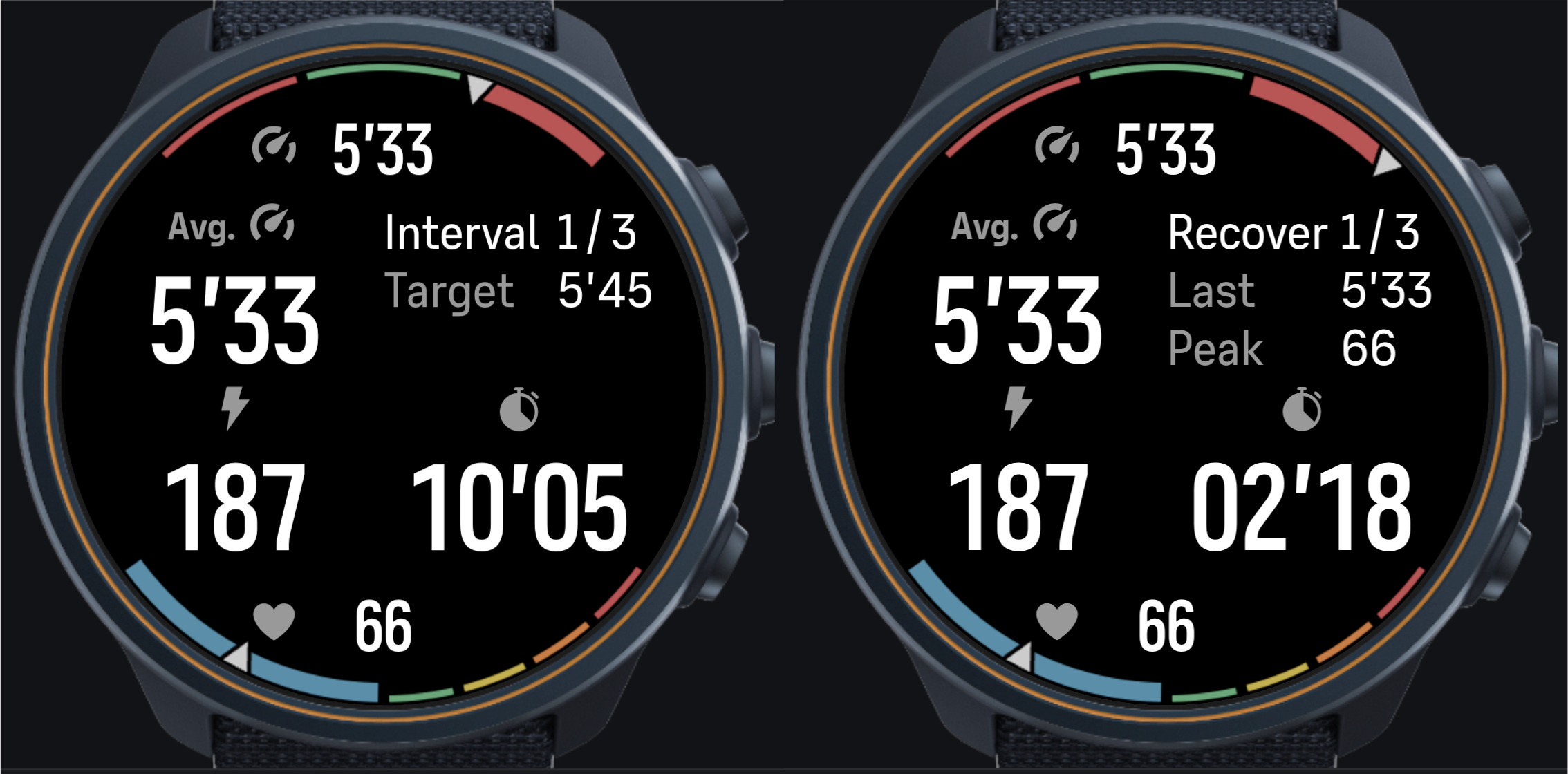
As it was not possible to upload FIT files to the watch I decided to implement the setup of a structured interval run on the watch like this.
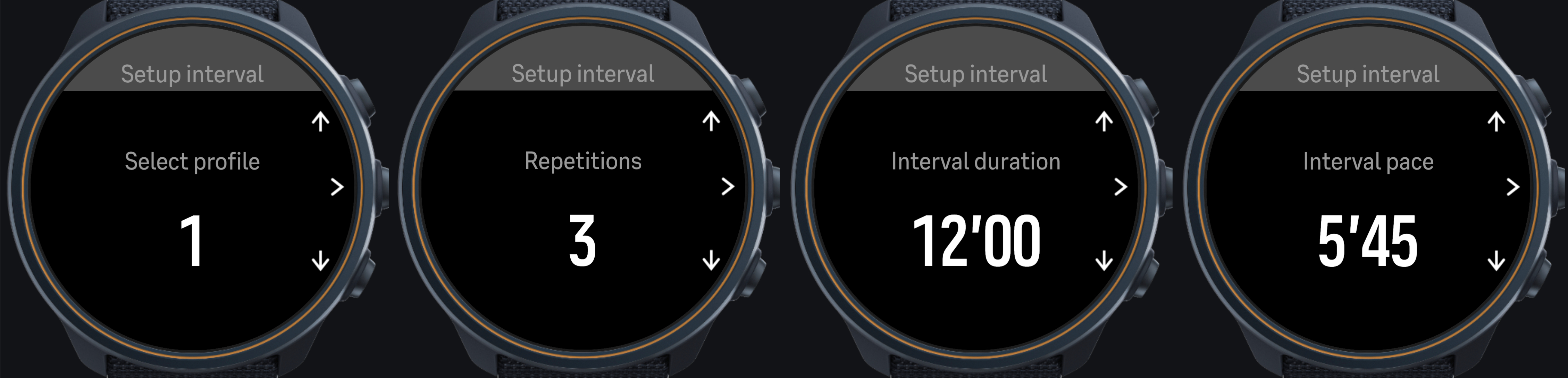
Three different interval profiles are stored on the watch. Initial defaults are:
2 x 12 min @ 101% of LT pace
5 x 6 min @ 107% of LT pace
10 x 1 min @ 113% of LT paceThe user can change repetitions, interval duration and pace. The new settings will be saved in the profile for the next interval run.
Speed zones are retrieved from the watch and used to set LT pace and reasonable pace for warm-up, recovery and cool-down. Recovery duration is set to match interval duration with a lower and upper limit.
The watch did not support creating four separate SetUp screens for the UI. So one screen was used in combination with setText for the label and parameter being changed.
To avoid problems with rounding effects in Suunto firmware, pace (seconds per kilometer) was used in main.js which was converted to speed (m/s) only when output.
-
Hello,
Here is my project to manage score in badminton with new rules with 3x15 points.
Source file can be fin in github /seb49/suunto-badminton-3x15
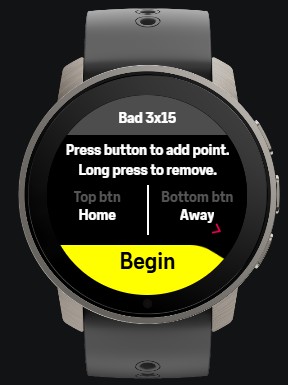
Welcome screen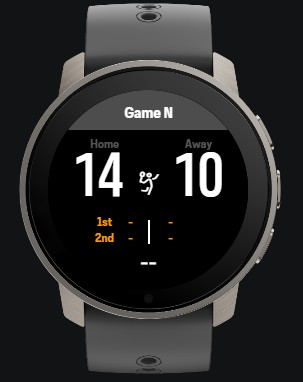
Main screen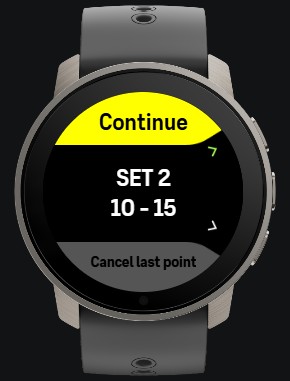
End set screen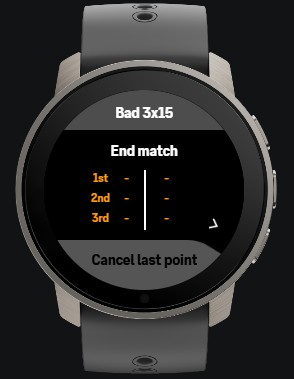
End match screenRegards
-
@aenzed Nice! I built a similar app, but without a Nightscout. Everything is local - Android app acts as a bridge, it talks to the pump and to the watch.
-
@Vadim-Frolov Oh that sounds a lot better than the mess I’ve been handling. How did you setup the system?
-
@Vadim-Frolov I have build an extension for my Karoo 3 and I am looking for a solution for my Suunto watch. Would you or @aenzed be open to share the details of your project for other T1Ds to also get their glucose levels on the watches?
-
Over the past weeks I’ve been building SuuntoPlus sports apps for my Race S, and along the way I put together a command-line toolkit that made the work a lot faster with Claude Code as it can simulate, test, and diagnose full development cycle other than real hardware tests. Everything is now public on GitHub, so I’m sharing it here in case it helps other developers, and because I’d love feedback and a few testers.
1. SuuntoPlus agentic dev env (the tooling)
www.github.com/aabbeell/suuntoplus-agentic-dev-env
Command-line and AI-agent tooling for building, measuring, deploying and debugging SuuntoPlus apps on a Mac without clicking through VS Code. It drives the official SuuntoPlus Editor extension (tested with 1.42.0) and its build library; it doesn’t replace them.
- sp-build: validates and builds an app for all displays from the terminal
- VS Code MCP bridge: a small extension that exposes build, deploy, simulator, screenshot and simulator log as tools, so Claude Code or any MCP client can drive the Editor
- watch-log: reads the connected watch’s system log (handy for spotting memory unloads and disabled apps)
- sp-mem: runs your app’s JavaScript in real Duktape 2.7.0 (the watch’s engine), counts allocated bytes, estimates the watch figure and counts canvas draw calls per frame
- safe-area: checks simulator screenshots for content clipped by the round display edge
- BLE capture example script for designing a Bluetooth sensor app
- WATCH_QUIRKS.md: things the real watch does differently from the simulator, collected the hard way
- A Claude Code skill for submitting an app to the store through API Zone
2. Suuntopo: multi-pitch climbing topos on the watch
www.github.com/aabbeell/suuntopo
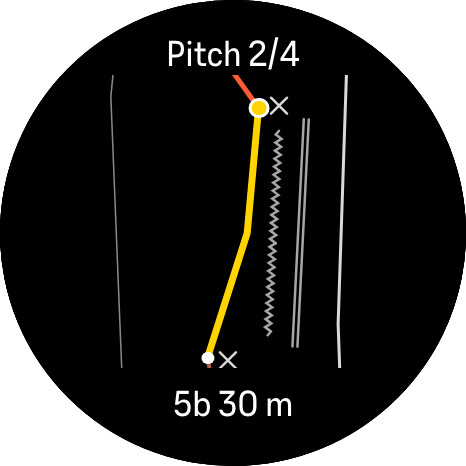
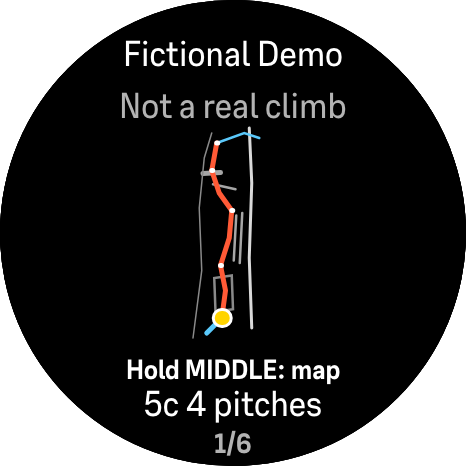
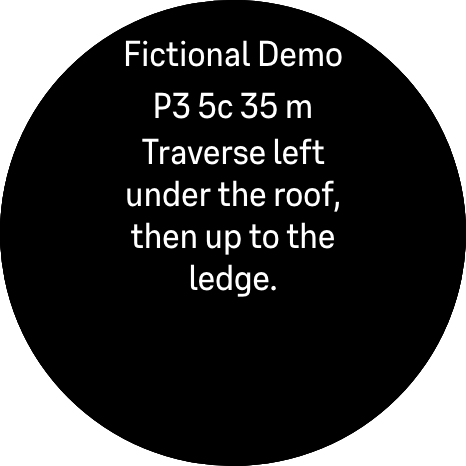
Draw a route in the browser topo editor (topo-editor.vercel.app, source in the same repo), copy it as one line, paste it into the app’s setting in the Suunto app and sync. On the watch you step belay by belay with the buttons: the current pitch is highlighted and auto-fitted, with grade, length and pitch notes. Short presses stay native, so lap and pause still work.
3. VarioLink for Suunto: paragliding vario display
www.github.com/aabbeell/suunto-variolink
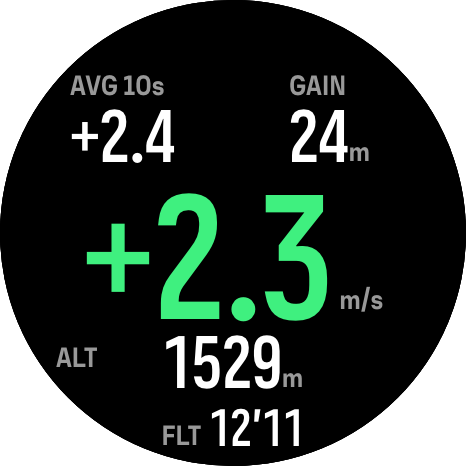
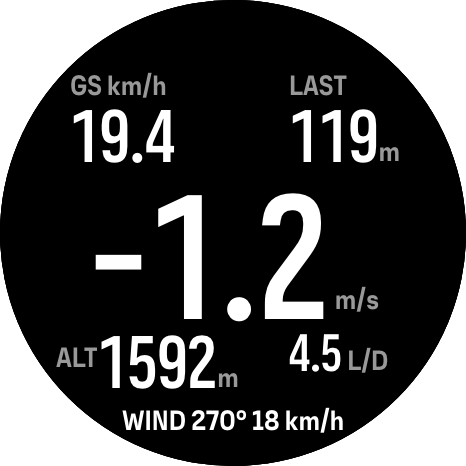
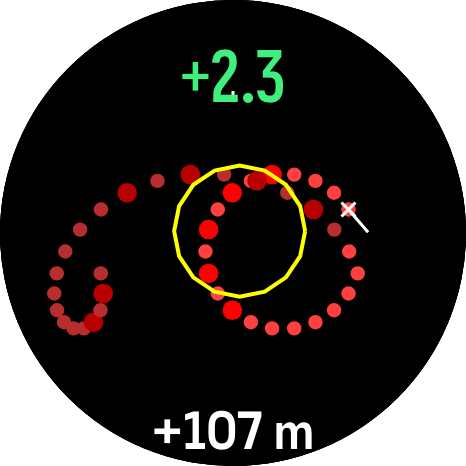
Shows a Stodeus UltraBip or BlueBip Bluetooth vario on the watch: big climb rate, average climb, thermal gain, altitude and flight time, logged to the exercise. Optional beta pages add ground speed, glide ratio, wind from your circles and a map of your thermal. Tested on watch and works but still needs some finetuning on the thermalling map also some real testing during paragliding
4. AirTemp for Suunto: real air temperature from a Bluetooth sensor
www.github.com/aabbeell/suunto-airtemp
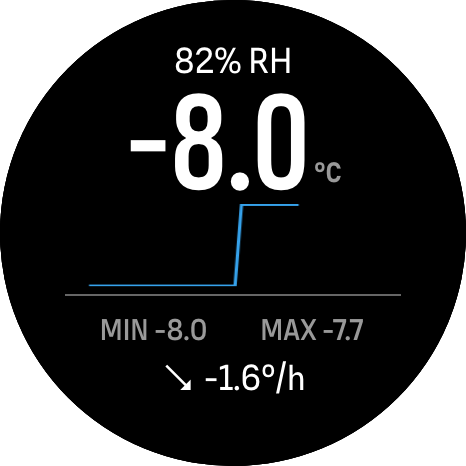
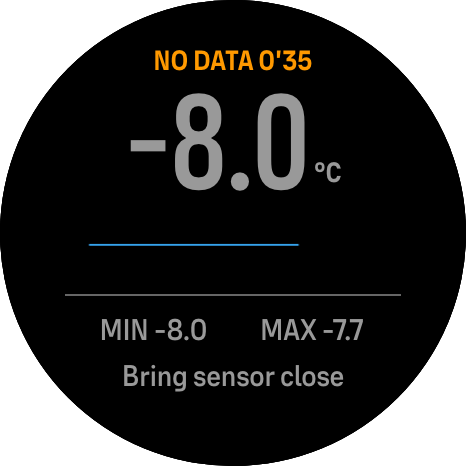
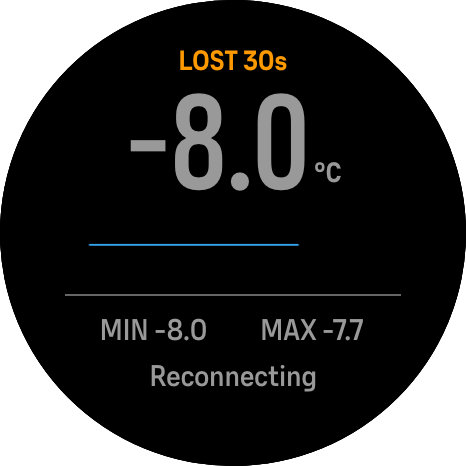
AirTemp reads a small Bluetooth sensor on the outside of your pack and shows air temperature, humidity, a graph, min/max and trend. Tested with a Xiaomi LYWSD03MMC (stock firmware) on watch; SensorPush, RuuviTag and standard Environmental Sensing sensors are supported in beta but untested.
*Screenshots are from the simulator (Race S, 466 px) with demo
What I’d love help with
- Testers on other watches (Race, Race 2, Vertical 2) and with sensors I don’t own (BlueBip, SensorPush, RuuviTag, other ESS sensors)
- Feedback from climbers and pilots on what’s actually useful on the screen
- Anyone who has hit the same simulator vs. watch differences: corrections and additions to WATCH_QUIRKS.md are very welcome
Thank you for suunto devs who opened the platform, this is the main reason im using suunto watch, and i think making it easier to create robust production apps by the community would be very beneficial to the platfform.
Thanks, and happy building!
-
@odivie I’ve got everything stored locally, but I’ll take a look if I can upload everything to github. I hardcoded my nightscout key in the beginning, so I’ll need to clear any insecure points. I’ll share the page/send you a message when I’ve done that.
I am working from iOS though, not android, so there’s a handful of hoops I have to jump through that won’t be necessary on android.
-
Sky Map: live star chart sports app (open source)
Hey all,
I wanted a star map on my Vertical 2 that follows me when I travel, so I built one. It’s a sports app for now since watch faces aren’t open to us yet.
It shows what’s actually above you right now: the bright stars, constellation lines, the Milky Way, the Moon with its real phase, and the five planets you can see without a telescope. Everything is worked out on the watch from the time and GPS. After dark it turns red so it doesn’t wreck your night vision.
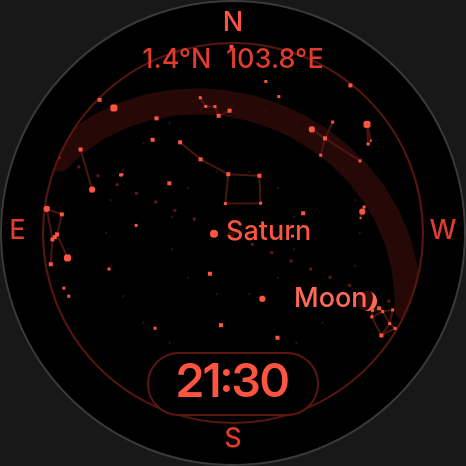
Code and install steps are on GitHub (MIT): kugensegaran/suunto-sky-map
Full disclosure, Claude did a lot of the heavy lifting on the code.
Where it’s at: it runs in the simulator and it’s installed on my Vertical 2, but I haven’t had a proper go with it on the watch yet. If you try it, I’d love to hear how it looks, especially on the MIP screens. I’ve only seen those in my own test renders.
A few things I ran into that might save someone some time:
- The canvas limits people posted here are real. I split the chart over four canvases and cut every line at 18 points. The worst case I found is about 130 calls on one canvas, so there’s headroom.
- Memory is the tight one. I tested against Duktape (the JS engine the watch runs) and the screen comes in around 24 KB. The test tool is in the repo if you want to check your own app.
- The heavy astronomy maths lives in a separate file that only loads with evalFile while the screen is closed, so it never fights the screen for memory.
- Outputs can come through as 32-bit floats, so pack anything that needs precision into whole numbers under about 16.7 million.
Accuracy is within about 0.2° of proper astronomy software, which is under a pixel on the watch.
Any feedback welcome, here or on GitHub.
-
Have experimented with an altitude acclimatization app. That should be a widget but we play with what we have.
The app shows a rough indicator on altitude acclimatization by providing a basic score.
What the watch shows- Score (0–100): how acclimatized you are to the altitude you’re at right now.
- Status: No altitude stimulus (below 1500 m), Not acclimatized (<40), Acclimatizing (40–74),
- Acclimatized (75+), or a caution: low SpO2, high sleeping HR, or ascent too fast.
- Adapted to … , N nights: your estimated acclimatized altitude and the number of consecutive nights slept above 1500 m.
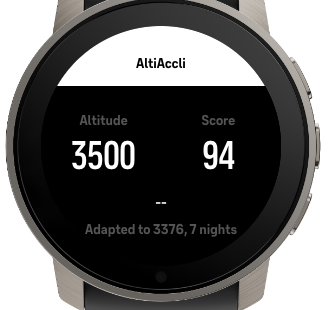
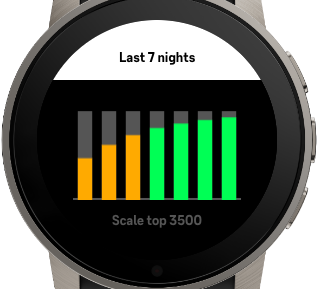
Field testing is pretty difficult technically for higher elevations and many days. Have done some basic testing and seems to somehow working. If anyone can use it for multiday trip and/or higher eleveations would be happy for feedback.
Github repo: https://github.com/panoskrt/SuuntoPlusAltitudeScore/



Hello! It looks like you're interested in this conversation, but you don't have an account yet.
Getting fed up of having to scroll through the same posts each visit? When you register for an account, you'll always come back to exactly where you were before, and choose to be notified of new replies (either via email, or push notification). You'll also be able to save bookmarks and upvote posts to show your appreciation to other community members.
With your input, this post could be even better 💗
Register Login